

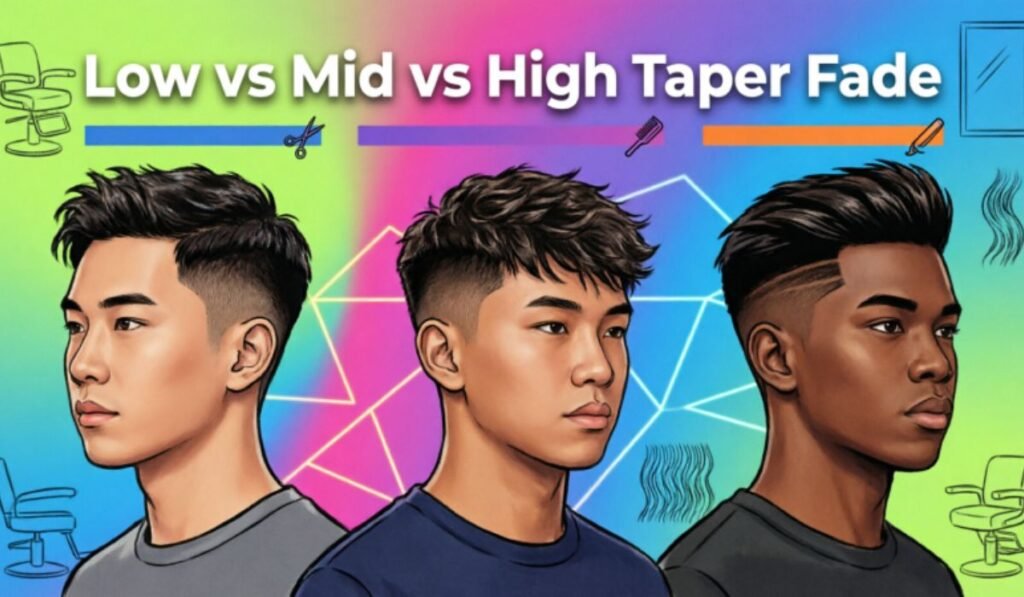
Sitting in the barber’s chair and hearing “low, mid, or high?” can feel like a pop quiz you didn’t study for. Every guy has been there, nodding along while secretly wondering what the difference even is.
Here’s the short answer before we go deep: a low taper fade stays close to your ear and keeps things classic, a mid taper fade sits at the temple for a balanced look, and a high taper fade climbs way up for maximum contrast. Below, we’ll break down exactly how each one looks, who it suits, and how to ask for it without any awkward back and forth with your barber.
Most guys don’t realize how much that single word (low, mid, or high) controls the entire outcome of a haircut. Ask for the wrong one and you might walk out with way more skin showing than you wanted, or barely any change at all. Once you understand what each height actually means, picking the right one takes about ten seconds.
What Is a Taper Fade?
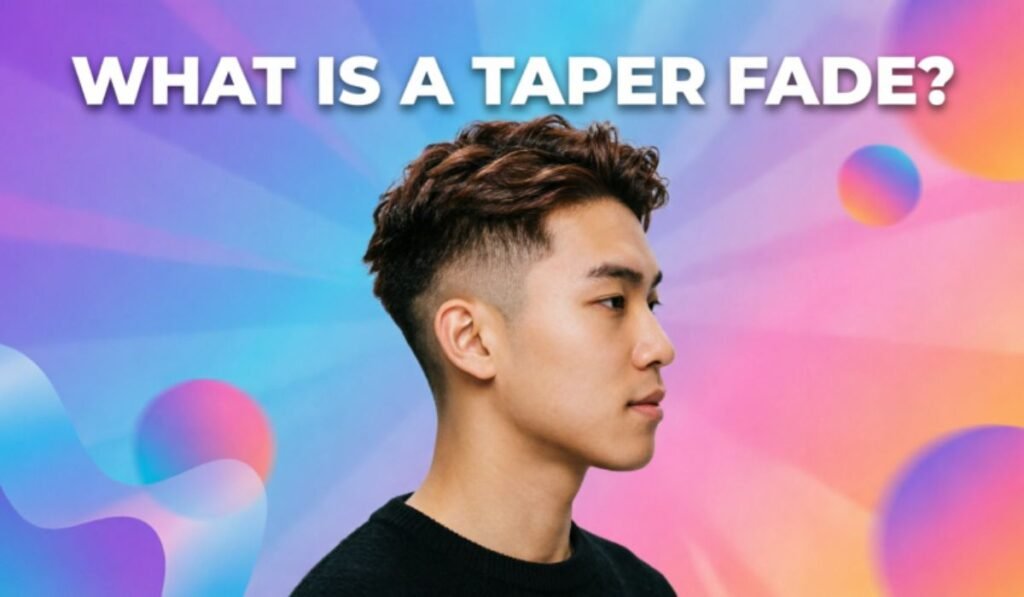
A taper fade is a haircut where the hair gradually gets shorter as it moves down toward your ears, sideburns, and neckline. Instead of one length all around, the sides blend smoothly from longer hair on top to close to the skin (or just very short) near the bottom.
Think of it like a gradient in a photo. There’s no harsh line, just a smooth shift from thick hair to short hair. This blending is what separates a taper from a basic buzz cut or a regular trim.
Barbers create this effect using clippers with different guard sizes, moving from a bigger guard up top to a smaller one near the hairline. A typical sequence might run from a number 4 guard down to a number 1, then finish with a bare blade near the edges for a crisp line. The result is a hairline and neckline that looks sharp but not choppy.
This haircut has stuck around for decades because it’s basically foolproof. It doesn’t ask you to commit to one bold look forever. You can keep it tame for the office on Monday and sharpen up the top for a night out on Friday, all with the same base cut.
A few things make a taper fade so popular:
● It works with almost any hair type, from straight to curly
● It suits round, square, oval, and long face shapes
● It grows out better than a hard, skin-close fade
● It pairs with almost any style on top, from a pompadour to a simple crop
● It’s low-risk for a first fade since the change happens gradually, not all at once
If you’ve ever left a barbershop feeling like your haircut aged you by five years or made you look like you were trying too hard, a well-cut taper fade almost never does that. The blend does the heavy lifting quietly, without turning your whole head into a statement piece (unless that’s exactly what you’re going for).
Taper vs Fade

People throw around “taper” and “fade” like they mean the same thing, but there’s a real difference worth knowing before your next haircut.
A taper is a gentle, gradual shortening of hair. The change is subtle. You won’t see bare skin anywhere on a pure taper, just hair getting shorter in small steps.
A fade, on the other hand, can go all the way down to the skin. That’s called a skin fade, and it creates a much sharper, more dramatic contrast between the top and the sides.
A taper fade blends both ideas. It tapers gradually near the top of the fade zone, then fades down closer to (or fully to) the skin near the ear and neckline. So every taper fade technically includes a mini fade, but not every fade counts as a taper.
This is exactly where a lot of confusion starts at the barbershop. A guy asks for “just a taper” expecting a soft, natural look, but the barber hears “fade” in the same sentence and goes in with a much shorter blade near the skin. Knowing the difference before you sit down saves you from that mismatch.
There’s also a related term worth knowing: drop fade. This is a variation where the fade line curves down behind the ear instead of staying straight, following the natural curve of your skull. You can pair a drop fade with a low, mid, or high starting point, so it’s a style detail layered on top of the height choice, not a separate category by itself.
Here’s a quick way to keep it straight:
| Style | Goes to skin? | Contrast level | Best known for |
| Taper | No | Low | Subtle, natural finish |
| Fade | Yes (usually) | High | Bold, sharp lines |
| Taper Fade | Partial to yes | Medium to high | Balance of both |
Once you get this difference, choosing between low, mid, and high gets a whole lot easier, because those three words simply describe where the fade starts on your head.
Low Taper Fade

How it looks
A low taper fade starts its blend right above the ear and just below the temple. Most of your head keeps its natural hair length, and the shortening only really shows up near the bottom edge, close to the ear and around the neckline.
From a few feet away, this cut can almost look like a regular haircut. Get closer, and you’ll notice the clean, faded edge tracing your ear and hairline. It’s subtle, but it makes a big difference in how sharp your whole head looks.
I’ve seen plenty of guys walk into a barbershop nervous about getting “too much done” to their hair, and a low taper fade is usually the cut that eases them in. It barely changes your silhouette from a distance but adds that clean, edged-up finish that makes even an unstyled morning look put together.
Best for
● Guys who want a professional, office-friendly look
● First-timers trying a fade without a dramatic change
● Round or square face shapes that don’t need extra height
● Thick or wavy hair that benefits from staying longer on the sides
Pros
● Grows out slowly, so you can stretch time between visits
● Works with almost any outfit or setting, from work to weekends
● Easy for less experienced barbers to get right
● Keeps hair on the sides for warmth and less scalp exposure
Cons
● Less dramatic contrast than mid or high options
● Can look plain if the top isn’t styled with some shape
● Not the best pick if you want a bold, eye-catching cut
Mid Taper Fade

How it looks
A mid taper fade moves the starting point up to around temple level. This creates noticeably more contrast than a low fade, since a bigger chunk of the side hair gets shortened.
It sits right in that in-between zone: sharp enough to turn heads, relaxed enough for daily life. Many guys call it the “safe but stylish” choice, and it’s easy to see why once you see it side by side with the other two.
This is usually the height most barbers suggest to someone who can’t decide. It splits the difference so well that it rarely looks wrong on anyone, and it gives your barber more room to get creative with the top without the sides feeling flat or forgotten.
Best for
● Oval and square face shapes looking for balance
● Guys who want a cut that reads as both casual and sharp
● Curly or thick hair that needs some volume control on the sides
● Anyone pairing the fade with a textured crop or brushed-forward style
Pros
● Strong middle ground between subtle and bold
● Flatters more face shapes than either extreme
● Handles thicker hair well without looking bulky
● Still fairly forgiving as it grows out
Cons
● Needs a touch-up sooner than a low fade, usually every three to four weeks
● Slightly trickier for a barber to blend perfectly
● Might feel “too much” for very conservative workplaces
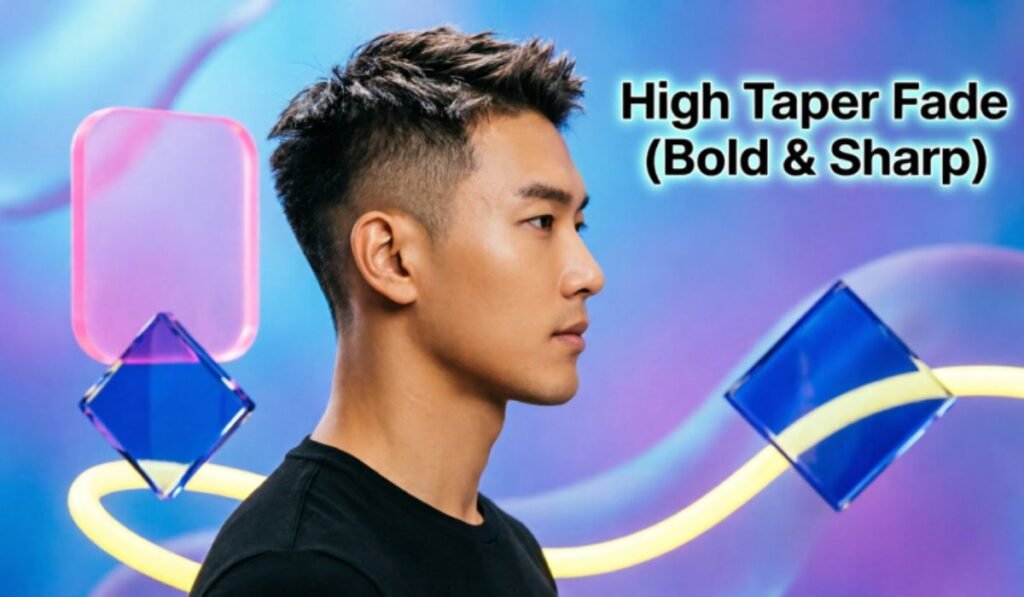
High Taper Fade (Bold & Sharp)
How it looks
A high taper fade starts well above the temple, sometimes close to the crown. This creates the sharpest, most dramatic contrast of the three, with a clear visual break between the short sides and the longer top.
This is the cut that makes a hairstyle feel like a statement. The top often gets styled tall or textured on purpose, since the short sides are built to show it off.
A high taper fade takes real confidence to pull off well, mostly because there’s nowhere to hide. Every angle of your head is on display, so the barber needs a steady hand and you need a clear idea of what you want on top before the clippers even come out. Skip the styling step and the whole look falls flat, since the short sides are designed to contrast against volume, not against more flatness.
Best for
● Guys who want their haircut to stand out
● Round faces looking to add height and length
● Thick hair that needs serious bulk reduction
● Anyone planning to add a hard part or a design
Pros
● Maximum contrast for a bold, modern look
● Reduces weight and bulk from thick hair fast
● Pairs perfectly with spikes, quiffs, or a slicked-back style
● Makes a strong first impression
Cons
● Grows out fast and needs trims every two to three weeks
● Not always accepted in strict professional settings
● Requires more upkeep and styling product to look its best
● Can be unforgiving on longer face shapes
Low vs Mid vs High Taper Fade
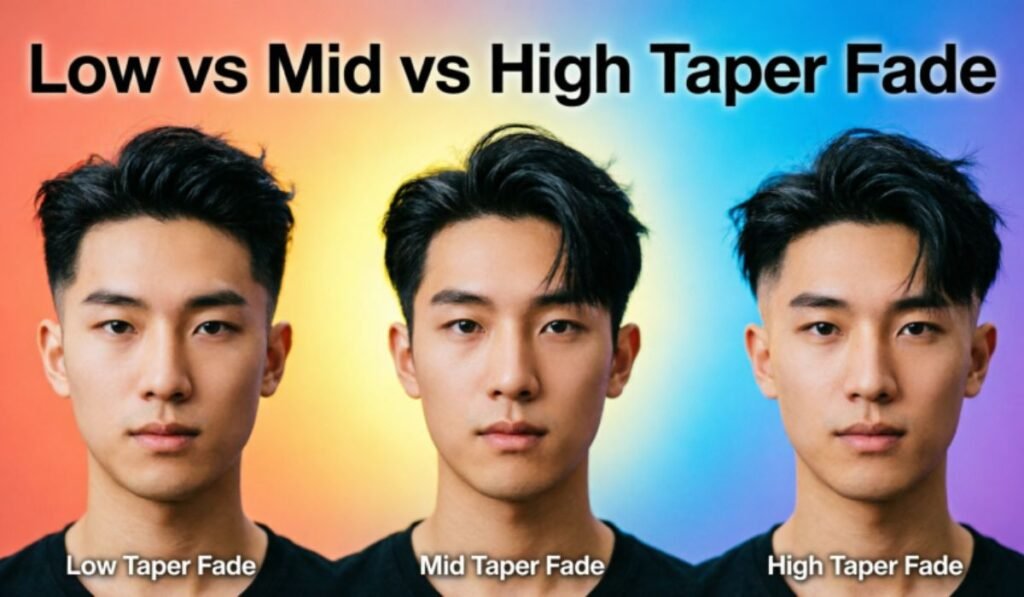
Seeing all three next to each other makes the choice a lot clearer. Here’s a side-by-side breakdown:
| Feature | Low Taper Fade | Mid Taper Fade | High Taper Fade |
| Starting point | Just above the ear | Around the temple | Above the temple, near crown |
| Contrast | Subtle | Medium | Dramatic |
| Maintenance | Every 4-6 weeks | Every 3-4 weeks | Every 2-3 weeks |
| Best face shapes | Round, square | Oval, square | Round, oval |
| Workplace friendly | Very | Mostly | Depends on the office |
| Styling effort | Minimal | Moderate | High |
Which Taper Fade Should You Choose?
Your choice really comes down to three things: your lifestyle, your hair type, and how bold you want to look.
If you barely have time to style your hair before work, a low taper fade keeps things simple. If you want something that looks put together without screaming for attention, the mid taper fade hits that sweet spot. And if you’re chasing a look that gets noticed the second you walk in, that’s where the high option comes in.
Think about your last few weeks too. If you skipped haircuts for over a month without anyone noticing, a low fade will fit your habits. If you’re already booking appointments every few weeks out of habit, a mid or high fade won’t feel like extra work, since you’re already showing up on schedule.
Choose a High Taper Fade if:
● You want the boldest, sharpest contrast possible
● Your hair is thick and hard to manage on the sides
● You’re willing to visit the barber every couple of weeks
● You like styling your top hair with product every day
● Your workplace or lifestyle allows for a trendier look
What to Tell Your Barber
Barbers hear vague requests all day, so being specific saves everyone time and gets you a better cut. Try this:
1. Name the height first: “I want a low taper fade” (or mid, or high)
2. Point to the spot on your head where you want the fade to start
3. Mention your hair type, like “my hair is thick” or “I have curly hair”
4. Tell them how much length to leave on top
5. Ask for a skin fade or a soft fade depending on how sharp you want the bottom edge
6. Bring a photo if you have one, since visuals remove all guesswork
A good barber will also check your face shape and adjust the blend so it actually flatters you, not just copies a picture. If you’re unsure about anything, ask them directly what height they’d suggest for your hair type and head shape. Most barbers appreciate the question, since it means you trust their judgment instead of forcing a look that might not suit you.
Face Shape and Hair Type Cheat Sheet
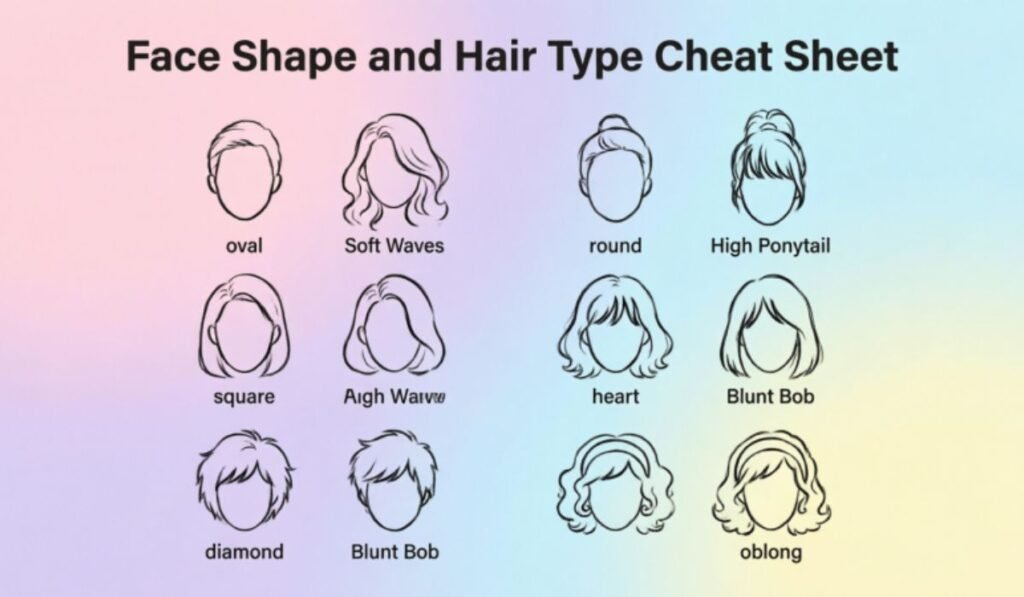
Matching your fade to your features makes the difference between a haircut that looks good on anyone and one that looks great on you specifically.
● Round face: A mid or high taper fade adds height and makes your face look longer
● Square face: A low taper fade softens strong jawlines without hiding them
● Oval face: Lucky you, all three options tend to work well
● Long face: Stick with low or mid, since high fades can stretch your face even more
● Straight hair: Handles all three fades cleanly with crisp lines
● Curly or coily hair: Mid and high fades manage volume better on the sides
● Thick hair: A high fade removes bulk fastest if your hair feels heavy
Maintenance & Styling Tips
Keeping any taper fade sharp comes down to a few simple habits:
● Book touch-ups based on how high your fade sits (lower fades stretch longer between visits)
● Use a light pomade or matte clay to add texture without weighing hair down
● Keep a small trimmer at home for cleaning up your neckline between cuts
● Moisturize faded skin areas if they feel dry, since less hair means more exposed skin
● Sleep with a silk or satin pillowcase if you have curls, to protect your shape overnight
● Wash your hair two to three times a week so product buildup doesn’t dull the fade’s edges
A fresh fade only stays fresh with a little routine behind it, so treat maintenance as part of the haircut, not an afterthought. Skipping trims doesn’t just make the fade look messy, it also makes the next visit harder on your barber, since they have to work through more growth to find the line again.
A quick trick a lot of regulars use: snap a photo of your fresh cut from the side and back right after you leave the chair. It gives your barber (or you, if you’re touching up your own neckline at home) a clear target to match every time, instead of guessing where the fade used to sit.
Frequently Asked Questions
Is a low, mid, or high taper fade more popular?
Mid taper fades tend to be the most requested since they balance style and practicality.
Does a taper fade work with curly hair?
Yes, mid and high taper fades handle curls especially well by controlling volume on the sides.
How often should I get my taper fade redone?
Low fades last four to six weeks, mid fades need three to four weeks, and high fades look best every two to three weeks.
Can I switch between low, mid, and high over time?
Yes, your barber can gradually raise or lower the fade line at each visit.
Is a taper fade the same as a skin fade?
Not exactly. A skin fade goes all the way to bare skin, while a taper fade can stop at very short hair instead.
Which taper fade suits a professional workplace best?
Low and mid taper fades are usually the safest, most widely accepted options at work.
Do taper fades work on thinning hair?
Yes, a low or mid taper fade can add the illusion of density by keeping length where it’s needed most.
Should I choose a taper fade or a full skin fade?
A taper fade suits guys who want a natural, gradual look, while a full skin fade suits those chasing maximum contrast.
Final Thoughts
Choosing between a low, mid, or high taper fade really comes down to how much contrast you want and how much upkeep you’re willing to handle. Low keeps things classic and low-maintenance, mid gives you a balanced everyday look, and high delivers the boldest, sharpest style around.
Whichever height you land on, walk into the barbershop with a clear ask and maybe even a photo. Your barber will handle the rest, and you’ll walk out with a fade that actually fits your hair, your face, and your everyday life.
Got a favorite between the three, or still torn between two? Drop it in the comments and let other readers know which taper fade actually worked out for them.