

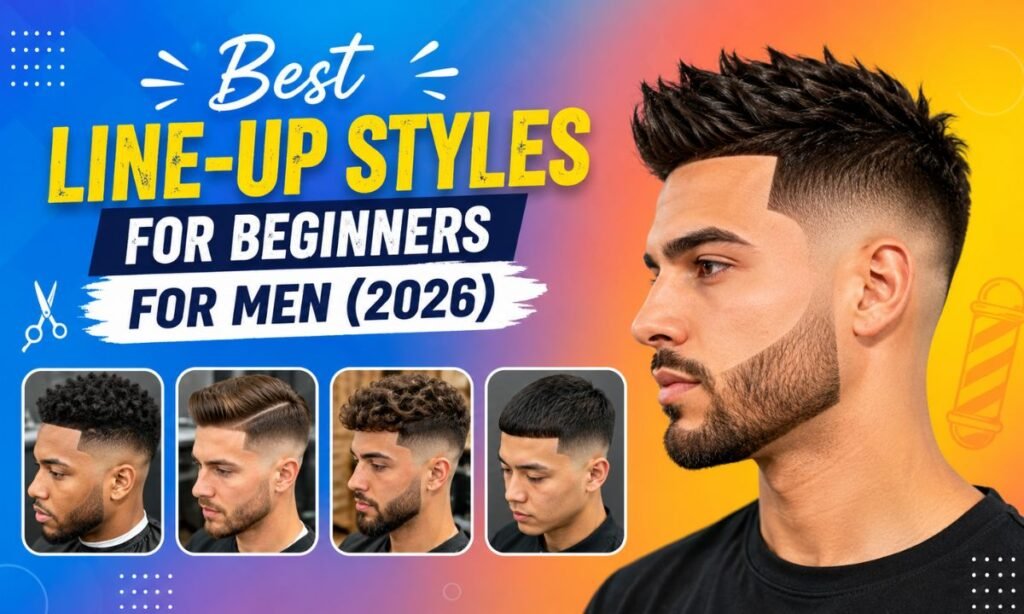
Getting your first line-up can feel like a big decision. One wrong move with the clippers, and your hairline can look uneven, too sharp, or just off. That’s why so many beginners stick to safe, boring haircuts and skip the line-up altogether.
But it doesn’t have to be complicated. A good beginner line-up is simple, low-risk, and easy to maintain. You don’t need a razor-sharp, super-defined edge on your first visit. You need a clean, natural shape that grows out well and doesn’t damage your hairline.
This guide breaks down the best line-up styles for beginners, what to tell your barber, and the mistakes that trip up almost every first-timer.
What Is a Line-Up?
A line-up, also called a shape-up or edge-up, is a barbering technique that creates a clean, defined edge around your hairline, temples, and sideburns. Barbers use clippers or a straight razor to remove stray hairs and sharpen the natural line where your hair meets your skin.
Unlike a regular haircut, a line-up doesn’t change the length of your hair. It simply cleans up the borders — the forehead line, the temple corners, and sometimes the neckline — so your haircut looks crisp and intentional.
Line-ups work with almost any hairstyle, including fades, buzz cuts, curly tops, and afros. For beginners, though, the goal isn’t to make the sharpest possible line. It’s to get a clean, natural-looking edge without overdoing it.
Natural Line-Up vs Sharp Line-Up
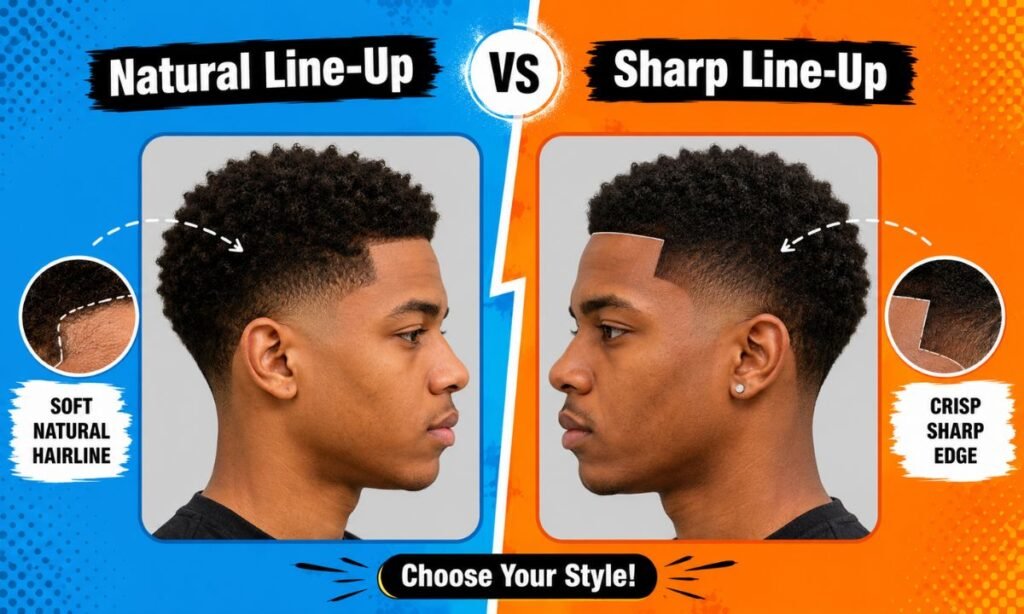
Before picking a style, it helps to understand the two basic approaches barbers use. Almost every line-up style falls into one of these two categories.
Natural line-up

A natural line-up follows the shape of your existing hairline. The barber only removes stray hairs and light fuzz along the edge, without cutting deep into the hairline itself. The result looks clean but still soft, like your hairline was always this neat.
This is the safer option for beginners because it:
- Grows out evenly without leaving a harsh gap
- Doesn’t put stress on the hairline
- Looks good with almost any face shape or hair type
- Requires less frequent touch-ups
Sharp line-up
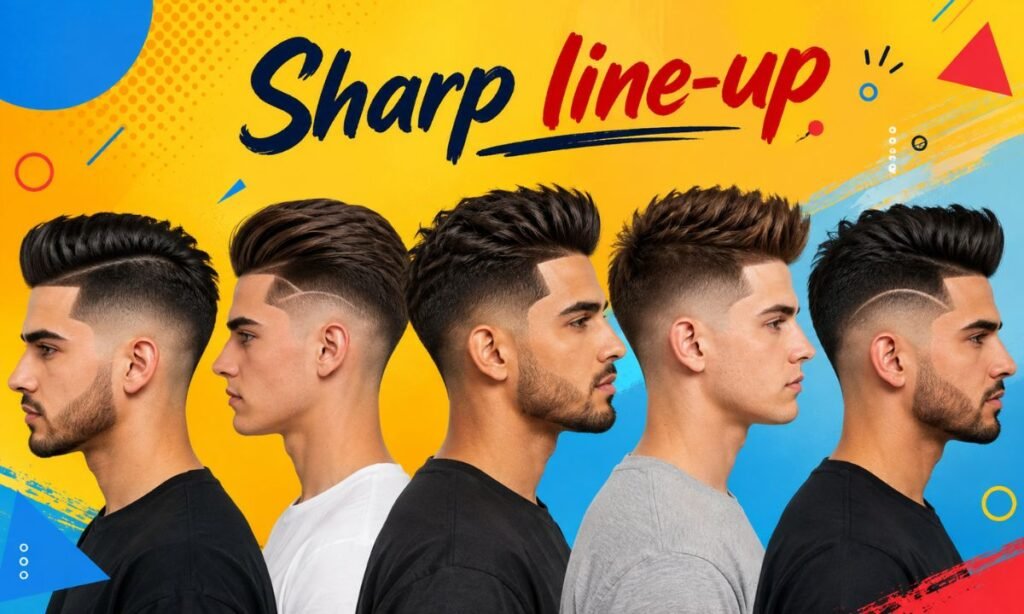
A sharp line-up creates a bold, geometric edge with straight lines and defined corners. Barbers often use a straight razor to carve a crisp border, sometimes pushing the line slightly higher or squaring off the temples for a more dramatic look.
Sharp line-ups look striking right after a fresh cut, but they:
- Show regrowth much faster (usually within a week)
- Can look patchy or uneven as new hair grows in
- Are harder to maintain without regular barber visits
- Carry more risk of an uneven or “too high” hairline if the barber overcorrects
For a first-timer, a natural line-up is almost always the better starting point.
ALSO READ THIS:https://thehairsmaster.com/undercut-fade-vs-low-fade/
Best Line-Up Styles for Beginners for Men
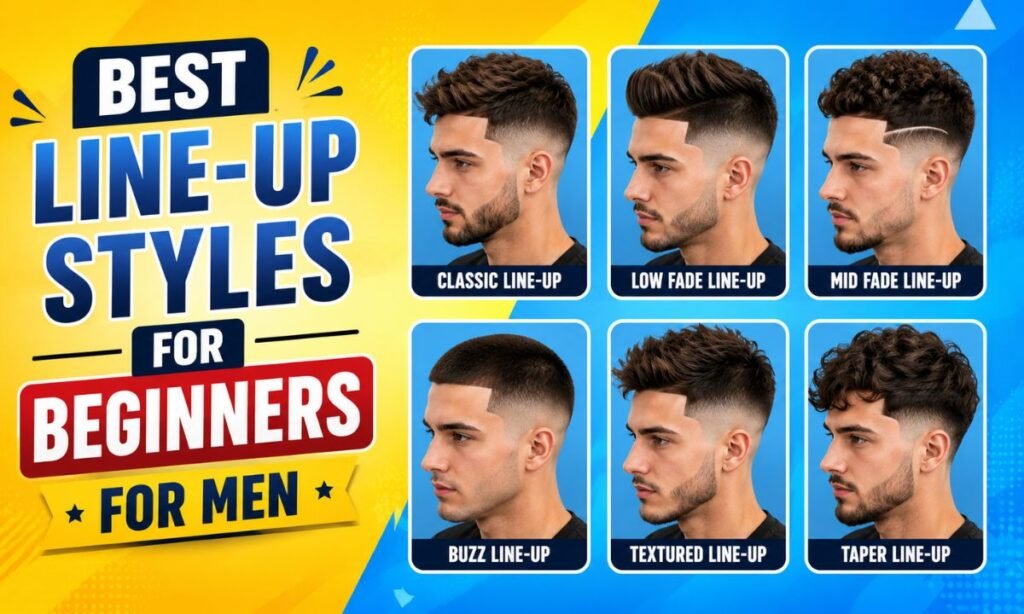
Here are five beginner-friendly line-up styles that are low-risk, easy to maintain, and simple to explain to any barber.
1. Natural Soft Line-Up (Best for First-Timers)
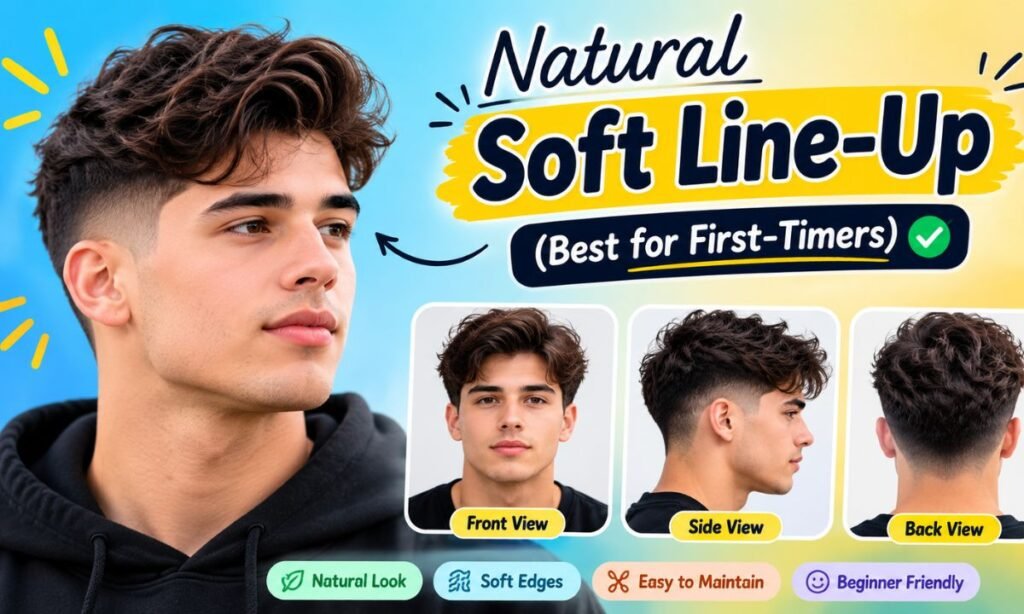
This is the safest line-up on this list, and it’s the one most barbers recommend for a first visit. It follows your natural hairline shape and simply tidies up the edges without changing anything dramatically.
Why it works for beginners:
- Barely noticeable if it grows out for a few days
- Works with any hair type, from straight to curly
- Doesn’t require a straight razor, so there’s less risk of nicks or irritation
- Blends well with almost every haircut, from a taper to a fade
What to tell your barber:
“Keep it soft and natural. Just clean up the stray hairs — don’t cut too deep or make the line too sharp.”
2. Rounded Hairline Line-Up
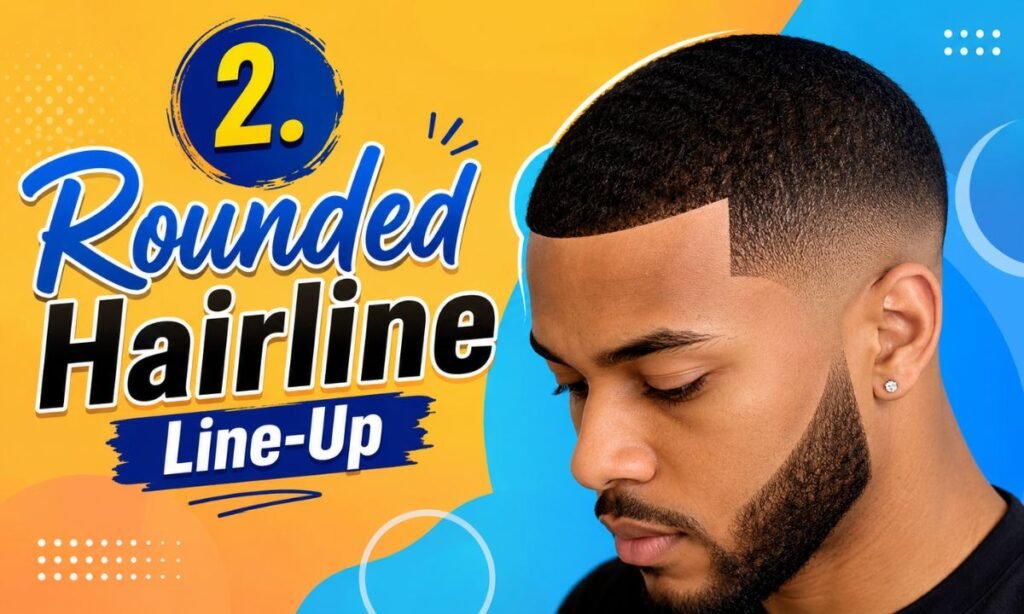
Instead of sharp corners, this style softens the edges into a slight curve. It’s a great middle ground between a completely natural hairline and a defined shape-up.
Why it works for beginners:
- Softer corners are more forgiving if your barber’s line isn’t perfectly straight
- Suits round, oval, and square face shapes well
- Looks polished without appearing overly styled
- Grows out gradually instead of leaving a visible step
What to tell your barber:
“Round off the corners instead of squaring them. I want it defined but not sharp-edged.”
3. Light Temple Line-Up (Corners Only)
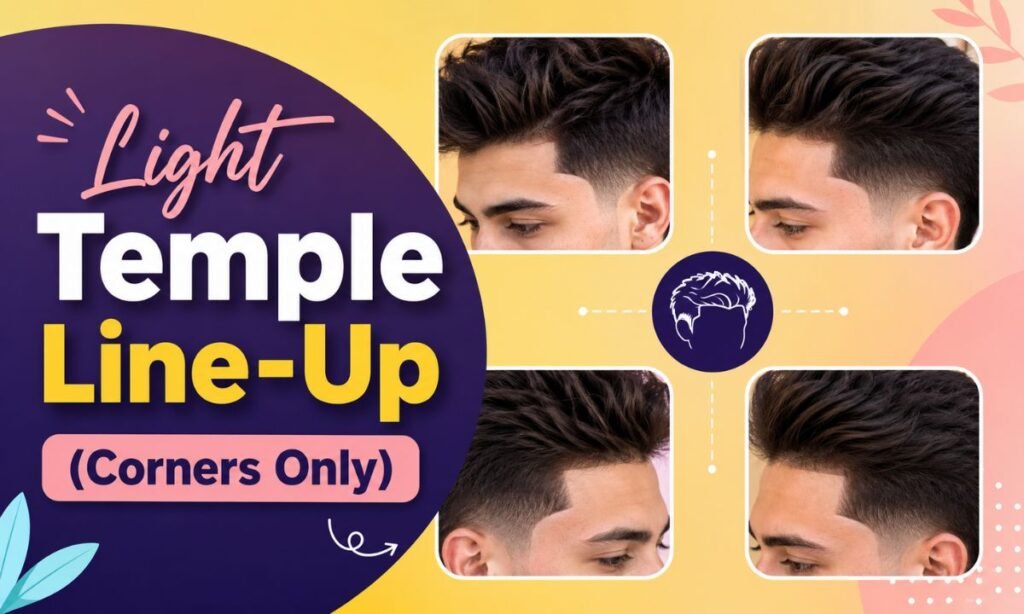
This style skips the full hairline and focuses only on the temple area. It’s ideal if you’re not ready to commit to a full line-up but still want a cleaner look near your ears and sideburns.
Why it works for beginners:
- Minimal commitment — easy to skip next time if you change your mind
- Low maintenance since only a small area needs touch-ups
- Pairs well with tapers and low fades
- Barely noticeable to anyone who isn’t looking closely
What to tell your barber:
“Just clean up the temples and sideburn area. Leave the rest of my hairline as it is.”
4. Beard-Only Line-Up (Hairline Untouched)
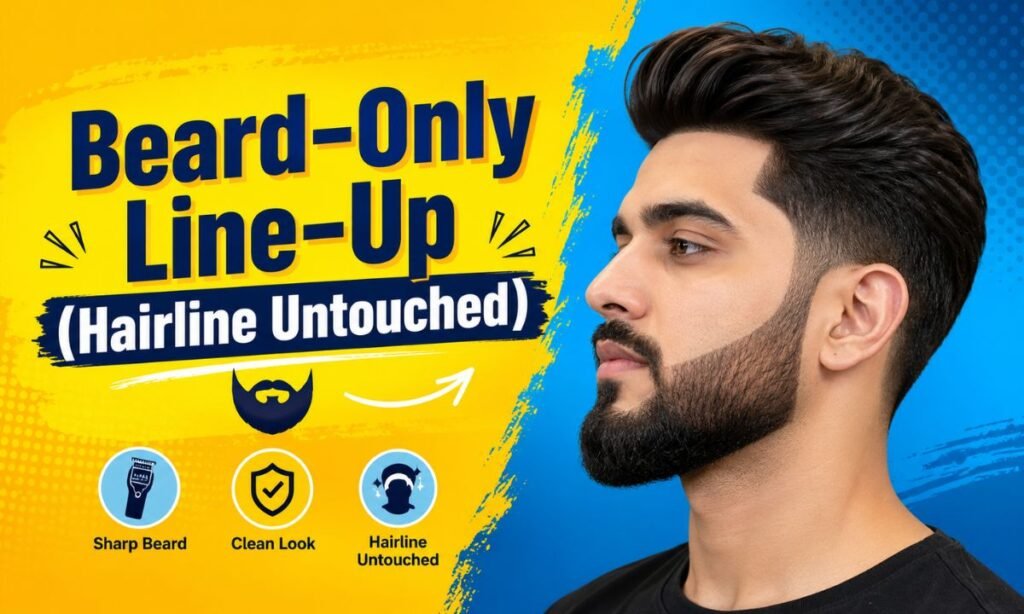
If you’re nervous about touching your hairline at all, start here. This style keeps your natural hairline completely untouched and only defines the edges of your beard along the cheek line, neckline, and mustache.
Why it works for beginners:
- Zero risk to your hairline
- Great way to test how a defined edge looks before committing to your head
- Instantly makes a beard look sharper and more intentional
- Works for men who are still growing out their hair
What to tell your barber:
“Just line up my beard — cheek line, neckline, and mustache. Please don’t touch my hairline.”
5. Taper + Natural Line-Up Combo
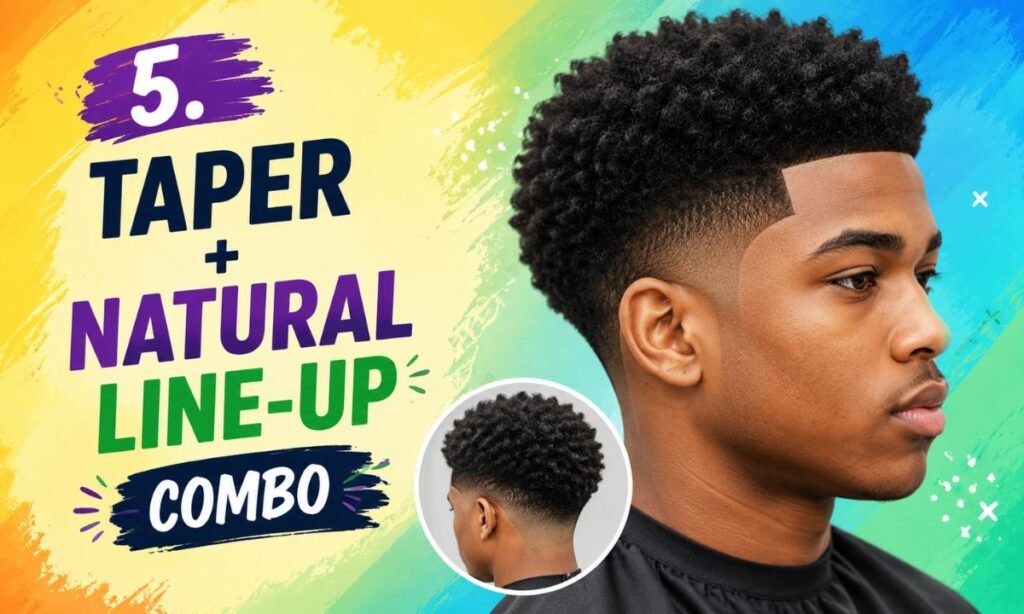
This pairs a soft taper on the sides with a natural line-up along the front. It’s a balanced, low-maintenance look that’s popular because it doesn’t scream “fresh haircut” the way a sharp fade and razor-line combo does.
Why it works for beginners:
- Grows out smoothly since neither the taper nor the line-up is extreme
- Works in professional and casual settings alike
- One of the easiest combinations for a barber to blend well
- Suits thick, thin, curly, and straight hair types
What to tell your barber:
“I want a soft taper on the sides with a natural line-up in front. Nothing too sharp, just clean and simple.”
Line-Up Styles Beginners Should Avoid
Not every popular line-up style is beginner-friendly. Some looks require regular upkeep and precise barber skills, and getting them wrong can affect how your hairline grows back.
Avoid these until you’re more experienced with line-ups:
- Razor-sharp geometric line-ups – These need touch-ups every few days to stay clean, and they show regrowth almost immediately.
- Pushed-back or raised hairlines – Cutting the line higher than your natural hairline can create an artificial, receding look over time.
- Heavy design line-ups – Shaved patterns or parts require an experienced barber and are hard to undo if done poorly.
- Overly squared temple corners – Sharp 90-degree corners can look unnatural on round or oval face shapes and are difficult to blend as hair grows.
Your hairline doesn’t grow back the way hair on top of your head does. Starting conservative now protects how it looks years from now.
What Beginners Should Say to Their Barber
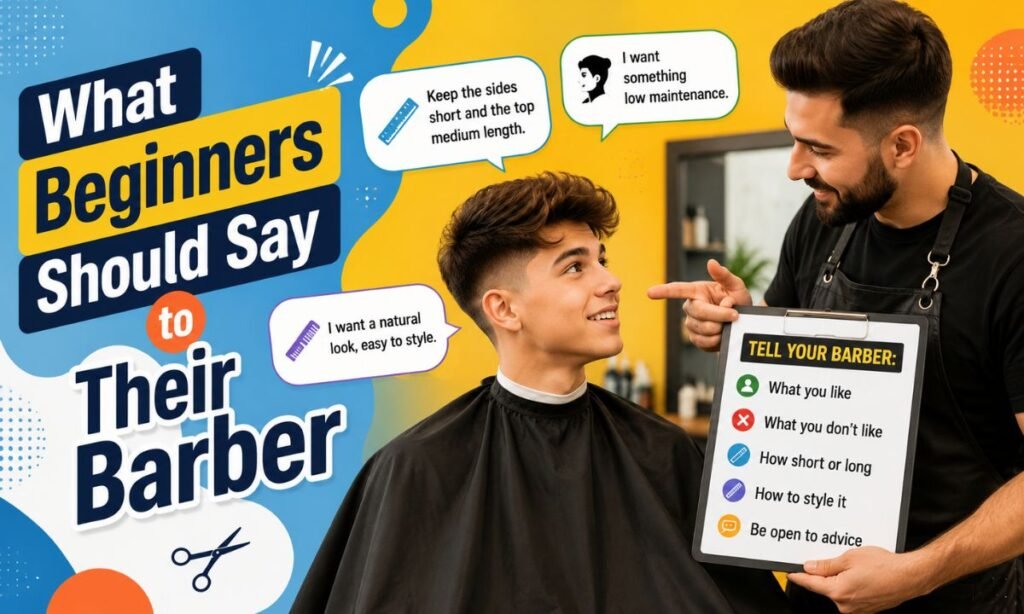
Clear communication is the difference between a clean first line-up and a disappointing one. Use this simple language during your appointment:
| What You Want | What to Say |
| A safe, natural look | “Keep it light and natural, nothing too sharp.” |
| To protect your hairline | “Please don’t raise or push back my hairline.” |
| A soft, low-maintenance edge | “Just clean up the stray hairs, don’t create a hard line.” |
| To test the waters first | “Start light — we can go sharper next time if I like it.” |
| Reference for the shape | “Match it close to my natural hairline shape.” |
It also helps to bring a photo, even if it’s just for reference on how sharp or soft you want the final look. Most barbers appreciate a client who communicates clearly rather than one who says “just make it look good.”
How Often Should Beginners Get a Line-Up?
For beginners, every 2 to 3 weeks is a reasonable touch-up schedule for a natural line-up. This gives your hairline time to grow out slightly between visits without looking messy in between.
| Line-Up Type | Recommended Touch-Up Frequency |
| Natural soft line-up | Every 3 weeks |
| Rounded hairline line-up | Every 2–3 weeks |
| Light temple line-up | Every 3–4 weeks |
| Beard-only line-up | Every 2 weeks |
| Sharp/geometric line-up | Every 5–7 days |
If you’re still deciding whether line-ups are for you, stretching visits to every three weeks is a safe way to ease into the habit without over-committing your schedule or your wallet.
Common Beginner Line-Up Mistakes
Most bad first-line-up experiences come down to a handful of avoidable mistakes. Watch out for these:
- Asking for a sharp line-up right away. Starting too aggressive makes mistakes more visible and harder to fix.
- Not communicating hairline concerns. If you have a naturally uneven or receding hairline, say so before the barber starts cutting.
- Skipping aftercare. Skin around a fresh line-up can be sensitive. Avoid touching the area excessively or applying heavy products right after your cut.
- Waiting too long between touch-ups. Letting a line-up grow out completely before your next visit makes it harder for the barber to clean it back up without cutting deeper than necessary.
- Choosing a barber based on price alone. A line-up is a precision job. A slightly higher price for an experienced barber is worth it for your first few visits.
- Trying to do it yourself with a razor at home. Beginners rarely have the steady hand or mirror technique needed to line up their own hairline evenly. Leave this to a professional until you’ve watched it done a few times.
FAQs
Is a line-up bad for your hairline?
No, not if it’s done lightly and naturally. Aggressive or overly sharp line-ups done too often can be harder on the hairline over time.
Should I get a line-up before a job interview?
Yes, if it’s kept light and natural. A soft line-up looks polished without appearing too styled for a professional setting.
What’s the best line-up style for a first-timer?
The natural soft line-up is the safest and most beginner-friendly choice.
How often should beginners get a line-up?
Around every 2 to 3 weeks works well for most natural line-up styles.
Should beginners start sharp or natural?
Always start naturally. You can always go sharper later, but it’s harder to undo an overly aggressive first line-up.
Conclusion
Your first line-up doesn’t need to be dramatic to look good. A natural, soft edge is easier to maintain, safer for your hairline, and still gives you that clean, put-together look. Start with one of the beginner-friendly styles above, communicate clearly with your barber, and stick to a simple maintenance schedule.
Once you’re comfortable with how a line-up looks and grows out, you can always experiment with sharper, more defined styles down the road. But for now, clean and natural will always beat sharp and risky.