

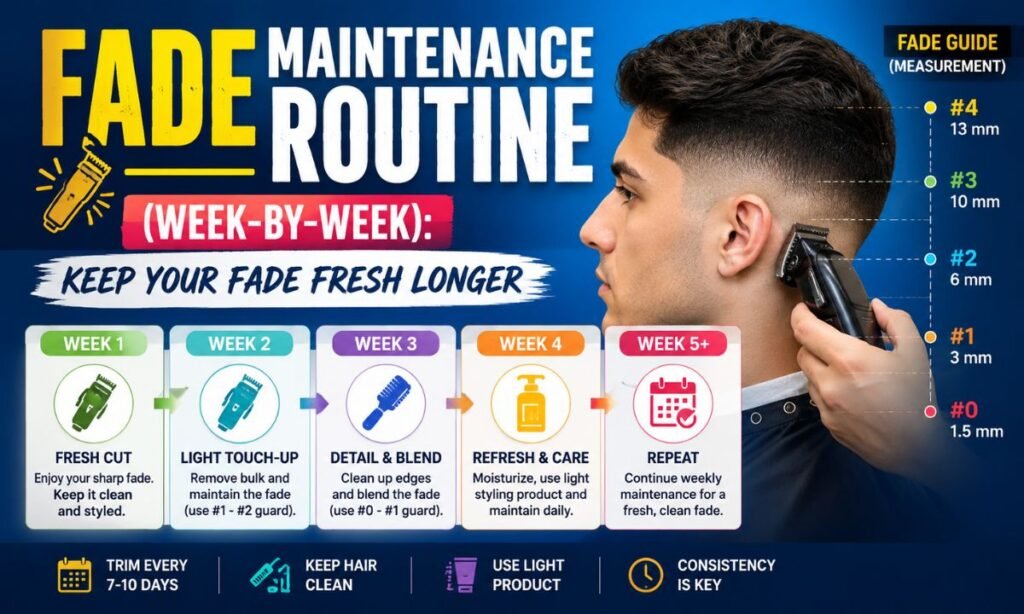
A fresh fade can make your whole haircut look clean, but keeping it sharp takes regular care. Sweat, hair growth, and daily styling can quickly make the sides look uneven. A good Fade Maintenance Routine (Week-by-Week): Keep Your Fade Fresh Longer helps maintain that clean look.
By following a simple weekly routine, you can keep your fade neat between barber visits. Small steps like cleaning, brushing, and trimming can make a big difference. You also avoid letting your haircut lose its shape too quickly.
This Fade Maintenance Routine (Week-by-Week): Keep Your Fade Fresh Longer will guide you through easy care steps. You will learn what to do each week to keep your fade looking fresh. With the right routine, your haircut can stay sharp for longer.
How Fast Fades Grow
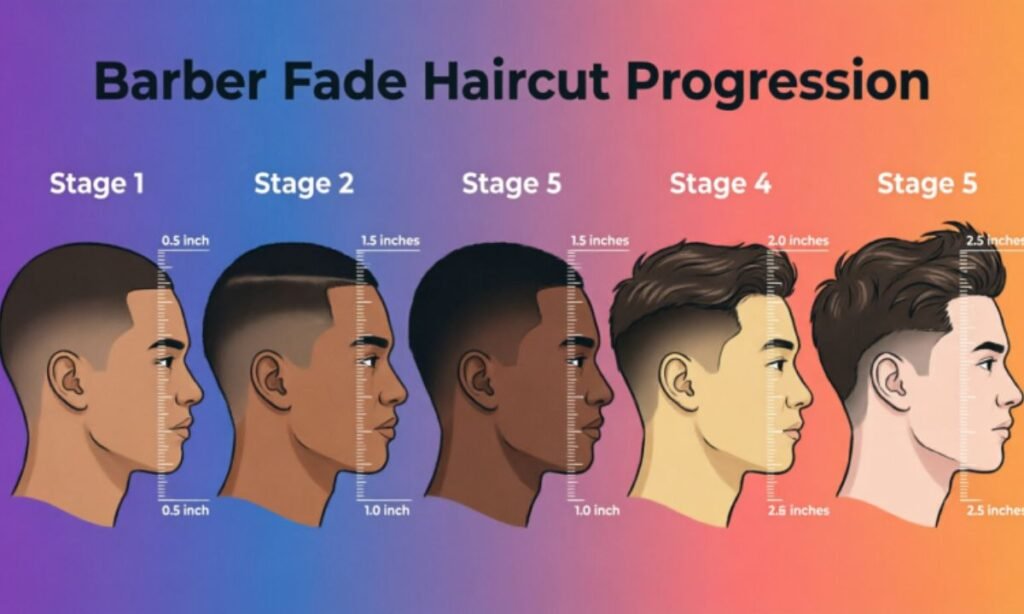
Hair grows at roughly the same rate for almost everyone — about half an inch (1.2–1.5 cm) per month, or around 0.4 mm per day. That number sounds small, but on a fade, it’s everything. A fade’s entire look depends on contrast: short sides, longer top, and a clean blend in between. As soon as regrowth starts filling in that contrast, the style begins to soften.
Several factors decide how fast your fade actually loses its edge:
- Fade type – The lower the fade sits (skin vs. low taper), the faster it shows growth.
- Hair texture – Straight hair reveals regrowth quickly; curly or coily hair can mask it for longer.
- Hair color contrast – Darker hair against lighter skin shows regrowth sooner than lighter or gray hair.
- Natural hair growth speed – Some people simply grow hair faster than others.
- Styling habits – Daily brushing, product use, and washing frequency all affect how “kept” a fade looks over time.
On average, most fades stay genuinely sharp for 7 to 10 days, start visibly softening by week two, and need a full reset by week three or four, depending on the fade style. Understanding this timeline is the foundation of the whole maintenance routine below.
Week 1: Fresh Fade Phase (Days 1–7)

This is the “just left the barbershop” window. The blend is seamless, the lines are crisp, and there’s genuinely very little you need to do except protect what you already have.
Goals for this week:
- Preserve the sharp lines around the hairline, neckline, and ears
- Keep the scalp clean and healthy without disturbing the fade
- Avoid habits that cause premature blurring
What to focus on:
- Wash smart, not often. Wash your hair every 2–3 days with a gentle, moisturizing shampoo. Overwashing strips natural oils and can make short fade areas look dry or ashy.
- Sleep with care. Use a silk or satin pillowcase if possible — it reduces friction that can mess with your hairline definition.
- Style lightly. A small amount of lightweight pomade, clay, or cream is enough. Heavy product buildup dulls the fade’s natural sheen.
- Hands off the clippers. There’s genuinely nothing to trim yet. Let the cut do its job.
By day 7, you’ll usually notice the very first signs of softening — a slight fuzz along the neckline or a barely-there shadow at the temples. That’s completely normal and marks the transition into week two.
ALSO READ THIS:Low vs Mid vs High Taper Fade: Which One Should You Choose?
Week 2: Control and Clean Phase (Days 8–14)

This is where the real maintenance work begins. Regrowth is now visible enough to blur the sharpest lines, especially around the neckline, sideburns, and hairline. The good news: this is also the easiest week to manage at home.
Priorities this week:
- Clean up the borders without touching the actual fade blend
- Manage frizz and flyaways on top
- Keep the scalp healthy to support even regrowth
Weekly action steps:
| Task | Frequency | Tool Needed |
| Neckline touch-up | Once, around day 8–10 | Cordless trimmer |
| Sideburn cleanup | Once or twice | Trimmer or edger |
| Wash | Every 2–3 days | Moisturizing shampoo |
| Styling product | Daily | Light pomade/cream |
| Brushing/combing | Daily | Boar-bristle brush or comb |
A quick trim of the neckline and sideburns — using the natural line your barber already carved — can restore a surprising amount of sharpness without needing a full barber visit. This is a touch-up, not a recut. The actual fade blend on the sides should still be left to a professional.
By the end of week two, most fades have lost their “just cut” shine but still look intentional and put-together — as long as the edges have been kept clean.
Week 3: Stretch Phase (Days 15–21)

Week three is the tipping point. The gradient that made your fade look sharp starts flattening out, and the contrast between the top and sides becomes noticeably softer. This is the phase where styling technique matters more than any product.
What’s happening to your hair:
- The blend zone thickens, softening the transition
- Hairline and neckline need attention every few days, not weekly
- Curl pattern (if you have one) starts showing more texture on top
How to stretch your fade through week 3:
- Increase touch-up frequency. Move from a once-a-week trim to touch-ups every 4–5 days on the neckline and sideburns.
- Use styling to your advantage. A textured, slightly messier style on top can actually disguise a softening fade better than trying to keep it slick.
- Deep condition once. A weekly deep conditioner or hair mask (especially for curly or coily textures) keeps hair looking healthy even as the shape grows out.
- Watch the “3-week rule.” For high and mid fades, three weeks is typically the outer limit before the cut looks visibly grown out. Low fades and tapers can often stretch further.
If your schedule or budget doesn’t support a barber visit every two weeks, this is the phase where a slightly looser style — like a taper instead of a skin fade — pays off, since it hides regrowth more gracefully.
Week 4 and Beyond: Reset Phase

By week four, most fades — especially high and skin fades — have lost their defining contrast. The sides have grown out enough that the “fade effect” is mostly gone, and what’s left is closer to a regular short haircut.
Signs it’s time for a full reset:
- The line between the top and sides has disappeared
- Neckline and sideburn touch-ups no longer restore a sharp look
- Hair on the sides feels closer in length to the top
Your options at this stage:
- Book a full recut. This is the most reliable way to bring back true fade sharpness.
- Let it grow into a new style. Some men use week four as a transition point into a longer, low-maintenance cut.
- Do a self-maintenance fade (advanced only). If you’re experienced with clippers and guards, a basic at-home blend can hold you over — but this carries real risk of an uneven result if you’re not confident.
For most people, week four is simply “rebooking week.” Setting your next appointment before you leave the chair — rather than waiting until the fade is fully grown out — is the single easiest way to stay consistently sharp.
Fade Type Maintenance Differences
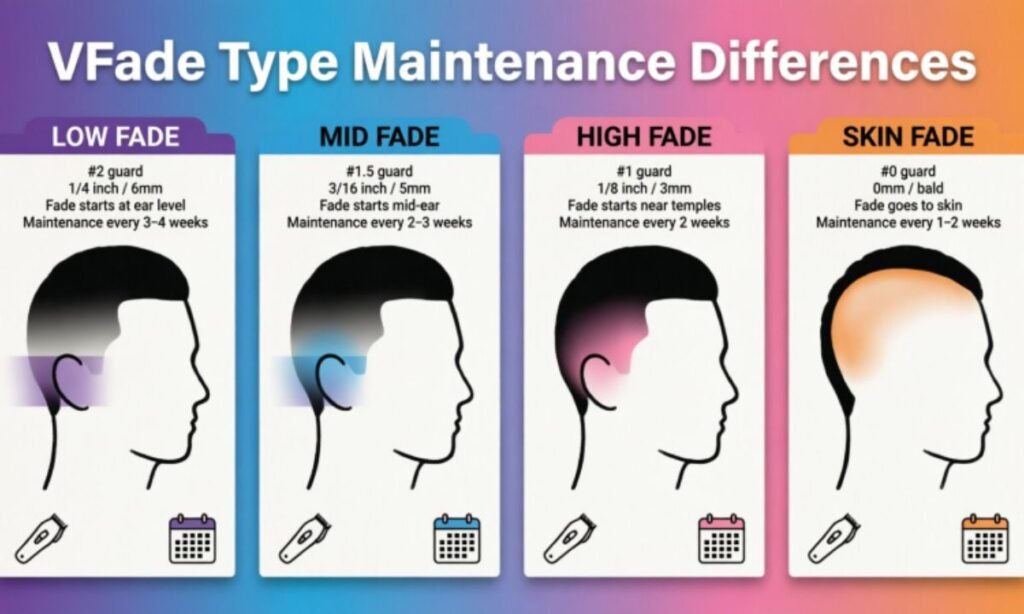
Not all fades grow out at the same speed. The height and closeness of the fade directly determines how often you’ll need touch-ups and full recuts.
| Fade Type | Looks Freshest For | Needs a Touch-Up By | Full Recut Recommended |
| Skin/High Fade | 5–7 days | Day 10–12 | Every 2 weeks |
| Mid Fade | 7–10 days | Day 14 | Every 2–3 weeks |
| Low Fade/Taper | 10–14 days | Day 18–21 | Every 3–4 weeks |
Key takeaway: the closer the fade sits to skin level, the faster it will need attention. If low-maintenance is your priority, a low fade or taper will save you both time and money over a year of haircuts.
What You Can Safely Do at Home

There’s a lot you can maintain yourself without risking the overall shape of your fade. Stick to these safe zones:
- Neckline cleanup with a cordless trimmer, following the existing line
- Sideburn trims to keep both sides even
- Brushing/combing daily to train hair direction
- Light product application to control frizz and add texture
- Regular washing with a moisturizing, sulfate-light shampoo
- Spot-checking symmetry in a mirror before and after any touch-up
These small habits genuinely extend how long a fade looks intentional, even as the blend softens underneath.
What You Should Never Do
Some tasks are simply outside the scope of safe at-home maintenance. Attempting them without training is the number one cause of uneven, “hacked-at” looking fades.
- Don’t attempt the actual fade blend yourself. Blending between guard lengths requires a trained hand and the right technique — a wrong angle creates a visible line instead of a gradient.
- Don’t use a single clipper guard all over. This removes the contrast that defines a fade entirely.
- Don’t skip guards or trim without a mirror on both sides. Uneven trims are hard to fix without going shorter than planned.
- Don’t over-wash or over-style. Product buildup and excessive washing both damage scalp health, which affects how evenly hair grows back.
- Don’t ignore the sides while over-styling the top. A messy top paired with an overgrown side blend looks unkempt, not intentional.
Simple Weekly Fade Maintenance Checklist
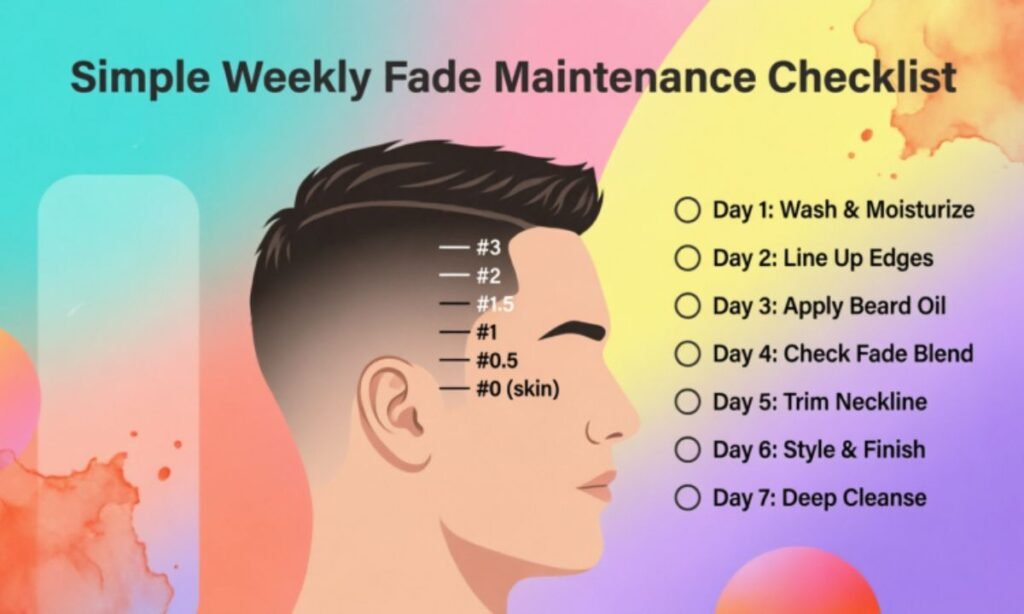
Use this quick checklist to stay on track without overthinking it:
- [ ] Wash hair every 2–3 days with a moisturizing shampoo
- [ ] Apply a light styling product daily
- [ ] Brush or comb hair daily to maintain direction
- [ ] Trim neckline every 5–7 days with a cordless trimmer
- [ ] Touch up sideburns as needed to keep them even
- [ ] Deep condition once a week (especially for curly/coily hair)
- [ ] Rebook your barber appointment before your current fade fully grows out
- [ ] Reassess fade sharpness every Sunday to plan the week ahead
Common Fade Maintenance Mistakes
Even well-intentioned routines can go wrong. These are the mistakes that shorten a fade’s lifespan the fastest:
- Waiting too long between touch-ups. Letting the neckline and sideburns grow out unchecked makes the whole cut look unkempt faster than the fade itself softening.
- Overwashing the scalp. Daily shampooing strips natural oils, drying out short fade areas and making them look patchy.
- Using heavy products. Thick pomades or gels can flatten texture and make regrowth more obvious, not less.
- Trying to fix the blend at home. This is the fastest way to turn a soft fade into an uneven one that needs a corrective cut.
- Ignoring hair texture. Curly and coily hair need more moisture and different maintenance timing than straight hair — a one-size-fits-all routine doesn’t work.
- Skipping the pre-booked appointment. Without a standing schedule, it’s easy to let a fade grow out for six weeks instead of three.
Frequently Asked Questions
How often should I get my fade touched up?
Most fades need a full recut every 2–3 weeks, with light neckline and sideburn touch-ups every 5–7 days in between.
Can I maintain my fade completely at home?
You can safely handle the neckline, sideburns, and styling, but the actual blend should be left to a barber to avoid uneven results.
Why does my fade grow out faster than my friend’s?
Hair growth speed, texture, and hair-to-skin color contrast all affect how quickly regrowth becomes visible.
Does hair texture affect fade maintenance?
Yes. Curly and coily hair hide regrowth longer than straight hair, which shows uneven blending sooner.
What’s the best fade type for low maintenance?
A low fade or taper holds its shape longest, often looking presentable for 3–4 weeks between cuts.
Is it bad to wash a fade every day?
Daily washing can dry out the scalp and short fade areas — every 2–3 days with a moisturizing shampoo is better.
Can weather affect how my fade looks?
Yes. Humidity can cause frizz that blurs clean lines, while dry air can make short areas look flaky or rough.
Conclusion
A sharp fade isn’t a one-time result — it’s the outcome of a routine. By understanding how your hair grows and matching your care to each phase (fresh, control, stretch, and reset), you can keep your fade looking intentional for weeks instead of days. Stick to safe at-home habits like neckline trims and light styling, leave the actual blending to your barber, and set your next appointment before you need it. Do that consistently, and your fade will always look like you just walked out of the chair.