

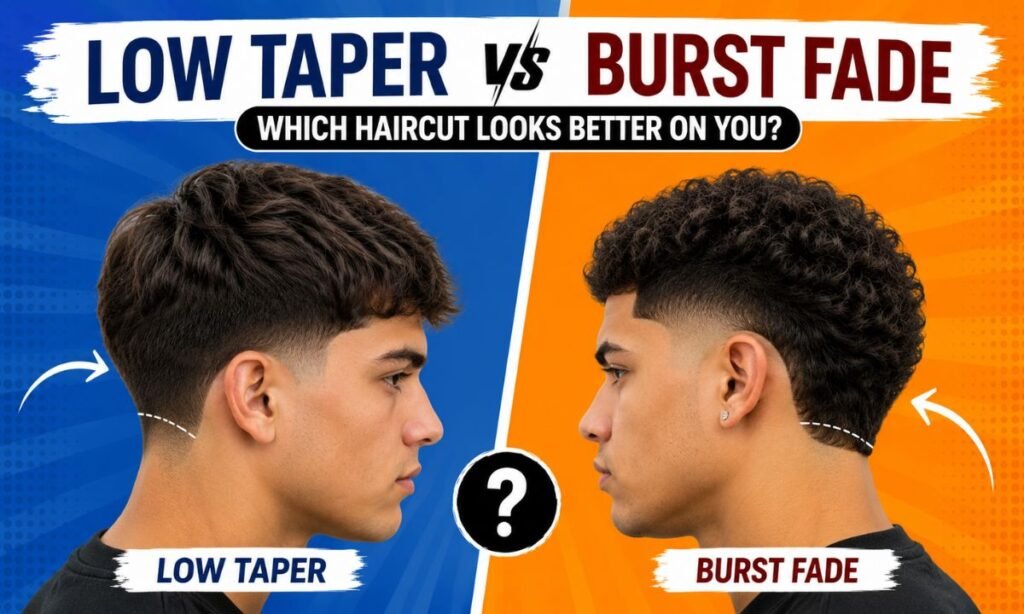
Choosing between a low taper fade and a burst fade is one of the most common dilemmas men face in the barber’s chair. Both cuts are clean, modern, and low-maintenance in their own way — but they create very different vibes. A low taper fade gives you a soft, professional finish that blends naturally into your hairline. A burst fade wraps around the ear in a sharp curve, creating a bolder, more fashion-forward statement.
So which one actually suits you? It depends on your hair type, face shape, lifestyle, and how much contrast you want. This guide breaks down every difference — from maintenance and styling to face shape and beard pairing — so you can walk into your next barber appointment knowing exactly what to ask for.
What Is a Low Taper Fade?
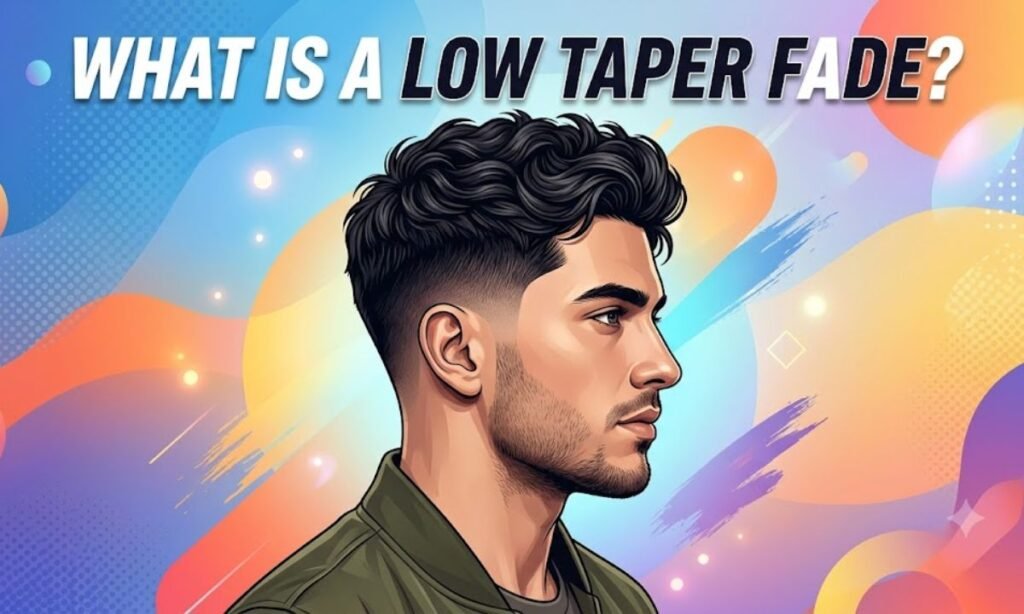
A low taper fade is a subtle haircut where the hair gradually shortens near the hairline, ears, and neckline, while the rest of the sides stay fuller and longer. Unlike a skin fade or high fade, the blending only happens close to the skin, so the contrast is soft and barely noticeable from a distance.
Key features of a low taper fade:
- The fade starts low, usually just above the ear and around the nape of the neck
- Most of the side hair is preserved, giving a fuller, natural look
- Works well with almost any hair length on top, from a short crop to a slicked-back style
- Creates a clean, polished outline without drawing too much attention
- Considered one of the safest, most versatile fade styles for everyday wear
Because the transition is gentle, a low taper fade suits conservative settings like offices, interviews, and formal events. It’s the type of haircut that looks tidy without screaming for attention — clean, classic, and easy to maintain.
What Is a Burst Fade?
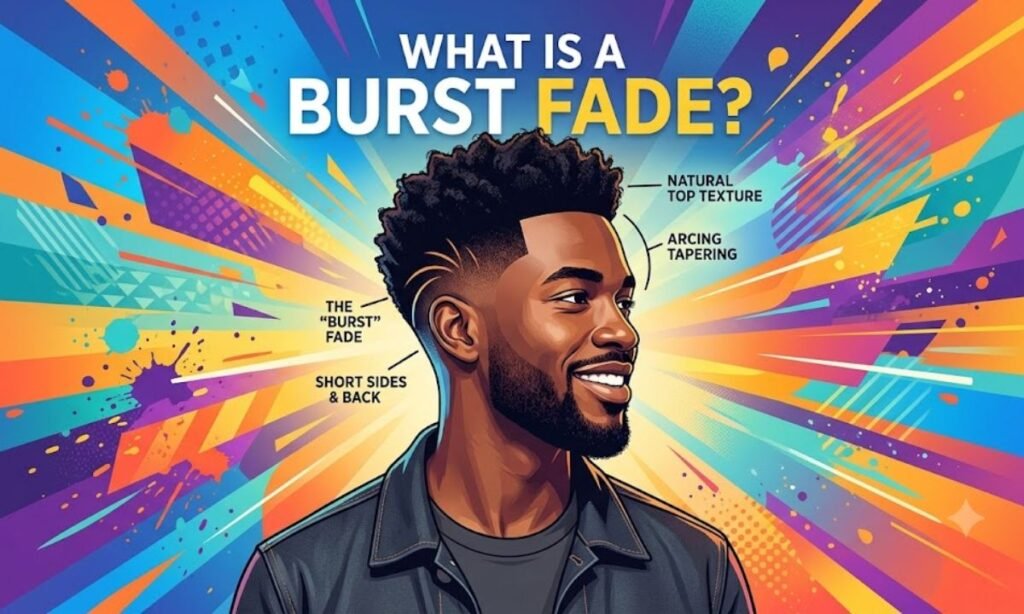
A burst fade is a curved variation of the classic fade that wraps around the ear in a half-moon or “burst” shape. Instead of blending evenly across the sides and back, the fade is concentrated around the ear area, while the hair at the back of the head is left longer — often shaped into a V-cut or kept for a mullet-style look.
Key features of a burst fade:
- The fade curves tightly around the ear instead of running in a straight line
- Length is preserved at the back of the head, creating more texture and movement
- Pairs well with curly, coily, and textured hair types
- Often used with mohawks, spikes, mullets, and other creative top styles
- Delivers a sharper, edgier, more eye-catching finish than a standard fade
A burst fade is the pick for guys who want their haircut to make a statement. It’s trendier, more dynamic, and works especially well if you like experimenting with your style.
ALSO READ THIS:https://thehairsmaster.com/best-hispanic-mexican/
Low Taper vs Burst Fade – Main Differences
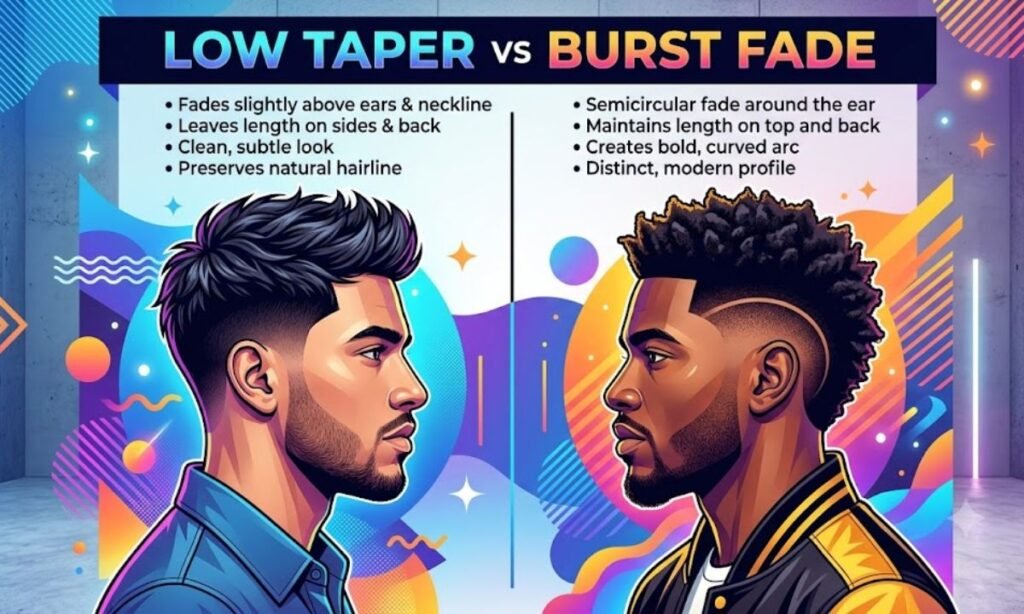
Here’s a side-by-side comparison to make the differences easy to understand at a glance.
| Feature | Low Taper Fade | Burst Fade |
| Fade shape | Straight, gradual line near the hairline | Curved, half-moon shape around the ear |
| Contrast level | Low to medium | Medium to high |
| Hair kept at back | Minimal difference from sides | Often longer, more texture |
| Overall vibe | Clean, professional, classic | Bold, trendy, creative |
| Best for | Office, formal settings, everyday wear | Casual, streetwear, fashion-forward looks |
| Maintenance frequency | Every 3–4 weeks | Every 2–3 weeks |
| Skill level required from barber | Moderate | Higher (precision curve) |
The biggest difference comes down to shape and attention. A low taper blends in. A burst fade stands out. Neither is “better” in general — it depends on the image you want to project.
Which Haircut Looks More Professional?
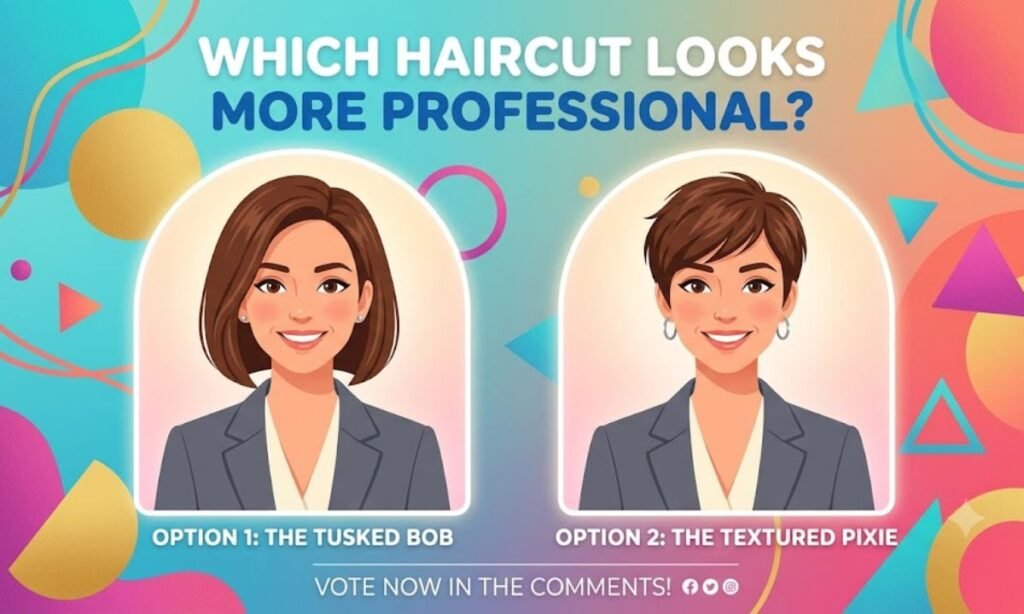
If you need a haircut for a corporate job, an interview, or a formal setting, the low taper fade is generally the safer and more professional option. Because the fade is subtle and stays low near the hairline, it doesn’t draw much attention and keeps a neat, buttoned-up appearance.
The burst fade isn’t unprofessional, but it does carry a more fashion-forward, youthful energy because of its sharper curve and longer back section. It works great for:
- Creative industries (design, music, media)
- Casual workplaces with relaxed dress codes
- Everyday street style and social settings
If your workplace has a strict dress code, stick with the low taper. If you have more freedom to express your personal style, the burst fade gives you room to stand out.
Which One Is Easier to Maintain?
Both cuts need regular trims to keep their shape, but the low taper fade generally requires less upkeep.
Low taper fade maintenance:
- Touch-ups every 3–4 weeks
- Softer blend means grow-out looks less messy
- Minimal daily styling required
Burst fade maintenance:
- Touch-ups every 2–3 weeks to keep the curve sharp
- The rounded shape grows out faster and loses definition quicker
- May need more product to maintain texture on the longer back section
If you want a low-effort haircut you can leave for a month without visiting the barber, go with the low taper. If you don’t mind more frequent visits for a sharper look, the burst fade is worth the extra maintenance.
Best Hair Types for Low Taper vs Burst Fade
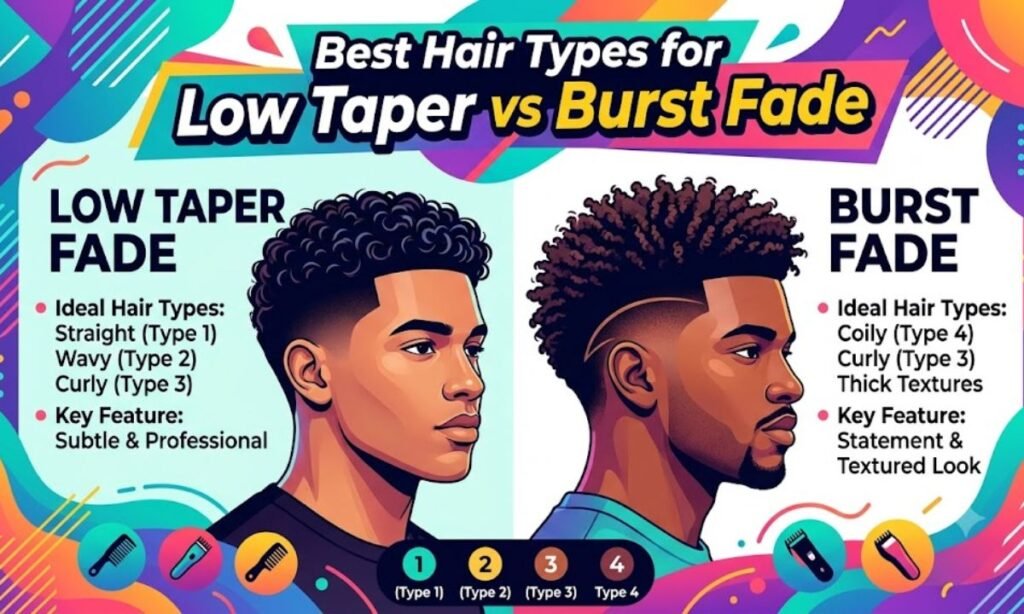
Not every hair type reacts the same way to these two cuts. Here’s how each style performs across common hair textures.
Straight Hair
Straight hair works beautifully with a low taper fade because the smooth texture makes the blend look extra clean and seamless. A burst fade also works but may need extra styling product to hold its curved shape, since straight hair tends to fall flat.
Curly Hair
Curly hair is where the burst fade truly shines. The rounded shape of the fade complements the natural bounce and volume of curls, framing the face nicely. A low taper also works well with curly hair but creates a softer, less defined contrast.
Thick Hair
Thick hair holds shape well, making both cuts a great match. A low taper keeps thick hair looking controlled, while a burst fade adds movement and prevents the top from looking too bulky.
Thin Hair
For thinner hair, a low taper fade is usually the better choice. It creates the illusion of density without over-thinning the sides, whereas a burst fade’s sharper contrast can sometimes highlight thinning areas.
Wavy Hair
Wavy hair pairs naturally with both cuts. A low taper gives wavy hair a clean, tapered finish, while a burst fade adds extra texture and dimension around the ear, especially with a textured or messy top style.
Best Face Shapes for Each Haircut
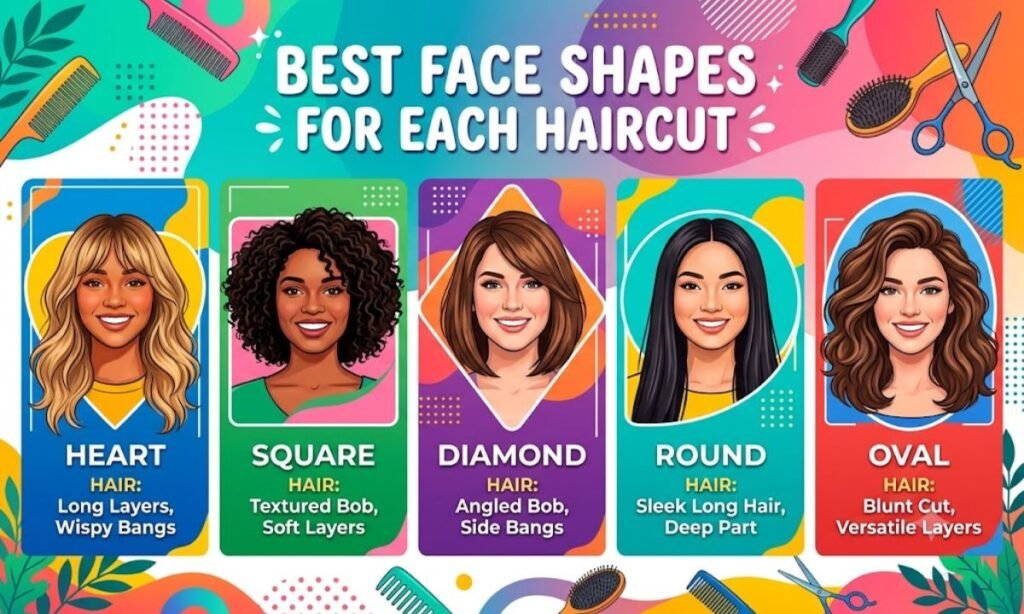
Face shape plays a big role in how flattering a haircut looks. While it’s not an exact science, these general guidelines can help.
Low Taper Works Best For:
- Round faces – adds subtle height and structure without overwhelming the face
- Square faces – softens strong jawlines with a clean, balanced fade
- Oval faces – almost any low taper style works, since oval faces suit most cuts
- Heart-shaped faces – keeps the sides simple, balancing a wider forehead
Burst Fade Works Best For:
- Diamond faces – the curved fade complements angular cheekbones
- Oblong faces – adds width and texture at the sides, breaking up length
- Triangular faces – draws attention upward and away from a wider jaw
- Square faces – the sharp curve adds an edgy contrast to strong features
Ultimately, both cuts are flexible enough to be adjusted by a skilled barber to suit almost any face shape — these are starting points, not strict rules.
Low Taper vs Burst Fade With Beard
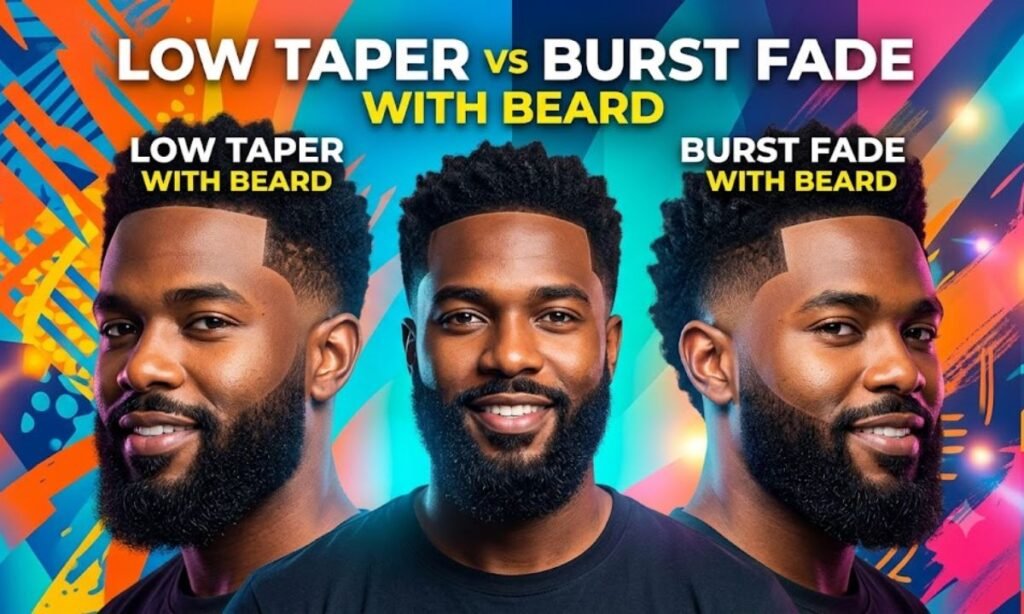
Pairing your haircut with your beard style creates a more balanced, put-together look.
Low taper fade with beard:
- Works best with a full, well-groomed beard for a classic, masculine look
- Complements short boxed beards for office-appropriate styling
- Creates a smooth transition from hairline to beard line
Burst fade with beard:
- Pairs well with a faded beard for a matching, cohesive style
- Looks sharp with textured or stubble beards
- Works great when both the haircut and beard have connected fade lines
If you want a seamless, symmetrical look, ask your barber to blend your beard fade with your haircut fade — this works especially well with the burst fade’s curved lines.
Common Mistakes to Avoid
Even a great haircut can go wrong if you overlook a few key details. Here are the most common mistakes men make with these fades.
Choosing a Fade That Does Not Match Your Lifestyle
A bold burst fade might look great on social media, but if your job requires a conservative appearance, it can cause unnecessary friction. Match your haircut to your daily environment, not just trends.
Ignoring Hair Texture
Not every fade works the same on every hair type. Skipping this consideration can lead to a haircut that looks patchy, uneven, or doesn’t hold its shape properly.
Not Showing Reference Photos
Describing a haircut in words often leads to miscommunication. Always bring 2–3 reference photos so your barber understands the exact fade height, curve, and length you want.
Waiting Too Long Between Haircuts
Both cuts lose their sharp definition as hair grows out. Waiting too long between appointments means your barber has to work harder to reshape the fade, sometimes resulting in a less clean finish.
How to Ask Your Barber for the Right Cut
Clear communication is the difference between a great haircut and a disappointing one. Here’s exactly what to say.
For a low taper:
- “I want a low taper fade that starts just above my ears and blends into the neckline.”
- “Keep most of the length on the sides — I don’t want too much contrast.”
- “Blend it low and soft, not high or sharp.”
For a burst fade:
- “I want a burst fade that curves around my ear in a half-moon shape.”
- “Keep the back longer and blend the sides shorter.”
- “Make the curve tight and defined, not blurry.”
Always take:
- 2–3 clear reference photos from different angles
- Notes on how short you want the sides (in millimeters or clipper guard number, if known)
- A photo of your current haircut so your barber can plan the transition
Which One Should You Pick?
If you want a clean, professional, low-maintenance haircut that works in almost any setting, choose the low taper fade. If you want a bolder, trendier look that shows off your hair texture and personal style, go with the burst fade.
There’s no universally “better” option — it comes down to your hair type, face shape, lifestyle, and how much attention you want your haircut to draw. Both styles are timeless in their own way, and a skilled barber can tailor either one to fit your features perfectly. When in doubt, bring reference photos, communicate clearly, and trust your barber’s judgment on what will work best for your unique hair and head shape.
Frequently Asked Questions
Is a low taper fade the same as a burst fade? No. A low taper fade blends straight along the hairline and neck, while a burst fade curves around the ear in a half-moon shape.
Which fade lasts longer without a touch-up? The low taper fade typically holds its shape longer, needing a trim every 3–4 weeks compared to 2–3 weeks for a burst fade.
Can I get a burst fade with straight hair? Yes, but you may need styling product to hold the curved shape, since straight hair tends to fall flat.
Is a low taper fade good for job interviews? Yes, it’s one of the safest, most professional-looking haircuts for formal settings.
Does a burst fade work with a beard? Yes, especially when the beard is also faded to match the curved lines of the haircut.
Which fade is better for curly hair? A burst fade generally works better with curly hair, since its curved shape complements natural volume and bounce.