

Looking for a cut that stays sharp and never goes out of style? The low taper fade haircut for Black men is exactly that. It keeps the sides short and clean while the top stays full and easy to shape. Barbers love it because it works with almost any hair texture.
This style is a favorite in barbershops across the country right now. A low taper fade blends slowly from the neckline up, so there’s no harsh line anywhere. It suits round faces, square faces, oval faces, basically everyone walks out looking put together.
You don’t need a special occasion to get this cut. Whether you’re heading to work, a wedding, or just want a fresh look, the low taper fade haircut for Black men fits right in. It’s low maintenance too, which is a huge plus if you’re busy.
In this piece, we’ll break down how to ask for it, the best variations to try, and tips to keep it looking fresh between trims. By the end, you’ll know exactly what to tell your barber.
What is a low taper fade haircut?
A low taper fade is a haircut where the hair gradually shortens starting near the hairline, ears, and neck, and blends up into longer hair on top. The word “low” tells you where the fade begins. It starts close to the skin around the bottom of the head instead of climbing up toward the crown.
Think of it as the quiet cousin of the high fade. It does not shout for attention. The blend is subtle, the transition is smooth, and most of your hair stays put. That is exactly why so many guys pick it as their go-to cut for work, school, or just everyday life.
Barbers usually use clippers with guard lengths ranging from a 0 or 1 near the base, moving up through the numbers as they work toward the top. The result is a haircut that looks sharp without screaming “new haircut” the way a high or bald fade sometimes does.
It has also been around for decades, showing up on everyone from working professionals to musicians and athletes. Trends in men’s grooming come and go, but this one keeps circling back because it is easy to wear and easy to keep clean. That kind of staying power is rare in a world where hairstyles trend for a season and disappear.
Part of the appeal is how forgiving it is. A high fade or a bald fade needs to be pretty much perfect, since any unevenness stands out against so much exposed scalp. A low fade hides small imperfections better, which takes some of the pressure off both you and your barber. It also means the cut ages well through the growing-out phase, so it never looks like it is falling apart halfway between appointments.
How it differs from a regular fade
A regular fade, sometimes called a mid or high fade, starts its shortening much higher on the head, often above the ear or near the temple. This style keeps that transition tucked low, right around the hairline and nape.
Here is the simple version. The higher the fade starts, the more scalp shows and the bolder the contrast looks. A low fade keeps more hair on the sides, so the look reads as more natural and less “chopped.”
Guys who want a subtle change, or who work in offices that expect a conservative look, tend to lean toward the low version. It gives you that clean barber shop finish without going too dramatic, and it is far easier to grow out gracefully if you decide you want more length later on.
Why a low taper fade works with Black hair textures
Black hair textures range from tight coils to loose curls, and this cut happens to flatter almost all of them. The fade creates a frame around your natural texture instead of fighting against it.
Coily and kinky hair holds shape well on top, which means your afro, twist-out, or curl definition gets to be the star while the sides stay neat. The taper does the heavy lifting of keeping things sharp so your top can do whatever it wants.
There is also a practical side to this. Textured hair tends to shrink and puff, especially with humidity or after a wash. A tight, low fade on the sides balances that volume instead of making your head look uneven. It is one reason barbers who specialize in Black hair recommend this cut so often, and why it shows up constantly in barbershop portfolios and client lookbooks.
There is a cultural piece to this too. In a lot of barbershops that specialize in Black hair, the low taper fade sits alongside the classic bald fade and the high top as one of the go-to requests, especially for guys who want their natural texture to stay front and center. It has become something of a default recommendation for first-time clients who are not quite sure what to ask for yet.
A few reasons it keeps showing up as a top pick:
- Low maintenance on top. You are not fighting your curl pattern, you are working with it.
- Face-framing effect. The fade draws the eye toward your features instead of your hairline.
- Works with a beard. The low blend connects easily into facial hair for guys who keep one.
- Grows out gracefully. Because the fade starts low, regrowth is less noticeable between trims.
- Photographs well. The soft contrast looks sharp in person and holds up nicely in photos too, which matters more than people admit these days.
ALSO READ “The Best Complete Guide to Taper Fade Haircut“
Best low taper fade styles for Black men
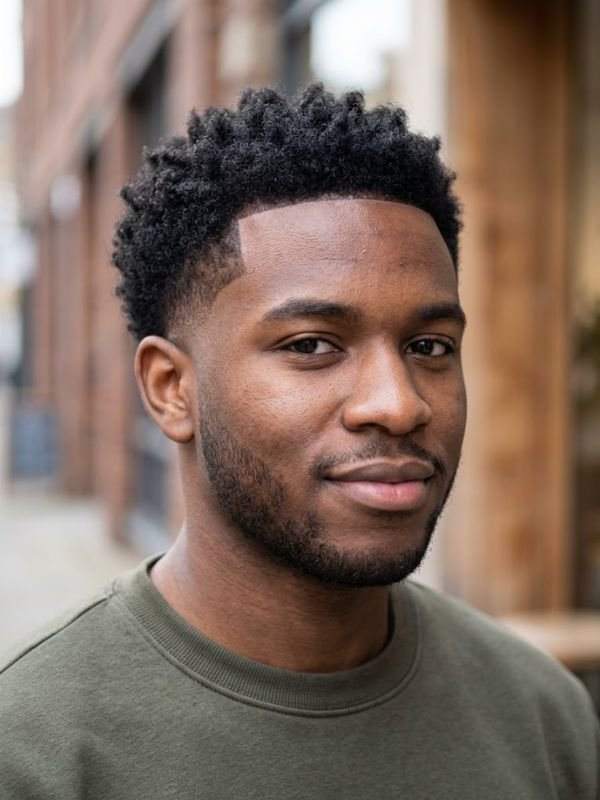
The beauty of a low taper fade is that it is a foundation, not a finished look. What you do on top is where the personality comes in. Here are the most popular directions guys take it, each with its own vibe and upkeep needs.
Low taper fade on short hair
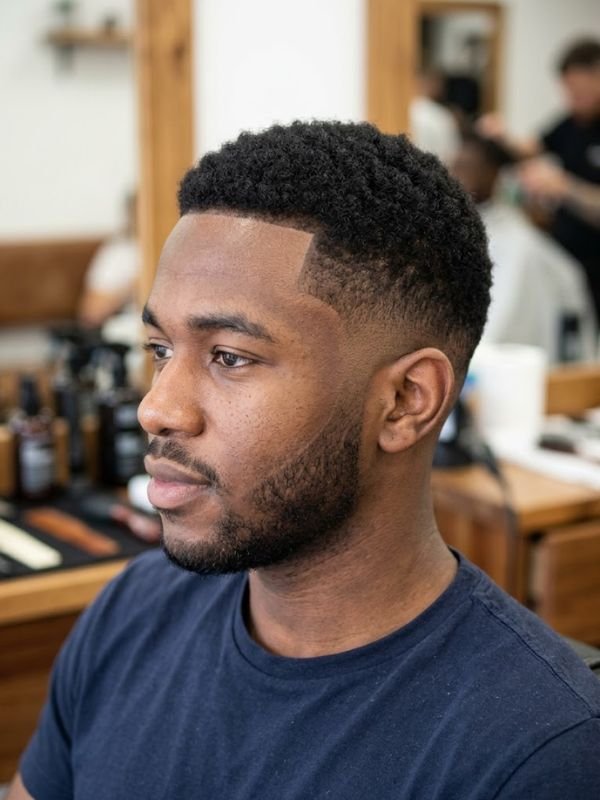
Keeping the top short is the cleanest version of this cut. It is a favorite for guys who want something they can wake up and go with, no styling products required. A short top paired with a low fade gives you that crisp, put-together look with almost zero daily effort.
This works especially well if you have a busy schedule or just prefer a low-fuss routine. Barbers often use clippers on the top too, just with a longer guard, so the whole cut blends together in one smooth motion.
It is also the easiest style to keep looking sharp between trims, since there is less length to grow out unevenly. If you travel a lot or spend time outdoors, this is usually the lowest-hassle option on this entire list.
Guys who work physical jobs or spend a lot of time under hats and helmets tend to gravitate here too. There is nothing to flatten, mess up, or reshape at the end of a long day, which makes it one of the most practical picks on this list.
Low taper fade with waves
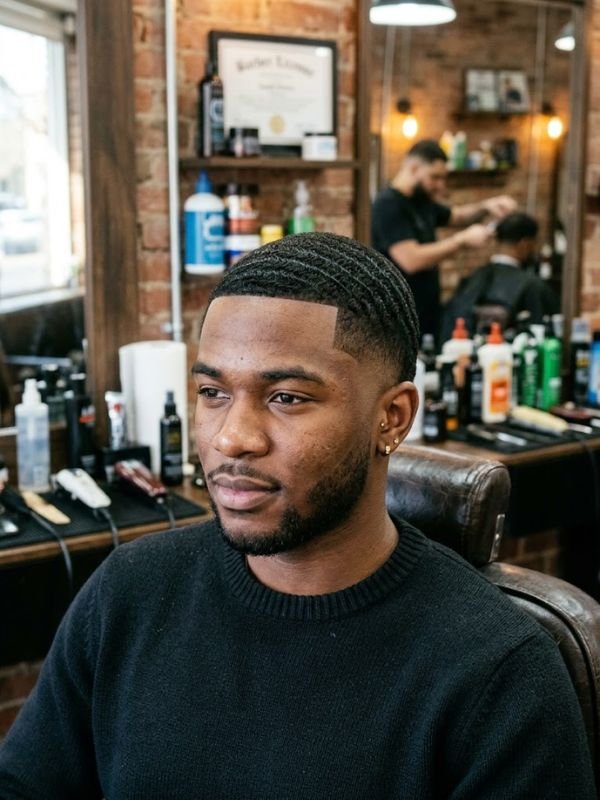
360 waves paired with a low fade is a combo that never really goes out of style. The waves ripple across the top while the taper keeps the sides tight and clean, and the contrast between the two textures is what makes the look pop.
Getting waves takes patience. You are brushing regularly, wearing a durag or wave cap, and using the right pomade to train the pattern. But once they set in, the payoff is worth it, especially with a fresh fade framing them.
Barbers recommend keeping the top a bit longer, somewhere around half an inch, so there is enough length for the wave pattern to actually show. Some guys chase 360 waves for months before they see the full spin, so patience really is the name of the game here.
A quality brush matters more than most people realize. A soft or medium bristle brush trains the hair without irritating the scalp, and consistent, gentle strokes in the direction you want the waves to flow will get you there faster than aggressive brushing ever will.
Low taper fade with curls or an afro
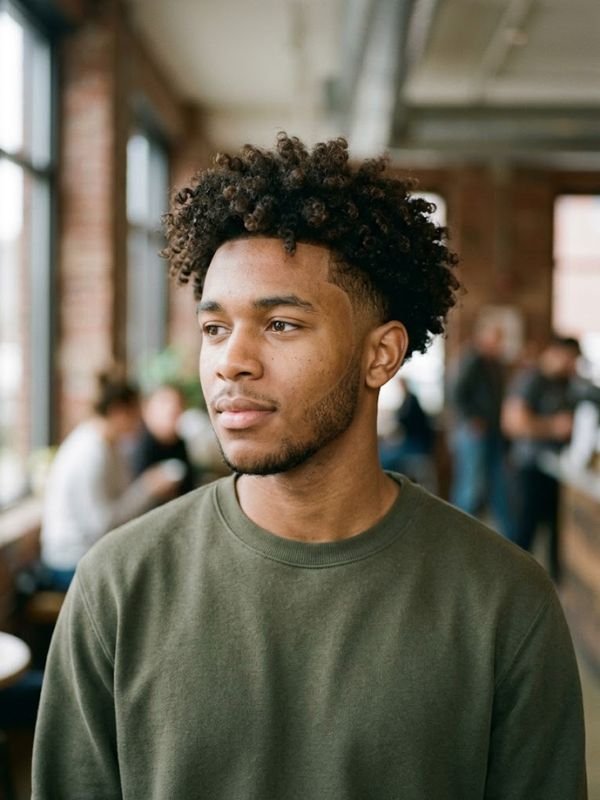
If your natural texture curls up on its own, a low taper fade with curls or a rounded afro on top is a striking look. The fade shapes the sides so the curls on top have somewhere defined to sit instead of spreading out unevenly.
For a fuller afro, barbers will taper just the perimeter while leaving more length up top for volume. For defined curls, a curl-defining cream and a diffuser after washing helps each curl hold its shape against the sharp sides.
This style tends to draw compliments because it shows off natural texture instead of hiding it. It is proof that you do not need straight or loose hair to rock a clean fade, and it has become one of the most requested combinations among barbers who work with natural textures.
A wide-tooth comb is your best friend here, both in the shower with conditioner and after with a little curl cream. Detangling gently while hair is wet cuts down on breakage and keeps the curls looking uniform instead of clumped or frizzy by the end of the day.
Low taper fade with sponge curls, twists, or locs

Sponge curls have become a go-to for guys who want short, coiled texture without growing anything long. Paired with a low fade, the look is compact, neat, and easy to maintain day to day.
Twists and locs bring a different energy. The taper handles the sides and neckline while the twists or locs stay untouched on top, growing however long you want them to. This combo is popular because it lets your locs mature naturally while your grooming still looks intentional the whole way through.
A few style notes worth knowing:
- Two-strand twists pair well with a low fade for guys growing out locs.
- Starter locs look cleaner with sharp, low sides while the roots lock up.
- Mature locs with a fresh fade give off a polished, put-together vibe for work or events.
- Sponge curls work best on shorter hair since the tool needs enough length to grip and coil properly.
If you are early in your loc journey, ask your barber to keep the taper conservative at first. It is much easier to take more off at your next visit than to fix sides that were cut too tight before your roots have fully matured.
Low taper fade with a buzz cut
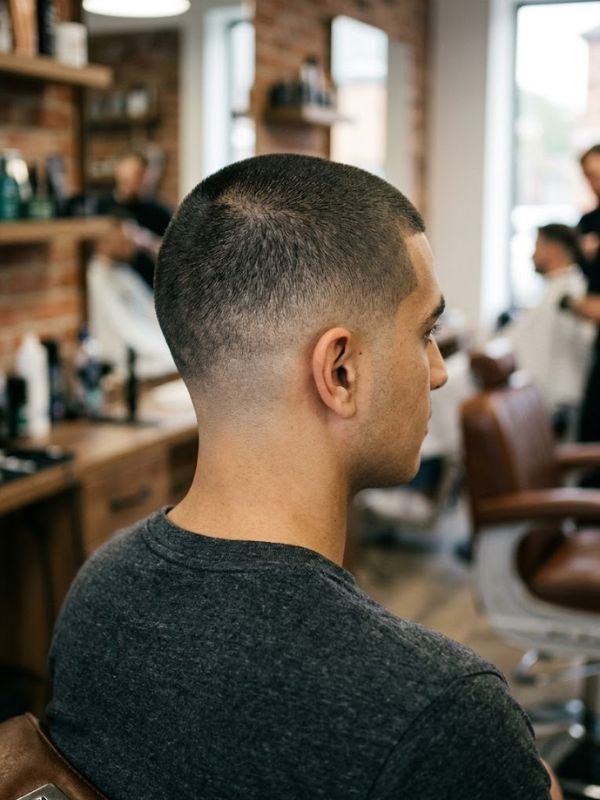
For guys who want zero styling time, a buzz cut on top with a low fade is about as simple as it gets. The whole head gets clipped, just with slightly longer guards on top than on the sides, so there is still a visible transition.
This one is popular with athletes, guys in the military, or anyone who just wants a cut that survives workouts, humidity, and hats without losing its shape.
It is also the most forgiving style if you are new to a fade and want to ease into it before trying something with more length on top. There is very little that can go wrong here, which makes it a safe first step for anyone nervous about trying a new look.
It is also the quickest cut on this list, both in the barber’s chair and in the mirror every morning. If your schedule barely leaves room for a shower, let alone styling, this is the version of the low taper fade built for you.
Low taper fade with a beard and line-up
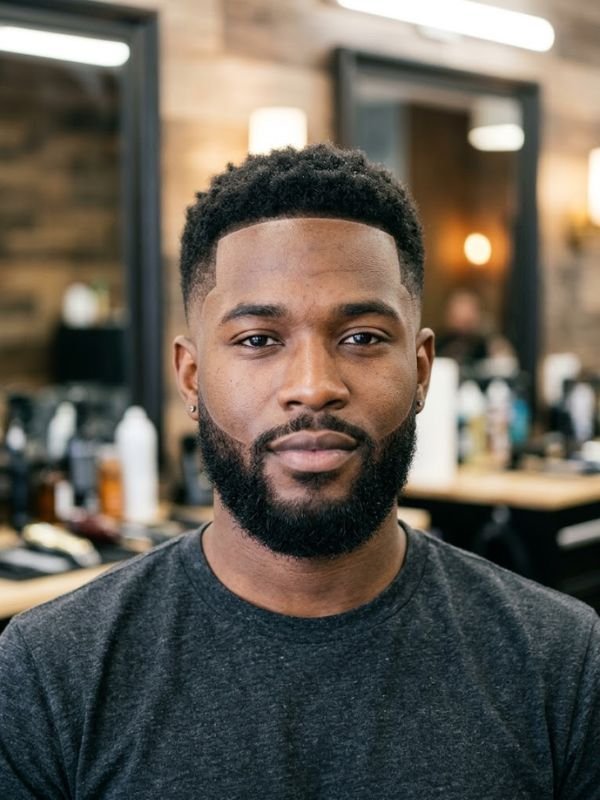
Pairing a low taper fade with a sharp beard and a clean line-up is one of the most requested combos in barbershops right now. The fade handles the sides, the line-up sharpens the hairline and beard edges, and the whole thing looks intentional from every angle.
A line-up, sometimes called an edge-up, uses a straight razor or trimmer to define crisp lines around the forehead, temples, and beard connection. When your barber blends the fade right into your beard, there is no awkward gap between hair and facial hair. It all reads as one cohesive look.
This combo is a favorite for guys headed into job interviews, first dates, or anywhere they want to look extra sharp. It also tends to photograph the best out of every style on this list, which is part of why it shows up so often on social media.
Keep in mind that a sharp line-up needs more frequent upkeep than the fade itself. Hairlines and beard edges grow out faster than the sides do, so a lot of guys book a quick line-up between full haircut appointments just to keep everything crisp.
Low taper fade without a beard
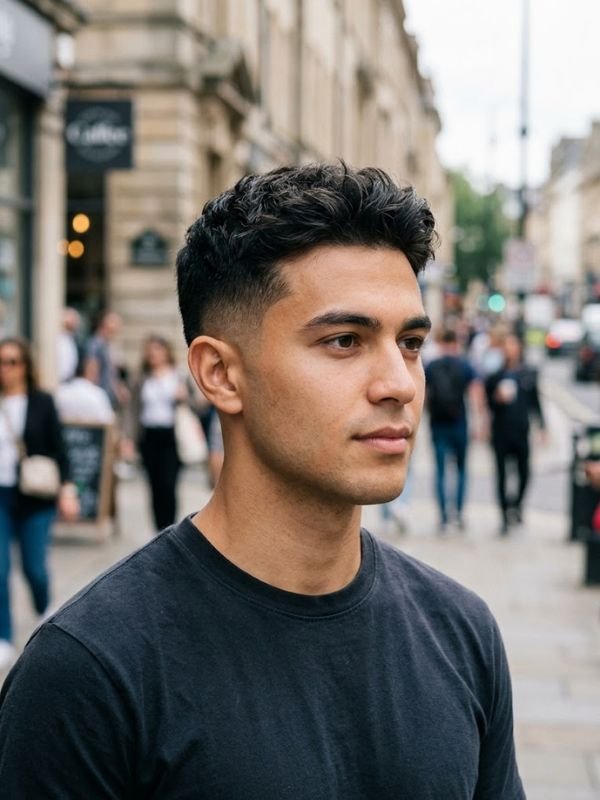
Not every guy grows facial hair easily, and that is fine. This cut stands on its own without a beard. The clean sides and defined top do plenty of the visual work.
Without a beard, more attention goes to your jawline and the shape of the fade itself, so barbers often pay extra care to symmetry and getting the blend perfectly smooth. A sharp hairline and neckline become even more important here since there is no beard to distract from any unevenness.
Plenty of guys actually prefer the clean-shaven look with this cut. It reads as youthful, sharp, and low maintenance, and it keeps the focus entirely on the quality of the fade itself.
If you shave regularly, ask your barber to time your fade appointment close to a fresh shave. A clean jawline makes it much easier to judge exactly where the hairline should sit and how tight the blend should look around your ears.
Low taper vs mid taper vs high taper fade
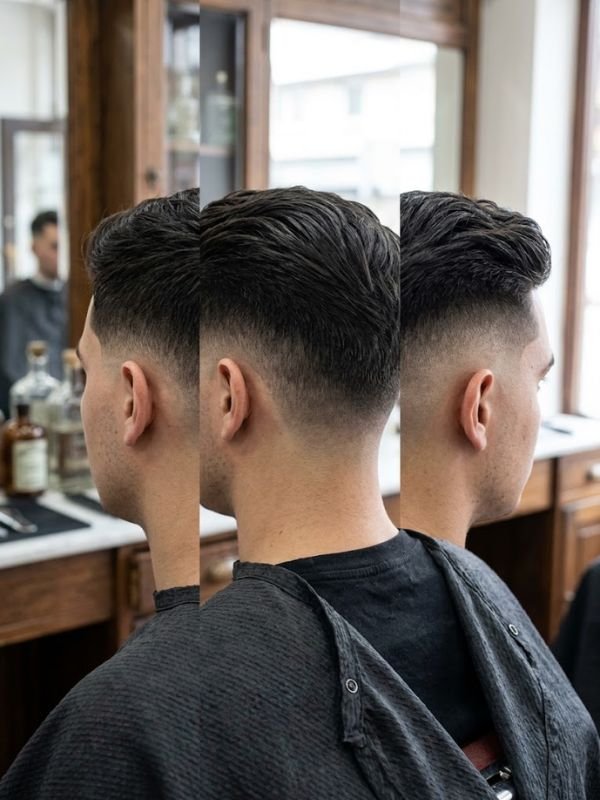
Choosing between a low, mid, or high taper comes down to where you want the fade to start and how bold you want the contrast to look. Here is a side-by-side breakdown.
| Fade Type | Where It Starts | Best For |
| Low taper fade | Just above the ears and around the nape | Subtle, professional, classic looks |
| Mid taper fade | Roughly at ear level | A balance of sharp and natural |
| High taper fade | Above the ear, closer to the temple | Bold, statement-making styles |
A low fade is the safest bet if you are not sure how dramatic you want the change to feel. It keeps more length on the sides and gives a softer overall silhouette, which is why so many first-timers start here before working their way up to bolder cuts.
A mid taper splits the difference. It shows a bit more contrast than the low version without going full skin-fade energy, making it a solid middle ground for guys who want something noticeable but not extreme.
A high taper is for guys who want the fade itself to be part of the statement. More scalp shows, the transition happens faster, and the whole look reads bolder from across the room. It also tends to need more frequent touch-ups since regrowth shows up faster near the top of the fade line.
There is no wrong answer among the three. It really comes down to how bold you want the contrast to feel and how often you are realistically willing to sit in a barber’s chair. Guys who want low commitment tend to land on the low version, while guys chasing a sharper statement usually work their way up.
How to choose the right low taper fade for your face shape
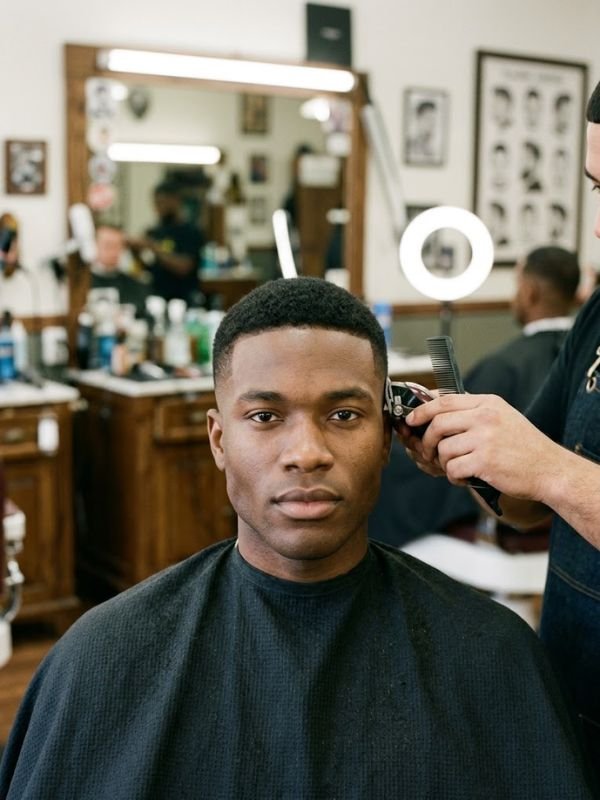
Your face shape plays a real role in how sharp a low taper fade looks on you. The goal is balance. You want the cut to complement your features, not compete with them.
| Face Shape | What to Ask For | Why It Works |
| Round | More height on top, tighter sides | Adds length and reduces width |
| Square | Textured top, soft taper | Softens strong jawlines |
| Oval | Almost any style works | Naturally balanced proportions |
| Diamond | Fuller top, low taper at temples | Balances a narrow forehead and chin |
| Oblong | Shorter top, fuller sides | Prevents the face from looking longer |
If you have a round face, ask your barber for more volume on top since added height creates the illusion of length. Guys with square faces usually look great with a slightly textured top that softens sharp jaw angles instead of emphasizing them further.
Oval face shapes have it easy. Almost every version of this fade, from buzzed to curly, tends to look balanced without much adjustment needed. Diamond face shapes benefit from a fuller top paired with a tight taper right at the temples to soften narrow points near the forehead and chin.
Oblong faces do best avoiding too much height on top, since extra length up there can stretch the face even more. A fuller, wider silhouette on the sides helps balance things out and keeps proportions looking even.
It never hurts to ask your barber directly what they think works with your bone structure. A good barber will look at your face shape before they even pick up the clippers, and their eye is usually sharper than a mirror at home.
If you are not sure which category your face falls into, a rough rule of thumb helps. Stand in front of a mirror and look at the widest points of your forehead, cheekbones, and jaw. Whichever measurement stands out the most usually points you toward the right category, though a good barber can confirm it in seconds.
What to ask your barber for a low taper fade
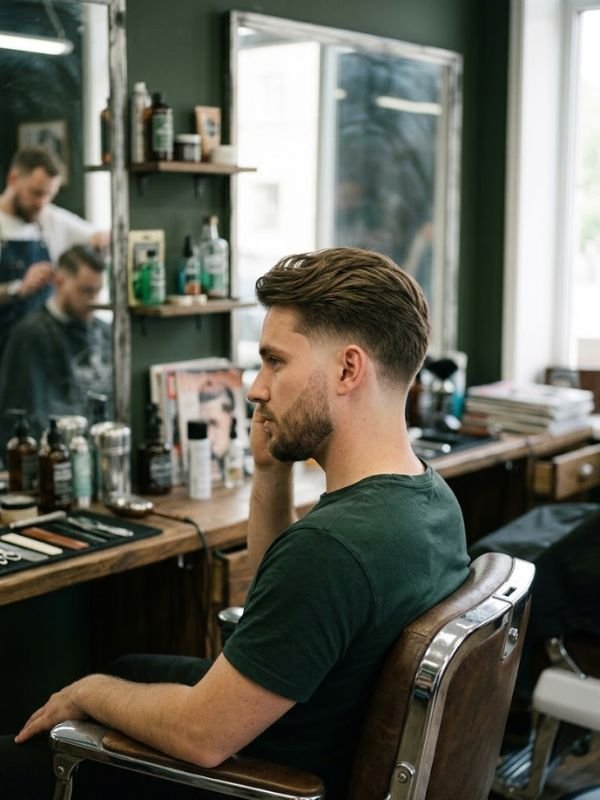
Walking into a shop with the right words can make or break your haircut. Barbers see dozens of clients a week, and being specific saves everyone time and gets you the exact look you want.
Guard lengths and fade height
Clipper guards are numbered, and each number corresponds to a specific length in inches. Knowing the basics helps you communicate clearly instead of just saying “make it low.”
| Guard Number | Approximate Length | Common Use |
| 0 to 1 | Skin to 1/8 inch | Bottom of the fade, near the skin |
| 2 to 3 | 1/4 to 3/8 inch | Mid-blend section |
| 4 and up | 1/2 inch and longer | Top of the fade, blending into longer hair |
Tell your barber you want the fade to start low, ideally right around the hairline or just above the ears, and ask them to blend it gradually rather than leaving any harsh lines. If you want a skin fade at the very bottom, mention that specifically. Otherwise most barbers will assume you want a soft, shadow-style fade instead of one that goes all the way to the skin.
It also helps to mention how much length you want to keep on top before your barber even picks up a clipper guard. Saying something like “leave enough for a twist-out” or “keep it short enough for waves” gives them a clear target from the very first cut.
Do not be afraid to speak up mid-cut either. If something feels off while the clippers are still in your barber’s hand, that is the moment to say so. It is far easier to adjust a fade in progress than to fix it once you are already out the door.
Why a reference photo helps
Words can mean different things to different people. What one barber calls “low” might be someone else’s “mid.” Bringing a reference photo, even a rough one saved on your phone, closes that communication gap fast.
Try to find a photo of someone with a similar hair texture and face shape to yours. A low fade on straight hair looks different from the same cut on coily hair, so matching texture matters more than matching the exact style.
If you cannot find a perfect match, that is fine too. Just point out specific details you like, whether that is the fade height, the top length, or how sharp the hairline is. Most barbers would rather ask a few extra questions upfront than guess and get it wrong.
How to maintain a low taper fade
A fresh cut looks great on day one. Keeping it that way for weeks takes a little routine, but nothing complicated.
How often to get a touch-up
Most guys need a touch-up every two to three weeks to keep this fade looking sharp. Because it starts low, regrowth is a bit more forgiving than with a high fade, so you might be able to stretch it a few extra days if needed.
If you keep your top very short or go with a buzz cut, you may need trims slightly more often since any unevenness shows up faster on shorter lengths. Guys with faster hair growth may also find themselves closer to the two-week mark rather than three.
A lot of guys find their own personal rhythm after a couple of cuts. Some stretch to a full month with light touch-ups in between, while others prefer to stay on a strict two-week schedule so the fade always looks freshly done. Either way works, it just depends on how sharp you like things to look day to day.
Daily and weekly routine
Keeping your cut fresh between barber visits comes down to a few simple habits.
- Moisturize daily. A light leave-in or oil keeps textured hair from drying out and looking dull.
- Wash weekly, or every other week. Overwashing strips natural oils, especially for coily textures.
- Brush or comb regularly if you are training waves or keeping curls defined.
- Sleep with a durag or bonnet to protect the shape overnight and prevent frizz.
- Trim the hairline yourself between visits if it starts looking uneven, using a small trimmer.
- Check your neckline in a mirror weekly, since it grows out faster than most people expect.
Keeping the hairline fresh
The hairline and neckline are the first things that start looking unkempt, usually before the rest of the fade even needs work. A quick edge-up at home with a trimmer can buy you extra days between full barber visits.
Go slow, use good lighting, and only clean up small areas at a time. It is much easier to remove more hair than to fix a line that went too far. A lot of guys keep a small handheld mirror behind them for this exact reason, since the back of the neckline is nearly impossible to see straight on.
Best products for a low taper fade on Black hair
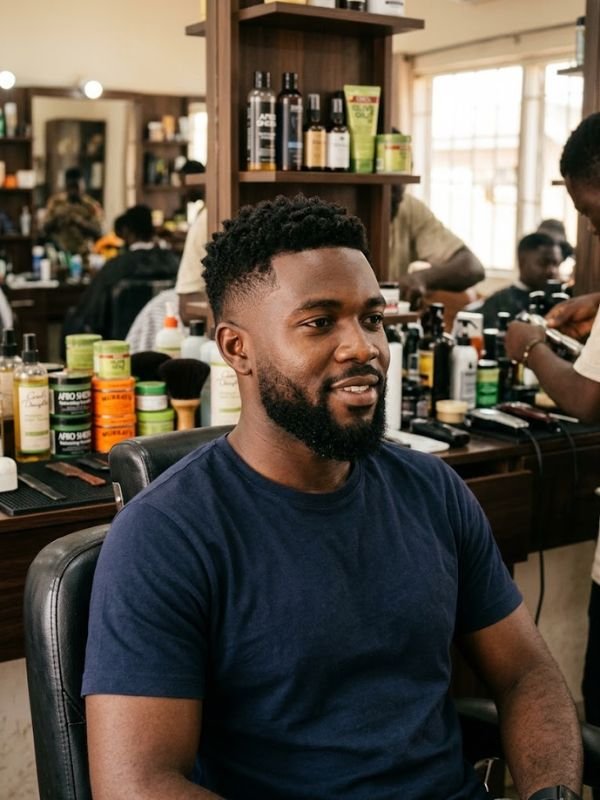
The right products make a real difference in how long this cut stays looking fresh and how healthy your hair feels in between cuts.
- Curl cream or custard for defining curls or a twist-out without weighing hair down.
- Edge control for laying down baby hairs and keeping the hairline crisp.
- Pomade or wave grease if you are building or maintaining 360 waves.
- Leave-in conditioner to keep coily and kinky textures moisturized between washes.
- Light hold gel for slicked or textured top styles that need to hold shape all day.
- Beard oil if you are pairing the fade with facial hair, to keep the connection looking neat.
- Scalp oil for the low, tightly cut sides, especially if you tend toward a dry scalp.
A little goes a long way with most of these. Using too much product on top of a fresh cut can make the sides look greasy or flatten curl definition, so start small and build up as needed rather than piling it all on at once.
Common mistakes to avoid
Even a great haircut can go sideways with a few avoidable slip-ups. Here is what to watch for.
- Waiting too long between trims. Letting a fade grow out too far makes the next touch-up harder to blend.
- Skipping moisturizer. Dry hair looks dull no matter how sharp the fade is.
- Going too aggressive with a DIY edge-up. A small mistake at home can turn into an uneven hairline that takes weeks to fully grow back.
- Not communicating clearly with your barber. Vague requests lead to results that miss the mark.
- Overusing heavy products. Too much pomade or gel weighs hair down and can clog pores along the hairline.
- Ignoring your natural texture. Fighting your curl pattern instead of working with it usually looks less polished than embracing it.
- Sitting with a barber who does not usually work with Black hair. Texture experience matters, and a mismatched skill set shows up fast in the final blend.
Low taper fade cost and appointment time
Prices vary a lot depending on your city, the shop, and whether you add a beard trim or design.
| Service | Average Price Range | Typical Time |
| Basic low taper fade | $25 to $45 | 20 to 35 minutes |
| Fade plus beard trim | $35 to $60 | 35 to 50 minutes |
| Fade plus line-up and design | $40 to $70 | 45 to 60 minutes |
Barbershops in bigger cities or specialty shops that focus on Black hair textures often charge on the higher end, but many also include extras like a hot towel or scalp massage in that price. It is worth asking upfront what is included so there are no surprises when you sit down in the chair.
Tipping norms vary by region too, but 15 to 20 percent is a fairly standard range if your barber nails the cut and takes their time with the details.
If you are on a budget, look for shops that offer loyalty cards or bundle discounts for regular visits. Since this cut needs touch-ups every couple of weeks, those small savings add up fast over the course of a year.
Is a low taper fade good for work, school, and formal events?
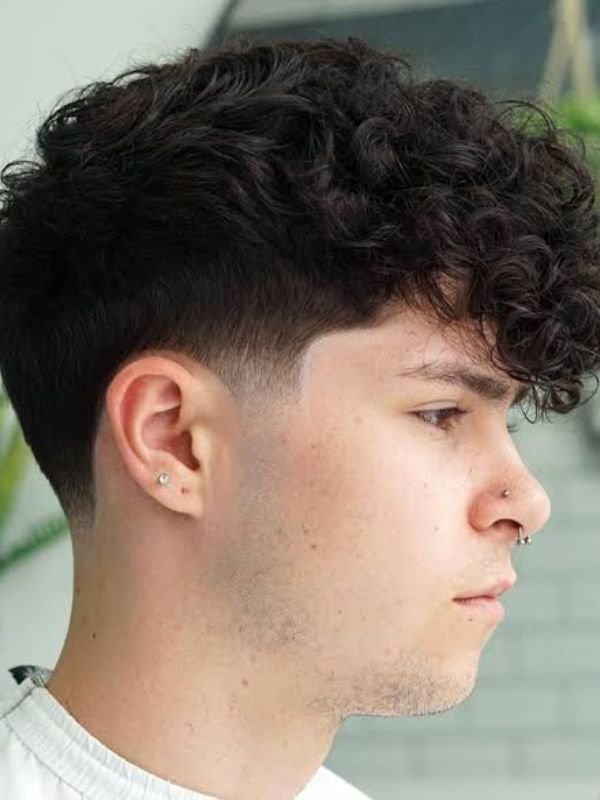
Yes, and this is actually one of the biggest reasons this haircut stays popular year after year. It reads as neat and put-together without looking flashy, which makes it a safe pick for offices, classrooms, interviews, and formal events.
Because the fade sits low and blends gradually, it avoids the more dramatic look of a high or bald fade, something that matters in more conservative environments. You still get a clean, intentional style, just without anything that might raise eyebrows in a boardroom.
For formal events like weddings or graduations, pairing the fade with a slicked or textured top and a sharp line-up takes it from everyday to dressed-up in just a few extra minutes of styling. It is one of the few cuts that genuinely works across every setting you might find yourself in during a given week.
Frequently Asked Questions
How long does a low taper fade last before needing a trim? Most guys get about two to three weeks before regrowth starts to show.
Can a low taper fade work with any hair texture? Yes, it flatters straight, wavy, curly, and coily hair textures equally well.
Is a low taper fade harder to maintain than a high fade? No, it is actually more forgiving since regrowth is less noticeable at the bottom.
Does a low taper fade suit thinning hair? Yes, the gradual blend can help disguise thinning areas near the temples.
Can I get a low taper fade with locs? Absolutely, the sides stay tapered while your locs grow freely on top.
Is a skin fade the same as a low taper fade? Not quite, a skin fade goes all the way to bare skin while a taper leaves a bit of length throughout.
How do I ask for a low taper fade without a specific photo? Describe the height, mention you want it to start near the hairline, and ask for a gradual blend.
Will a low taper fade work for a receding hairline? Yes, many guys use it specifically to soften the look of a receding hairline.
Can women get a low taper fade too? Yes, it has become increasingly popular for women as well, especially with natural hair.
Should I moisturize before or after getting the fade cut? Come in with clean, dry hair. Save the heavy moisturizing after your appointment.
Does this cut work well for a first-time fade? Yes, it is one of the most beginner-friendly fades since mistakes blend in more easily.
Final Takeaways
The low taper fade earns its popularity for a reason. It is versatile enough to pair with waves, curls, locs, or a buzz cut, subtle enough for the office, and sharp enough to turn heads at a wedding. Whether you keep it simple or add a beard and line-up, this cut adapts to your life instead of the other way around.
Bring a reference photo, know your guard numbers, and stay on top of touch-ups every two to three weeks, and you will keep this look sharp all year. It is a low-effort, high-reward haircut, and that combination is exactly why it is not going anywhere soon.