

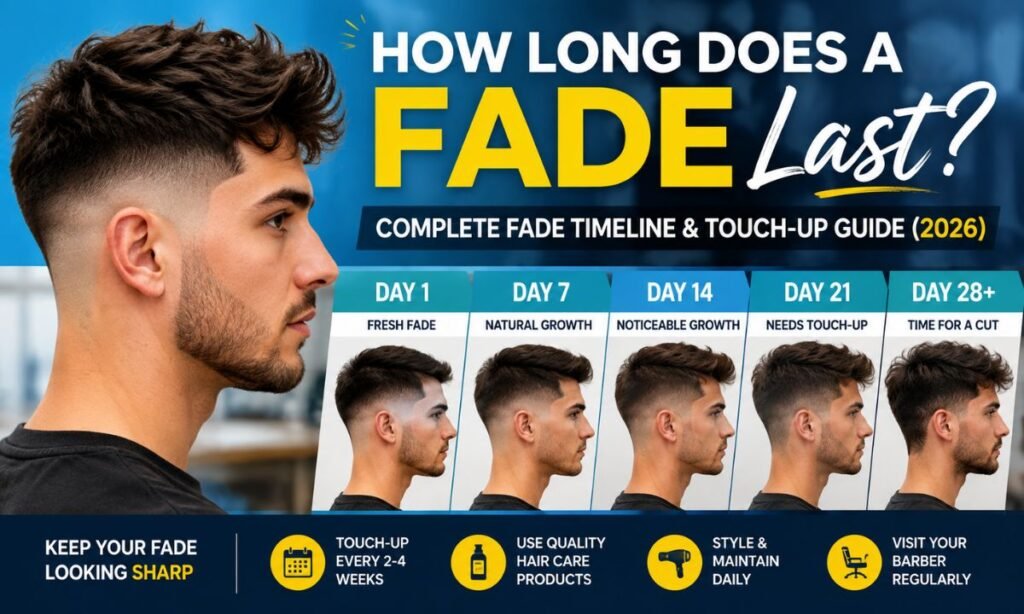
You just walked out of the barbershop with crisp lines and a clean fade haircut. Now the real question hits: how long until it starts looking messy? On average, a fade lasts 1 to 4 weeks, depending on the fade type, your hair growth rate, and how well you take care of it between visits.
This guide breaks down exactly how long each fade style holds up, what speeds up regrowth, and how to stretch the time between barber trips. No filler, just what you need to plan your next haircut.
What Is a Fade Haircut?
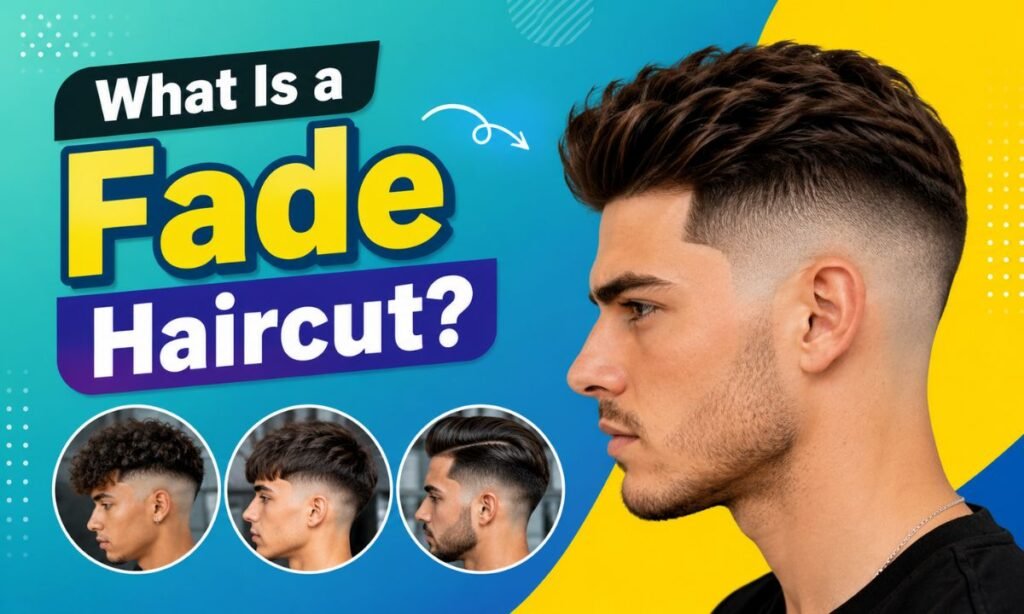
A fade haircut blends hair from long on top to short (or skin-level) on the sides and back. There’s no harsh line, just a smooth gradient from one length to the next.
Barbers create this look using clippers with different guard sizes, working section by section. The skill is in the blend. A good fade should look seamless, not choppy, with no visible line where one length ends and the next begins.
Fades have been around for decades, but they’ve stuck around because they work with basically any hair type, face shape, and top style. You can pair a fade with a pompadour, a quiff, curls, or a simple crop on top, and it still looks put together.
There are a few main types you’ll hear barbers talk about:
● Skin fade: fades all the way down to bare skin
● High fade: starts high, around the temples
● Mid fade: starts around the middle of the head
● Low fade: starts just above the ears, close to the hairline
● Taper fade: a gentler blend that doesn’t go down to skin
● Drop fade: curves down behind the ear instead of staying straight
Each one wears differently. A skin fade shows regrowth fast because it starts at zero. A low taper fade hides growth longer because the contrast is softer to begin with.
Fade vs Taper: What’s the Real Difference?
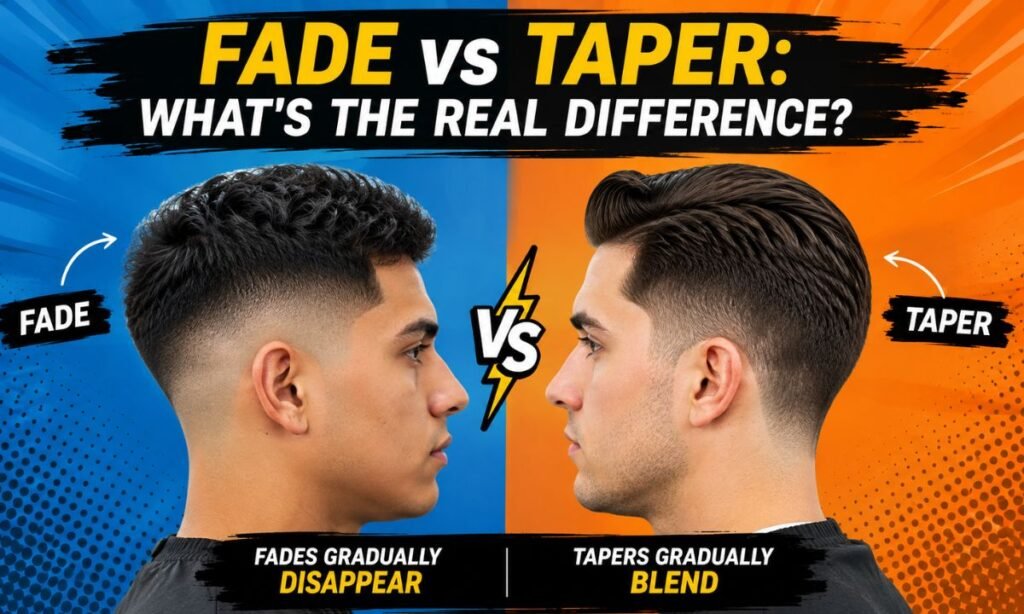
People throw these words around like they mean the same thing, but they don’t. A fade goes all the way down to skin or very close to it. A taper just shortens the hair gradually without ever exposing scalp.
That one difference changes everything about maintenance. Fades need more frequent touch-ups because the contrast between skin and hair is so obvious. Tapers are more forgiving since there’s never a hard line to begin with, just hair getting shorter as it goes down.
A low taper fade, which is what most guys mean when they say “low fade,” actually blends both ideas. It has the shape and structure of a fade but keeps enough length on the sides that it behaves more like a taper in terms of how long it lasts.
ALSO READ THIS:https://thehairsmaster.com/low-taper-vs-drop-fade/
How Long Different Fade Types Last
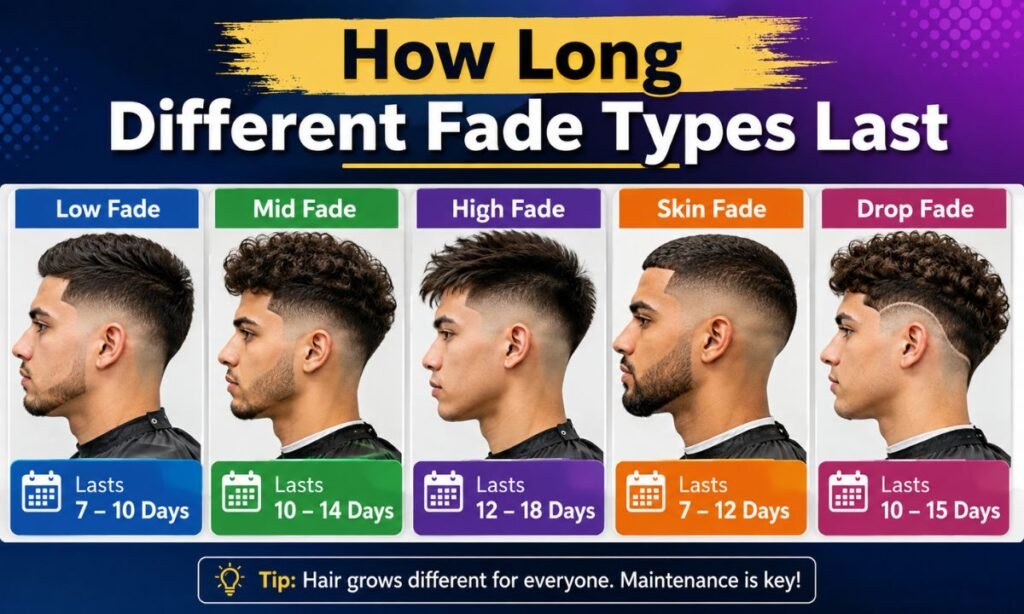
Here’s a quick breakdown so you know what to expect before you book your cut.
| Fade Type | How Long It Lasts | Touch-Up Frequency |
| Skin fade | 1 to 2 weeks | Every 1 to 2 weeks |
| High fade | 1 to 2 weeks | Every 2 weeks |
| Mid fade | 2 to 3 weeks | Every 2 to 3 weeks |
| Low fade | 3 to 4 weeks | Every 3 to 4 weeks |
| Taper fade | 3 to 4 weeks | Every 3 to 4 weeks |
| Drop fade | 2 to 3 weeks | Every 2 to 3 weeks |
The pattern here is simple. The tighter and shorter the fade, the faster it shows growth. A low taper fade wins on longevity because the transition is already soft, so new growth blends in instead of standing out.
Fade Timeline: What to Expect
Your fade doesn’t fall apart overnight. It fades out in stages (no pun intended). Here’s a rough week-by-week look at what happens.
● Week 1: Sharp lines, clean skin or close-cropped sides, zero regrowth showing. This is peak fade.
● Week 2: Slight softening around the hairline and temples. Still looks fresh, but a trained eye can spot the start of growth.
● Week 3: The blend starts to blur. Sides look thicker, and the contrast between top and sides shrinks. Low fades and tapers still hold up fine here.
● Week 4: For skin and high fades, this is usually past the point of looking sharp. For low fades and tapers, this is often the natural touch-up window.
Everyone’s hair moves through these stages at a different pace, but this gives you a baseline to plan around.
What Affects How Long a Fade Lasts?
A few things decide whether your fade holds for two weeks or stretches past a month.
● Hair growth rate: The average is about half an inch per month, but this varies a lot person to person. Faster growers need more frequent trims.
● Hair texture: Coarse or curly hair hides new growth better than straight, fine hair. Straight hair shows a fresh line of regrowth almost immediately.
● Fade type: Tighter, higher-contrast fades (skin, high) grow out faster than softer, low-contrast ones (low, taper).
● Genetics and age: Some people just grow hair quicker than others. Age and overall health can shift growth speed too.
● Lifestyle: Gym sessions, sweating, hats, and helmets all mess with your fade faster than a calm daily routine.
● Barber skill: A well-blended fade from an experienced barber grows out gradually and looks decent even at week three. A rushed or poorly blended fade shows harsh lines the moment hair starts coming back.
Age plays a role too, though people don’t talk about it much. Hair growth naturally slows down as you get older, which means a fade at 45 might actually hold its shape a little longer than the same cut at 25. Diet and general health matter as well. Hair that’s well nourished tends to grow in a bit more evenly, which keeps the blend looking cleaner for longer.
Climate and season can shift things slightly too. Hair often grows a touch faster in warmer months, so summer fades might need a bit more attention than a fade you get in the middle of winter.
How to Make a Fade Last Longer
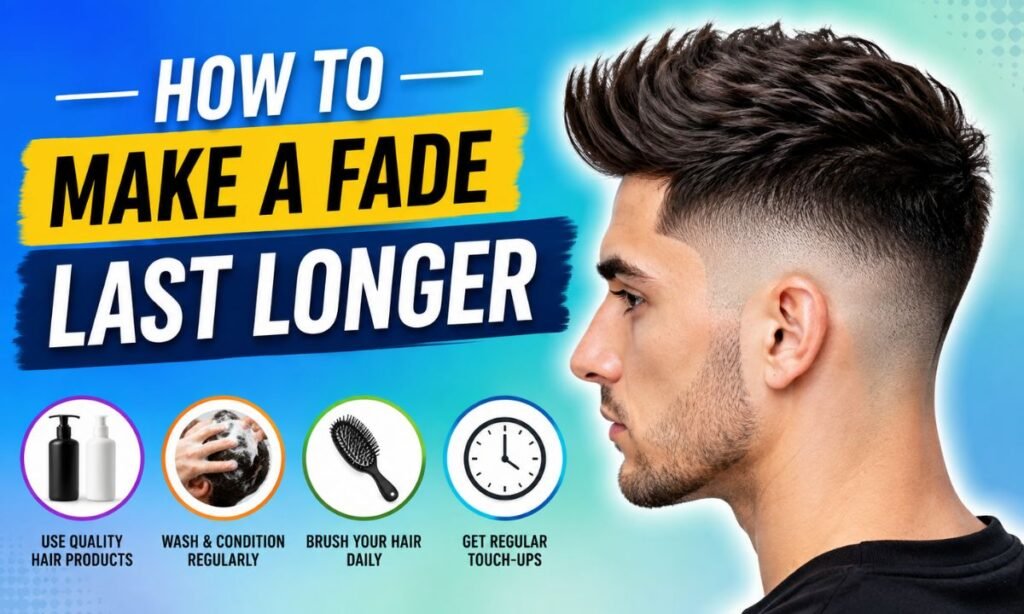
You can’t stop hair from growing, but you can stretch how long your fade looks sharp. Here’s what actually works:
1. Wash with the right shampoo. Washing two to three times a week keeps hair and scalp healthy without stripping it. A clean scalp also makes the fade line look crisper for longer.
2. Moisturize your scalp. Dry skin makes regrowth look patchy and uneven. A light scalp oil or moisturizer keeps things smooth.
3. Use light styling products. A little pomade or matte cream on top can distract the eye from growth on the sides. Don’t overdo it though, heavy product weighs hair down.
4. Protect your hairline while you sleep. A silk or satin bonnet or pillowcase reduces friction that messes up your edges overnight.
5. Clean up the neckline yourself. A trimmer at home can handle stray hairs at the neck and sideburns between barber visits. Leave the actual blend to your barber though. Home clipper work on the fade itself almost always looks off.
6. Book your next appointment before you need it. Most guys wait until their fade looks bad to book again. Instead, schedule your next cut around week two or three, right when the fade still looks good but is about to start fading.
One more thing worth mentioning: find a barber you trust and stick with them. A barber who already knows your hair type, growth pattern, and preferred fade height will give you a cleaner blend every time, and a cleaner blend from the start always grows out better than a rushed one.
When Should You Get a Fade Touch-Up?

Your fade is telling you when it’s time, you just have to know what to look for.
Watch for these signs:
● The hairline or neckline starts looking fuzzy instead of sharp
● The contrast between the top and sides has faded (again, no pun intended)
● You can run your fingers through the sides and feel real length
● The overall shape looks more like a regular haircut than a fade
As a general rule, here’s when most people go back in:
| Fade Type | When to Book a Touch-Up |
| Skin or high fade | Every 1 to 2 weeks |
| Mid or drop fade | Every 2 to 3 weeks |
| Low fade or taper fade | Every 3 to 4 weeks |
If you like your fade razor sharp at all times, lean toward the shorter end of these windows. If you’re fine with a more relaxed, natural look between cuts, you can usually stretch it a bit further.
A good rule of thumb barbers use: book your next appointment about a week before you think you’ll actually need it. Waiting until the fade looks fully grown out means your barber has to start almost from scratch, which takes longer in the chair and often costs more in product and time. Catching it early keeps every cut quicker and cleaner.
Which Fade Lasts the Longest?
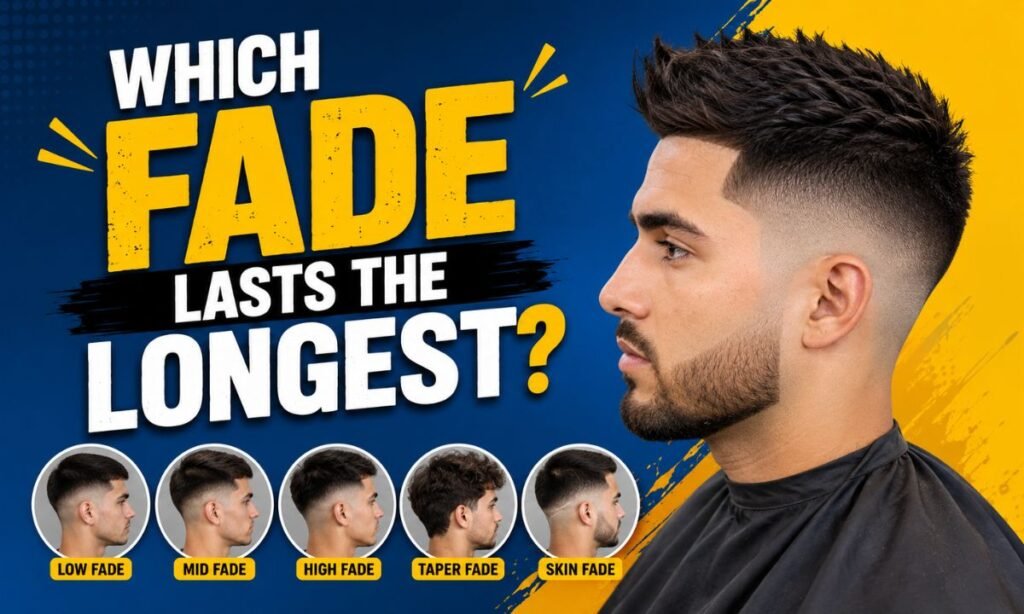
The low taper fade takes the win here. Since it starts higher up and doesn’t fade all the way to skin, new growth blends in naturally instead of creating a hard line. Most guys can go a full 3 to 4 weeks, sometimes longer, before it starts looking rough.
Skin fades and high fades sit on the opposite end. They look incredible fresh out of the chair, but that same sharp contrast is exactly what makes regrowth so obvious after just a week or two.
If low maintenance matters to you, a low fade or a classic taper is the smarter long-term choice over a tight skin fade.
Quick Answers
How long does a fade last on average?
Most fades hold up for 1 to 4 weeks, with low fades and tapers lasting the longest.
Do fades grow out badly?
Not if you catch the touch-up window in time. A well-blended fade grows out fairly evenly, especially with thicker or curlier hair.
Can I stretch a fade past a month?
Yes, especially with a low fade or taper, though the sharp definition will soften.
Does hair color affect how long a fade looks fresh?
Yes. Darker hair shows regrowth faster because the contrast against the skin is more visible.
Is a low taper fade good for curly or thick hair?
Yes. Curly and coarse textures hide new growth naturally, so a low taper fade often lasts even longer on these hair types than on straight hair.
Should beginners ask for a skin fade or a low fade?
If you want less upkeep, start with a low fade or taper. A skin fade looks sharper on day one but demands trims almost every week.
Final Thoughts
So, how long does a fade last? Most styles hold up for 1 to 4 weeks, with skin and high fades needing the most frequent touch-ups and low fades or tapers stretching the longest between cuts. The real answer depends on your hair growth rate, texture, and how well you maintain it at home.
Know your fade type, watch for the early signs of regrowth, and book your next trim before things start looking messy. That’s really the whole trick to keeping a fade looking sharp all month long.