

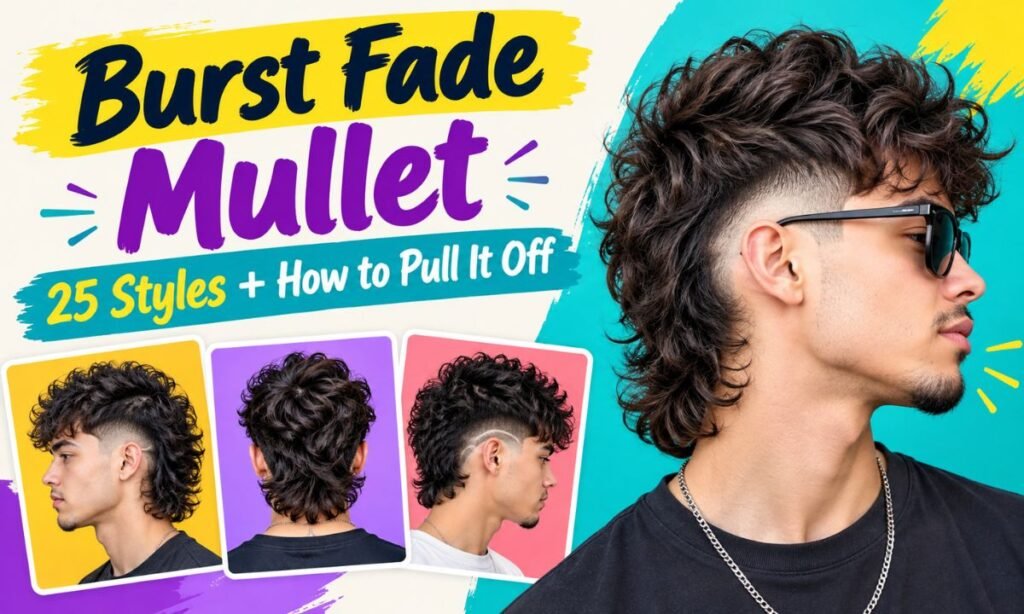
You keep seeing it on your feed. Short, tight sides. A soft, curved edge where the fade meets the skin. Longer hair spilling over the back of the neck. That’s the burst fade mullet, and it’s easily one of the most requested cuts in barbershops right now.
This guide walks you through what this cut actually is, who it flatters, and 25 real ways to wear it in 2026. You’ll also get a step-by-step tutorial, product picks, a maintenance schedule, and answers to the questions guys ask their barber most. By the end, you’ll know exactly what to say in the chair so you walk out with the cut you pictured, not a rough guess.
What Is a Burst Fade Mullet Haircut?
A burst fade mullet is a mullet with a curved, ear-hugging fade cut into the sides instead of a straight line.
Picture a regular fade. It usually runs in a fairly flat line around the head. A burst fade breaks that rule. The blend curves around the ear like a half moon, then “bursts” outward toward the back, tapering the hair right down to skin near the temple and behind the ear.
Pair that burst pattern with a mullet, meaning short hair up front and on top, longer hair left alone at the back, and you get a cut that reads as sharp and rebellious at the same time. The front stays tidy for work or school. The back keeps a bit of that 80s throwback swagger.
Barbers like this combo because the burst fade does a lot of the visual work. It draws the eye around the ear instead of straight across the head, which softens the whole look. That curve is also why this cut suits more face shapes than a boxy skin fade mullet does.
There’s also a practical reason this cut spread so fast. Regular fades need the hairline redone constantly to stay sharp, and full mullets can look shapeless without any blend at all. This hybrid solves both problems at once. You get the low-maintenance sides of a fade with the personality of a mullet, and neither side has to fight the other for attention. Walk into almost any barbershop with a photo of this cut and the barber will already know the general shape you’re after, even if they’ve never met you before.
A few things that make this cut different from a standard mullet:
- The fade blends instead of chopping length abruptly
- The taper wraps around the ear, not just above it
- The back length can be barely-there or genuinely long, depending on your patience
- It works with a fringe, a quiff, or slicked-back styling up top
ALSO READ “Top 10 Mohawk Mullet Variations 2026“
Who Should Try a Burst Fade Mullet?
Anyone who wants a cut that looks put-together up front and a little wild in the back should give this style a shot.
This style tends to land best with guys who already grow their hair fast, since the back section needs a few months of length to look intentional rather than accidental. If your hair grows slowly, you can still get the look. You’ll just be patient with the back while your barber keeps the fade fresh every two to three weeks.
It also suits people who switch jobs, gyms, or social scenes often. The front half reads as clean-cut. The back half reads as creative. That split personality is exactly why musicians, skaters, and office workers alike have picked it up.
You might be a good fit if you:
- Have thick or medium-density hair that holds shape without much product
- Want a low-effort back section paired with a styled front
- Like the idea of a fade without going full buzz cut
- Have an oval, square, or heart-shaped face (round faces need small tweaks, covered below)
- Are willing to visit the barber every two to three weeks for the fade alone
If your hair is very fine and thin, this cut can still work. You’ll just want a barber who texturizes the crown so the back doesn’t fall flat.
On the other hand, this probably isn’t the cut for you if you need a completely uniform, one-length look for work, or if you know you’ll skip fade appointments for months at a time. A neglected burst fade grows out into an awkward, shapeless mess faster than a basic buzz cut does, and that’s the main trade-off you’re signing up for.
Age isn’t really a factor either. Teenagers wear it with a mohawk twist, guys in their thirties wear it clean and paired with a beard, and plenty of women have picked it up too, usually with curtain bangs framing the front. What actually matters is your patience level and how often you’re willing to sit in a chair. If you hate frequent barber visits, this might not be your cut. If a two-week touch-up doesn’t bother you, you’re set.
25 Burst Fade Mullet Styles for 2026
Here are 25 ways to wear this cut, from the barbershop basics to the styles that take real commitment.
1. Low Burst Fade Mullet

The blend starts low, right above the ear, so most of your natural hair color stays visible. This is the most subtle version of the cut and a smart first try if you’re nervous about going too bold. It reads as professional from the front and playful from the back.
2. Mid Burst Fade Mullet

The fade starts around temple height, giving a balanced ratio of short to long hair. Most barbers default to a mid fade because it flatters nearly every head shape. It’s the safest middle ground between subtle and statement.
3. High Burst Fade Mullet

The fade climbs well above the ear, leaving less hair on the sides and more contrast against the longer back. This version photographs well and feels edgier day to day. Guys with round faces often lean toward this one since the height adds visual length.
4. Curly Hair Burst Fade Mullet
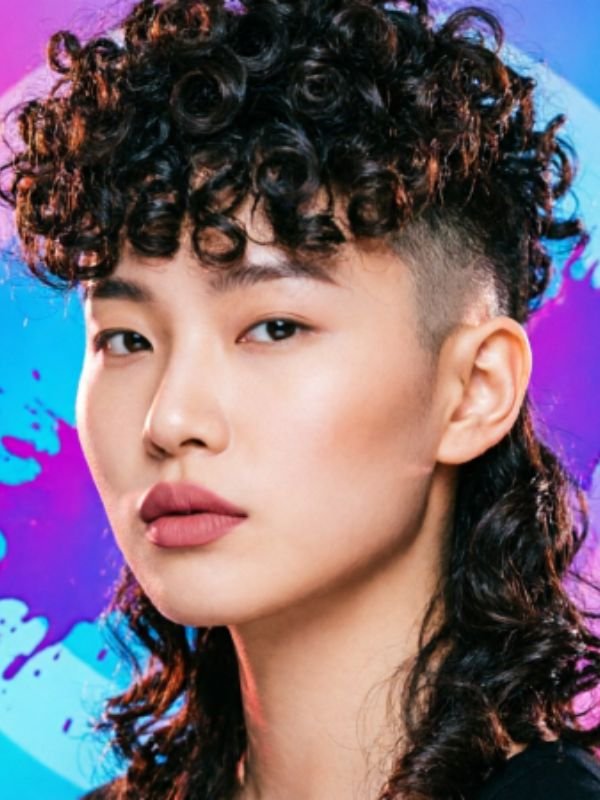
Curls at the crown and nape add natural bounce, and the burst fade keeps the sides from looking bulky. Ask your barber to cut the curls with scissors instead of clippers on top, so the spring stays intact. This version needs a curl cream to keep frizz down between cuts.
5. Burst Fade Mullet for Straight Hair

Straight hair lets the burst fade line show up crisp and clean, since there’s no texture fighting the blend. The back tends to lie flat and sleek rather than flip out, which some guys prefer. A light pomade keeps flyaways under control without weighing the top down.
6. Messy Burst Fade Mullet

A little sea salt spray and some finger-styling turns a neat mullet into something that looks effortless. This version hides a day or two of missed washing better than the sleek styles do. It’s a go-to for guys who don’t want a daily styling routine. Just scrunch product in with damp hands and let it air dry for the best result.
7. Textured Burst Fade Mullet

Choppy, uneven layers on top give the cut movement and grip for styling products to hold onto. Thinning shears are usually used here to remove bulk without shortening the length. It pairs especially well with a matte clay finish. Ask your barber to point the layers in slightly different directions for a shaggier, more lived-in feel.
8. Skin Burst Fade Mullet

This version fades all the way down to bare skin, giving the sharpest possible contrast against the longer back. It needs the most upkeep of any style on this list since regrowth shows fast. Guys who like a crisp, barbershop-fresh look every week gravitate here.
9. Taper Burst Fade Mullet
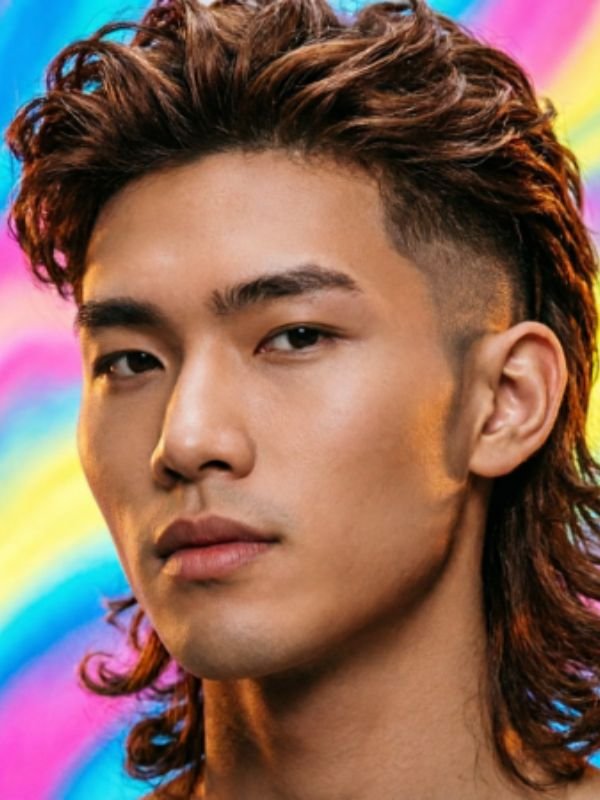
A softer blend that doesn’t go all the way to skin, leaving a touch of length along the hairline. This reads as more mature and works well in office settings. It grows out more gracefully than a skin fade version too, so you can stretch appointments a few extra days if your schedule gets busy.
10. Drop Burst Fade Mullet
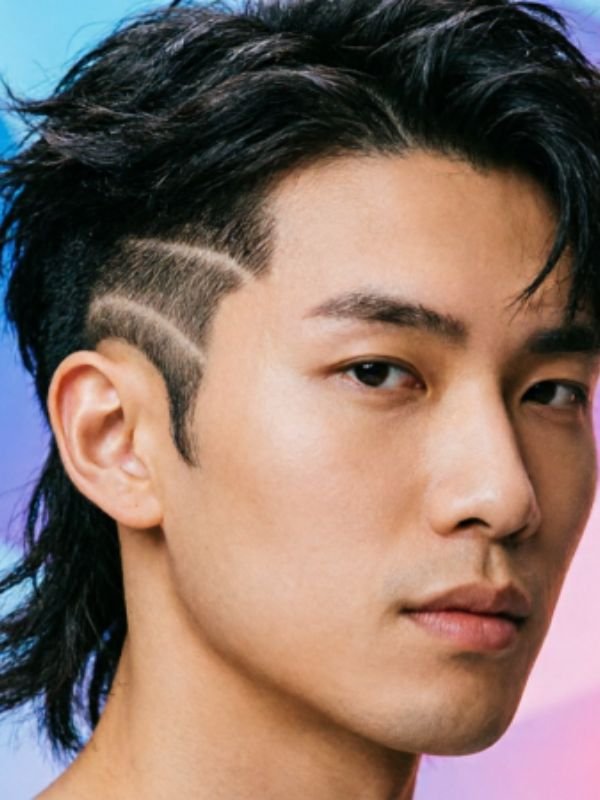
The fade line drops lower behind the ear instead of staying level, curving down toward the nape. This creates a longer, more dramatic burst pattern that frames the jaw. It’s a favorite for guys who want the fade itself to be the statement piece, and it photographs especially well from side angles.
11. Burst Fade Mullet with Design
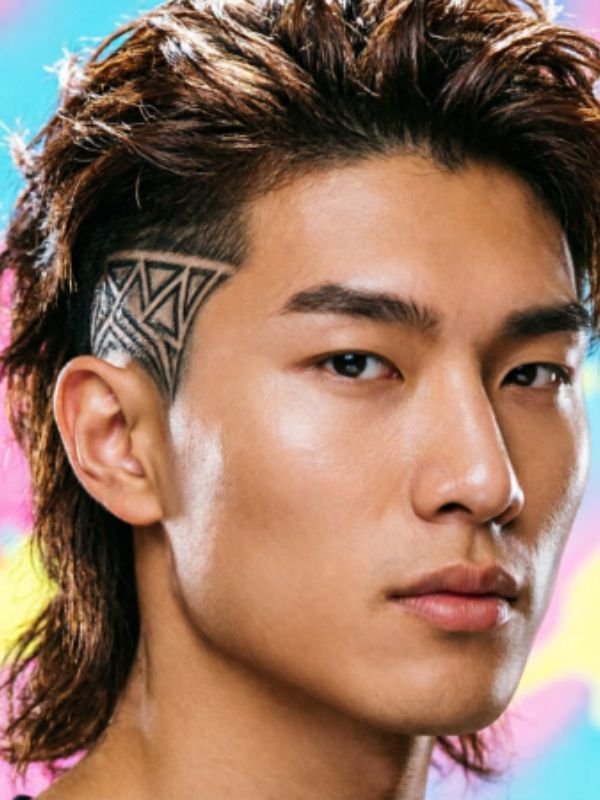
A shaved line, a part, or a small geometric pattern gets etched into the fade area for extra detail. This works best on straight or wavy hair where the design stays visible. Talk to your barber about touch-up frequency, since designs grow out fast.
12. Undercut Burst Fade Mullet

Instead of a gradual blend, the sides get cut short and disconnected from the length on top and back. This gives a bolder, more graphic contrast than a traditional fade. It suits guys who want their mullet to look intentionally sectioned rather than smoothly blended from front to back.
13. Fluffy Burst Fade Mulle
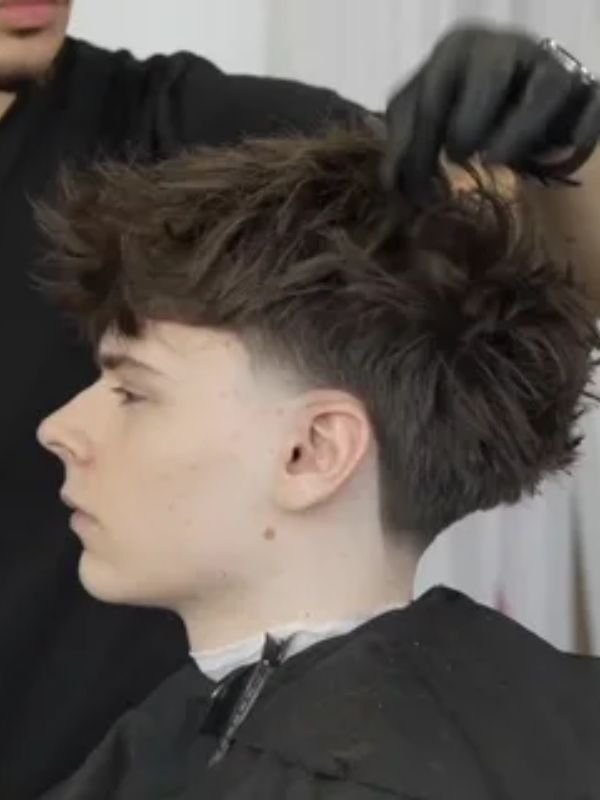
Extra length is left on top and blow-dried for volume, giving the whole style a soft, rounded silhouette. A light mousse before drying helps the fluff hold through the day. This version leans casual and youthful, and it works particularly well on hair with a natural bend or wave.
14. Modern Burst Fade Mullet
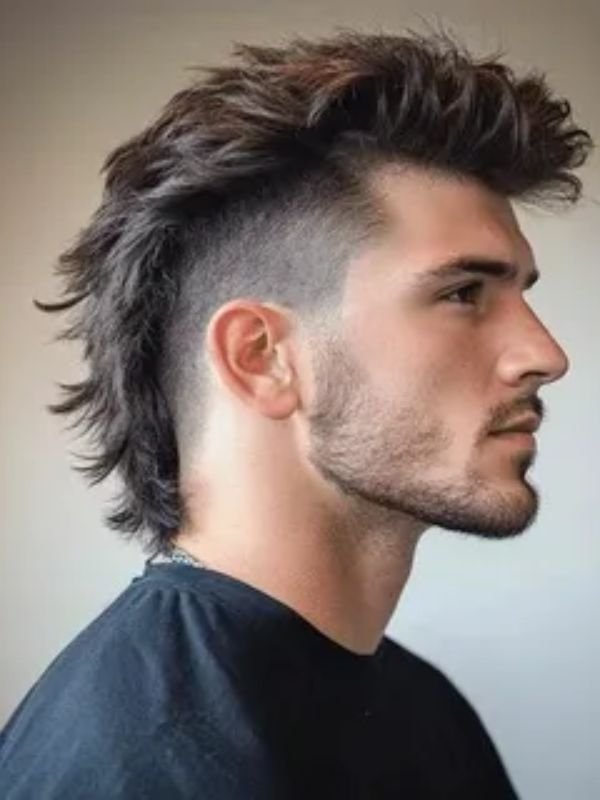
A cleaner, more polished take that trims the back shorter than the classic 80s length while keeping the burst detail sharp. It’s built for guys who want the mullet shape without looking like a throwback costume. This is often what barbers show first when you search for inspiration photos.
15. Short Burst Fade Mullet
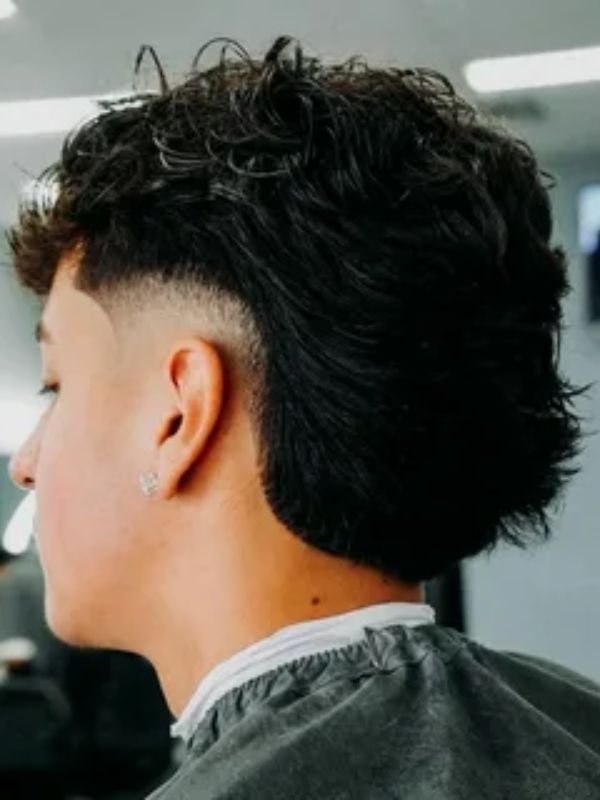
The back length stays close to the neck rather than growing out long, so the mullet effect is subtle. This works well for a first attempt at the style or for workplaces with stricter grooming rules. It’s also the easiest version to grow out of if you change your mind, since a quick trim erases most of the length difference.
16. Long Burst Fade Mullet
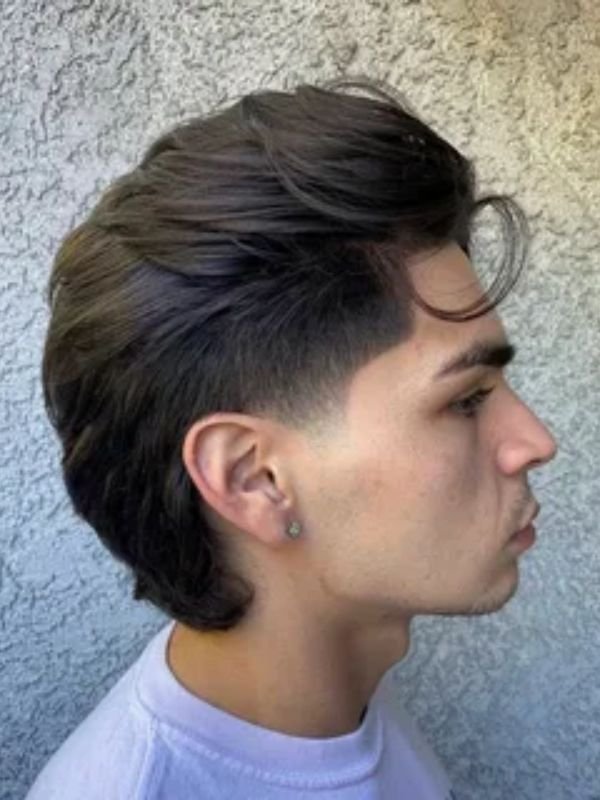
The back hair grows well past the collar, giving the most dramatic length contrast against the fade. This takes real patience, often six months or more of growth. It rewards guys who stick with the process and keep the fade maintained the whole time.
17. Burst Fade Mullet with Beard
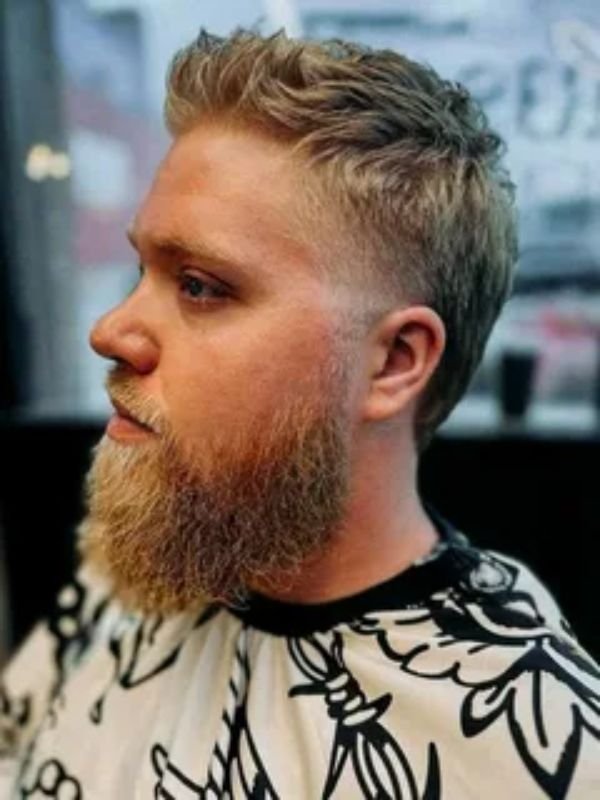
Pairing the cut with a full or stubble beard balances out the sharp fade lines with softer facial hair. A skin fade on the sides tends to connect nicely into a beard fade at the jawline. This combo is popular for a rugged, put-together look.
18. Asian Burst Fade Mullet
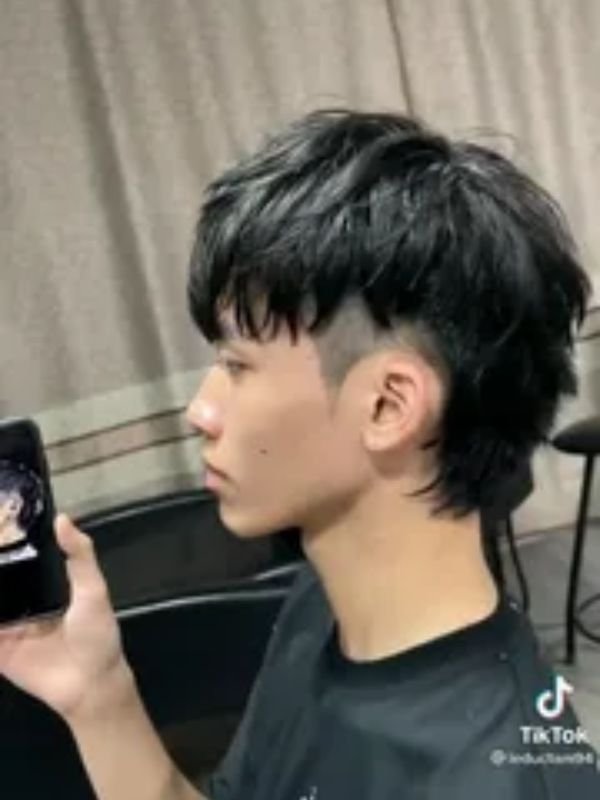
Thicker, straighter hair textures common in Asian hair hold the fade line especially crisp and let the top sit with natural volume. Barbers often add slight texturizing on top to prevent a helmet-like shape. This version photographs cleanly and needs minimal daily styling.
19. Blonde Burst Fade Mullet
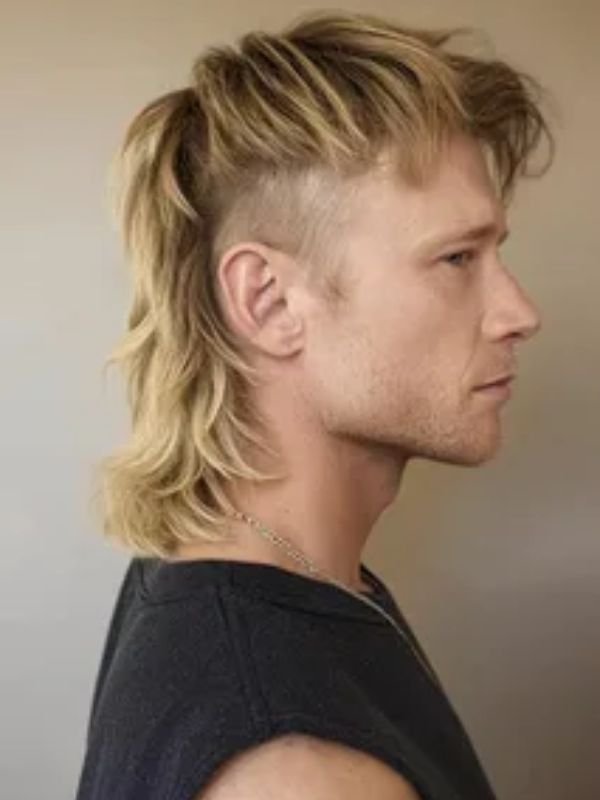
Lightened hair makes the length contrast between the short sides and long back even more visible. The color also draws attention to any design work cut into the fade. Regular toning appointments matter here as much as the haircut itself, since brassy or faded color pulls focus away from the cut’s clean lines.
20. Wavy Hair Burst Fade Mullet
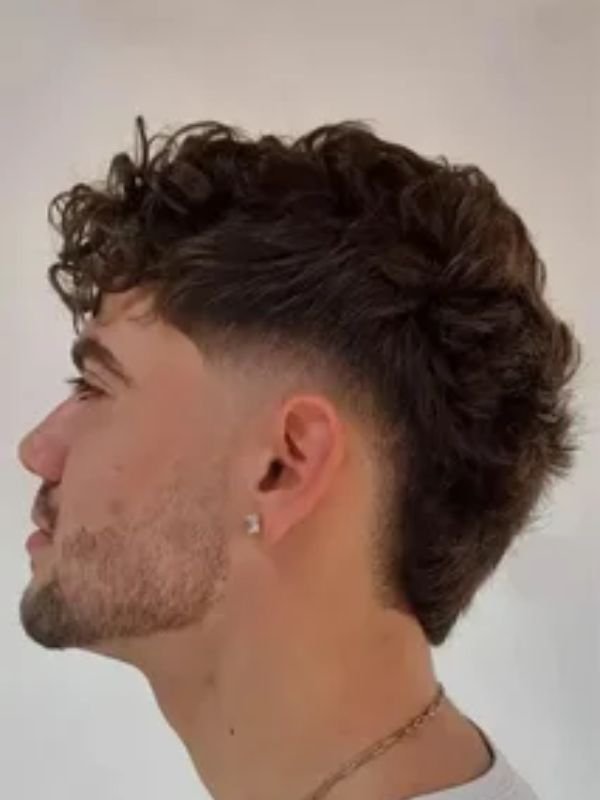
Natural waves give the back section built-in texture and movement without much product. The fade blends smoothly against wavy hair since there’s less bulk to work through than with curls. A curl-enhancing spray keeps the waves defined between washes, and scrunching instead of brushing helps preserve the natural pattern.
21. Burst Fade Mohawk Mullet
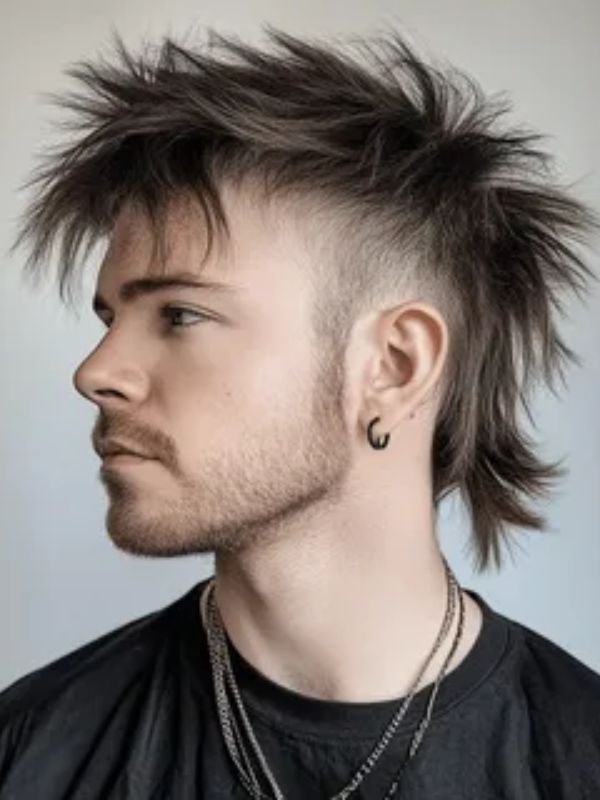
A strip of longer hair runs down the center of the top, styled upright, while the sides get the burst treatment and the back stays long. This is the boldest hybrid on the list and turns heads fast. It works best on guys who already gravitate toward standout styles.
22. Edgar Burst Fade Mullet
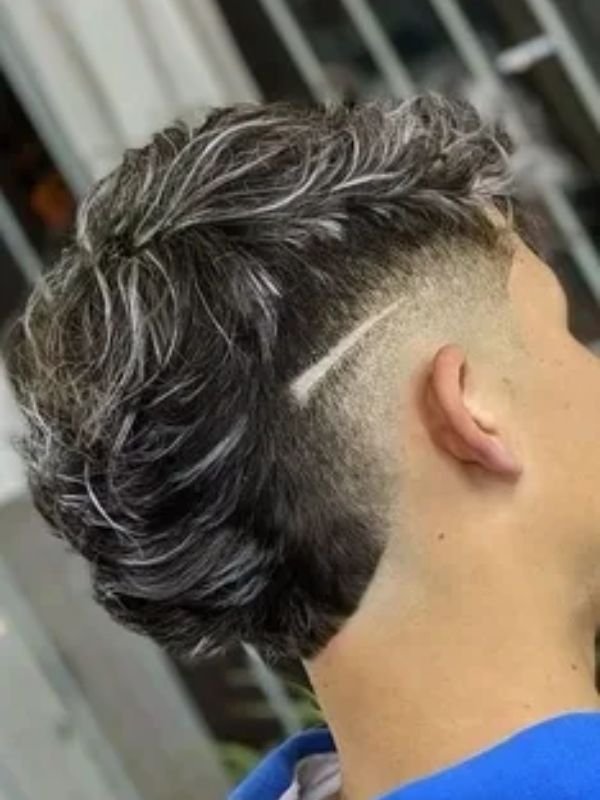
The signature blunt fringe of the Edgar cut meets the burst fade sides and mullet back for a look that’s part trendy, part retro. The straight-across bang needs regular trims to stay crisp. This combo is especially popular right now among younger guys.
23. Burst Fade Mullet with Fringe
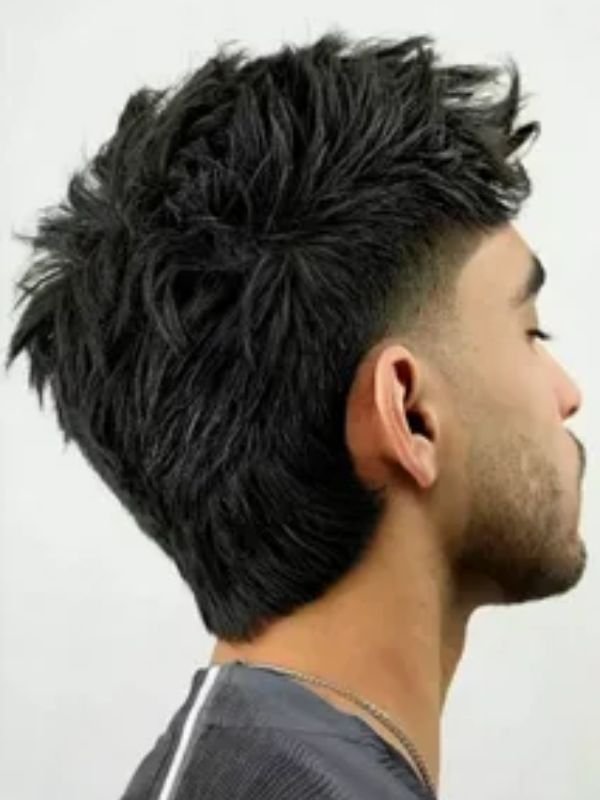
A softer, side-swept fringe replaces the blunt Edgar bang for a more relaxed front section. It works well for guys with a higher forehead who want some coverage. The fringe also gives you a styling option beyond just pushing hair straight back, letting you switch looks depending on the day.
24. Burst Fade Mullet for Thick Hair
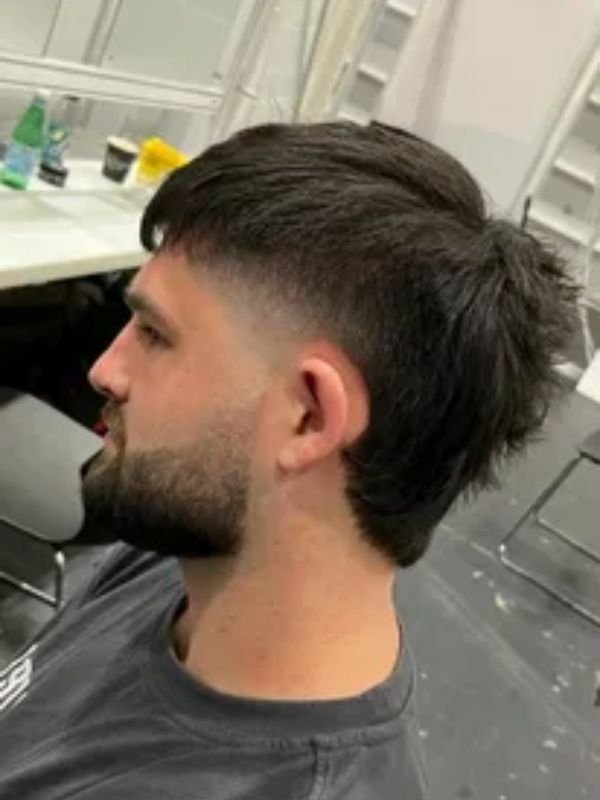
Thick hair holds the mullet shape without flattening, so the back keeps volume even in humid weather. Your barber will likely thin it out some with shears to keep it from looking bulky. This version usually needs less product than thinner hair types.
25. Burst Fade Mullet for Thin Hair
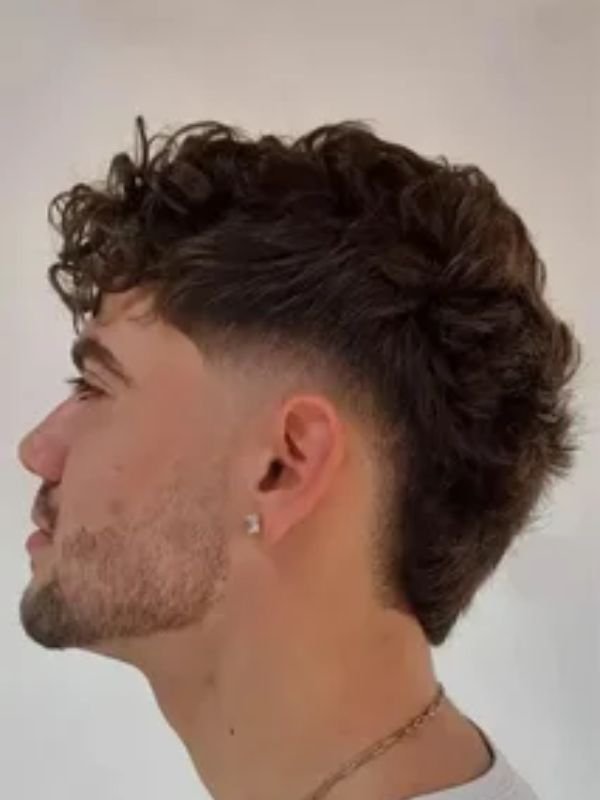
Thin hair benefits from a shorter back section and a bit of texturizing at the crown to fake extra density. A light volumizing mousse applied to damp hair helps the mullet hold its shape through the day. Keeping the length shorter overall also prevents the back from looking stringy.
Burst Fade Mullet by Face Shape
Your face shape changes how much fade height and back length work in your favor.
Barbers read face shape by looking at the width of your forehead, cheekbones, and jaw, then comparing that to the length of your face top to bottom. You don’t need a professional opinion to get a rough idea. Stand in front of a mirror, pull your hair back, and trace the outline with a bar of soap or a dry-erase marker. The shape that appears usually points you toward one of the categories below.
| Face Shape | Best Fade Height | Back Length | Why It Works |
| Oval | Low to mid | Any length | Oval faces suit nearly any version of this cut |
| Round | High burst fade | Longer back | Adds vertical length, breaks up width |
| Square | Mid fade with soft curve | Medium length | Softens strong jawlines |
| Heart | Low to mid fade | Fuller back | Balances a narrower chin |
| Long | Low fade, fuller top | Shorter back | Keeps the face from looking stretched |
| Diamond | Mid burst fade | Medium length | Softens narrow forehead and chin |
If you’re not sure which category fits, ask your barber to look at your hairline and jaw before the first cut. A five-minute conversation saves you from a fade height that fights your features.
Keep in mind these are starting points, not strict rules. Plenty of guys with round faces wear a low fade and look great, especially once a beard or glasses come into the mix and change the overall balance. Use the table as a first guess, then trust what actually looks right in the mirror over what a chart says should work.
Burst Fade Mullet by Hair Type
Hair type decides how much styling the mullet needs day to day, not whether the cut will work.
This matters more for how you style it at home than for what your barber can actually cut. Nearly every hair type can carry a version of this style. The real variable is how much product and effort your morning routine will need once you leave the shop.
If you’re not sure where your hair lands, wet a small section and let it dry naturally without touching it. Straight hair falls flat, wavy hair forms loose S-shapes, curly hair coils, and coily hair forms tight, springy loops. That quick test tells you more about which styling products to buy than any label on the bottle will.
| Hair Type | What to Expect | Styling Tip |
| Straight | Crisp, sleek fade line | Light pomade to control flyaways |
| Wavy | Natural movement in the back | Sea salt spray for texture |
| Curly | Springy volume, needs scissor work on top | Curl cream to fight frizz |
| Coily | Strong shape retention, less shrinkage on back | Leave-in conditioner before styling |
| Thick | Holds shape well, may need thinning | Matte clay for control without shine |
| Thin | Needs shorter back and texturizing | Volumizing mousse on damp hair |
Modern Mullet Haircut vs. Traditional Mullet
The old-school mullet and today’s burst fade mullet share a silhouette but not much else.
The traditional mullet, the one your uncle might have rocked in 1987, usually had an abrupt length change with no real fade at all. The sides were often left shaggy or just combed down, and there wasn’t much shape to the top.
Today’s version treats the sides like a proper fade haircut, complete with a barber-grade blend, then adds the long back as a deliberate styling choice rather than an afterthought.
| Feature | Traditional Mullet | Burst Fade Mullet |
| Side treatment | Shaggy, uneven | Clean, blended fade |
| Fade style | Rare or none | Curved burst around the ear |
| Top styling | Minimal | Often textured or quiffed |
| Maintenance | Low | Every 2 to 3 weeks |
| Overall vibe | Retro, casual | Polished front, bold back |
That precision is exactly why the modern version costs more at most shops and takes longer in the chair. You’re paying for the barber’s skill at curving a fade line cleanly around the ear rather than just running a clipper straight across the head. It’s a fair trade if you want the cut to look finished rather than accidental.
Both cuts keep the long-back, short-front idea alive. The difference is precision. This version takes real barber skill, while the traditional version could be done with a pair of kitchen scissors and a mirror.
Step-by-Step Burst Fade Mullet Tutorial
Here’s what actually happens in the chair when you ask for this cut, whether you’re the barber or just want to know what to expect.
- Section the hair. The barber separates the top, sides, and back with clips so each area gets cut without interference, which keeps the longer back safely out of the way while the sides are worked on.
- Set the back length. Using scissors, the back gets trimmed to your target length, usually left noticeably longer than the sides, since this length becomes the anchor point for everything else.
- Establish the fade guide. A clipper guard, often a 1 or 2, marks where the burst curve will start around the ear.
- Cut the burst curve. The clippers move in a rounded, sweeping motion around the ear instead of a straight horizontal line, tapering down toward skin or a low guard.
- Blend upward. Longer guards fade into shorter ones moving up the head, smoothing any visible lines between sections so the transition looks gradual rather than stepped.
- Connect to the top. The fade blends into the length on top, which may be textured with shears for movement.
- Clean the perimeter. The neckline and around the ears get a fresh edge with a trimmer for a crisp finished outline.
- Style and check. Product goes in, and the barber checks the fade from multiple angles under bright light before calling it done.
If you’re doing this at home, start with a longer guard than you think you need. You can always go shorter. You can’t add hair back once it’s on the floor.
Give the whole process 30 to 45 minutes if it’s your first time in the chair for this specific cut. Barbers move slower on a new style until they know your hair’s behavior, and that extra time usually pays off in a cleaner blend. Most guys find their second and third visits go noticeably faster, since the barber already knows your growth pattern and can jump straight to the fade.
Best Styling Products for a Burst Fade Mullet
The right product depends on your hair type and how much hold you actually want.
- Matte clay: builds texture and a low-shine finish, great for textured or messy styles
- Sea salt spray: adds grit and volume without stiffness, perfect for wavy or beachy looks
- Pomade: gives a sleeker finish with medium to high shine, best for straight hair
- Curl cream: defines curls on top while fighting frizz on the sides
- Volumizing mousse: lifts fine or thin hair at the roots and crown
- Texturizing spray: adds grip for styles that need extra hold, like the mohawk mullet
- Light-hold gel: keeps a fringe or Edgar-style bang in place without crunch
A dime-sized amount is plenty for most of these. Work product through towel-dried hair, then style from the roots out.
Keep the sides mostly product-free, especially right after a fresh fade. Heavy product near the fade line can trap lint and dust, which makes a crisp cut look dull faster than it should. Save the styling budget for the top and back, where the actual shape of the cut lives.
Weekly Care Routine
This cut needs more attention than a basic buzz cut, but not much more.
- Wash two to three times a week with a sulfate-free shampoo to avoid drying out the longer back section
- Condition every wash, focusing on the back where the hair is longest and most prone to tangles
- Brush or comb the back gently before bed to prevent knots from forming overnight
- Apply a light leave-in treatment once a week if your hair type runs dry or frizzy
- Trim split ends at the back every six to eight weeks, separate from your fade appointments
- Keep the fade fresh with a home trimmer touch-up around week two if your next barber visit is further out
None of this takes more than a few extra minutes a week. Most of it can piggyback on a routine you already have, like conditioning while you brush your teeth or combing the back out while your leave-in treatment sets. The habits matter more than any single product, since consistent care keeps the longer hair from becoming the weak point of an otherwise sharp cut.
Maintenance Schedule
| Area | How Often | What Happens |
| Fade sides | Every 2 to 3 weeks | Reblend the burst curve before it grows out and loses shape |
| Back length | Every 2 to 3 months | Light trim to keep ends healthy without losing length |
| Neckline and edges | Every 1 to 2 weeks (home touch-up) | Quick trimmer pass to keep it sharp between full cuts |
| Deep condition | Weekly | Keeps the longer back from drying out or frizzing |
| Full reshape | Every 6 months | Reassess the cut as your hair grows or your face changes |
Think of this schedule as a floor, not a strict rule. Some hair grows fast enough to need a fade touch-up closer to the ten-day mark, while slower-growing hair might comfortably stretch to three and a half weeks. Pay attention to how your own hair behaves over the first couple of cycles, then adjust the calendar to match instead of forcing a generic timeline onto it.
Barber Tips for the Perfect Burst Fade Mullet
A few things separate a great version of this cut from a mediocre one, and most of it comes down to communication.
- Bring a photo, but also explain what you like about it in your own words, since lighting and hair texture change how a photo translates
- Ask for the burst curve specifically, since some barbers default to a straight fade unless you name the style
- Mention your face shape, or ask the barber for their read on it before the first guard touches your head
- Get the back length set first, so the fade height gets planned around it rather than the other way around
- Book your next fade appointment before you leave, since the two to three week window sneaks up fast
- Speak up mid-cut if something looks off. It’s easier to fix at guard-2 than after the trimmer has already gone to skin.
A good barber will also ask about your styling habits before they cut, since that changes how they shape the top. If you never blow-dry or use product, mention that up front so they cut a version that looks decent even on lazy mornings.
How to Grow Out the Back Section
Growing the back out is the part most guys underestimate, and it’s really a patience game more than a technical one.
The first six to eight weeks are the awkward stretch. The back looks like it’s just an overgrown fade rather than an intentional style, and this is where a lot of guys give up and cut it all off. Push through this window and the length starts separating from the sides visually, which is when the mullet shape actually clicks into place.
A few things help during the growing-out phase:
- Keep the fade sharp even while the back is still short. A crisp fade makes the growing back look deliberate instead of neglected.
- Trim split ends only, not length, roughly every two months so the back stays healthy without losing progress.
- Use a lightweight leave-in conditioner since longer hair dries out faster than short hair, especially at the ends.
- Tell your barber you’re growing it out at every fade appointment so they don’t accidentally take length off the back by habit.
- Expect the awkward stage around month two, and know that it passes once the length hits collar height.
Most guys reach a satisfying back length somewhere between four and six months, though hair growth speed varies quite a bit from person to person.
Personalization Tips for This Cut
No two versions of this cut have to look the same, and small tweaks let you make it your own.
Start with fade height. A low or mid burst fade reads as understated and works in most professional settings, while a high burst fade pushes the look toward bold and unmistakable. Pick based on your workplace, your comfort level, and how much attention you actually want.
Next, think about the top. A textured, choppy top gives off a relaxed, skater-adjacent vibe, while a slicked-back or quiffed top leans more polished and dressed-up. You can even switch between the two on different days once your hair has enough length to work with.
A few more ways to personalize the cut:
- Add a beard if you want the fade lines to connect into a fuller, more rugged look
- Try a shaved design in the fade area for a one-of-a-kind detail
- Play with color, whether that’s a subtle balayage on the longer back or a bold full lightening job
- Adjust the back length seasonally, keeping it shorter in summer and letting it grow through fall and winter
- Swap accessories in, like a headband or bandana, to change the vibe of the front section without touching the cut itself
The goal is to treat the barber’s cut as a starting point, not a finished product. Your daily styling choices do almost as much work as the haircut itself.
Common Mistakes to Avoid With a Burst Fade Mullet
Most regrets with this style come from a handful of avoidable slip-ups.
- Going too short on the back too soon. It takes months to build real length, so trimming it like the sides erases your progress.
- Skipping fade maintenance. A burst fade grows out faster than people expect, and a two-week-old fade starts looking patchy.
- Ignoring face shape. A high fade on an already narrow face can make features look stretched.
- Using heavy products on fine hair. Pomade and thick clay can weigh down thin hair instead of lifting it.
- Not communicating with the barber. Walking in and saying “just do a mullet” leaves too much room for guesswork.
- Forgetting the neckline. A sharp fade with a messy neckline still reads as unkempt from behind.
- Copying a photo exactly without accounting for your own hair density. A style that looks full on someone with thick hair can look thin and patchy on someone with fine hair unless the barber adjusts the cut.
- Waiting too long between fades and then going drastic. A stretched-out fade often gets over-corrected into a much shorter cut just to fix the blend, which sets your back growth back too.
Most of these mistakes are easy to avoid once you know they exist. A short conversation with your barber before the clippers come out solves almost all of them, and a quick look in the mirror before you leave the shop catches anything that slipped through.
FAQs
Is a burst fade mullet hard to maintain? It needs a fade touch-up every two to three weeks, which is about the same as most fade haircuts.
Does this style work for thin hair? Yes, especially with a shorter back section and some texturizing at the crown for extra density.
How long does it take to grow the back out? Most guys see a solid mullet length in four to six months, depending on how fast their hair grows.
Can I get a burst fade mullet with curly hair? Curly hair works well and often looks fuller in the back, though the top usually needs scissor work instead of clippers.
What’s the difference between a burst fade and a regular fade? A burst fade curves around the ear in a half-moon shape, while a regular fade usually runs in a straighter line.
Is this a good first-time cut? A low or mid burst fade with a shorter back is the easiest version to start with and the simplest to adjust later.
Does this style suit round faces? Yes, a higher burst fade paired with a longer back adds visual length and balances a rounder face shape.
How often should I wash this haircut? Two to three times a week is usually enough, since washing too often can dry out the longer back section.
Can women wear this style? Yes, the style has become popular with women too, especially paired with curtain bangs or a textured top.
Will a burst fade mullet suit an office job? A low fade with a shorter back reads as professional enough for most workplaces, especially with a beard or clean styling.
How much does this haircut usually cost? Pricing follows local fade and haircut rates, though many barbers charge a bit more for the detailed burst blending work.
Can I switch from a regular fade to this style without starting over? Yes, if your sides already have some fade shape, your barber can usually reshape the curve and just let the back grow from there.
Conclusion
The burst fade mullet earns its popularity honestly. It gives you a sharp, low-maintenance front paired with a back section that lets you have a little fun. Whether you go for a subtle low fade or a bold mohawk mullet hybrid, the key is picking a version that matches your hair type, face shape, and how often you’re realistically willing to sit in the barber chair.
Start with one of the 25 styles above, bring it to a barber who knows fade work, and stick with the maintenance schedule. Give it a few months, and you’ll have a cut that looks intentional from every angle, not just the one in your mirror.
Don’t stress over picking the “perfect” version on your first visit either. Hair grows back, fades get reshaped, and most guys land on their favorite variation only after trying two or three along the way. Book the appointment, ask for the burst curve by name, and let the back grow while you figure out what suits you. That’s really the whole process.

1 thought on “Burst Fade Mullet: 25 Styles + How to Pull It Off”