

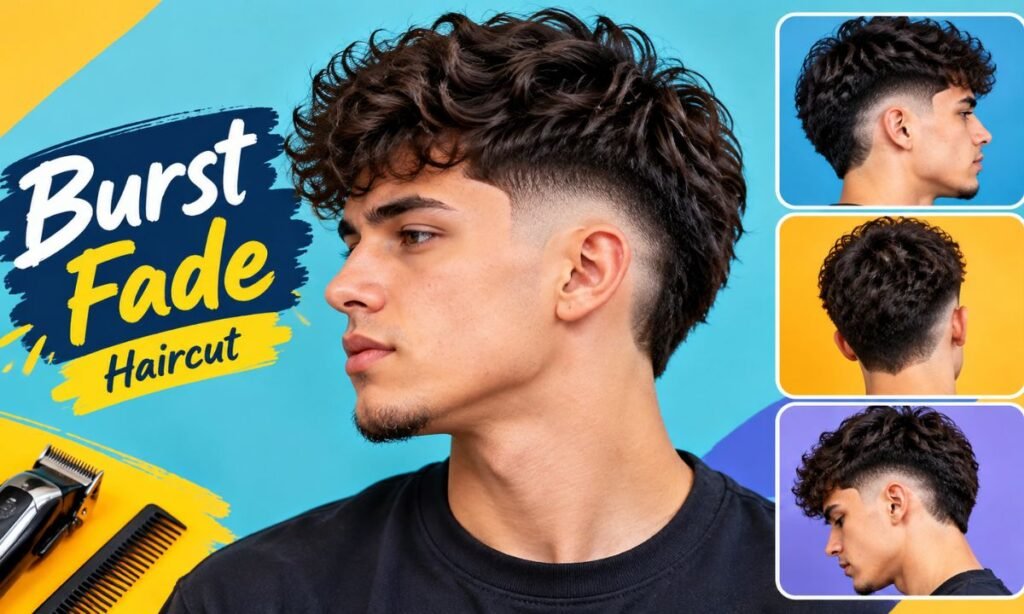
Not sure what a burst fade haircut really is? You’re not alone. It’s a fade that curves around the ear like a small sunburst. The sides go short. The back keeps its length. The result looks sharp and a little bold.
Below, you’ll learn the types, the best styles, and how to talk to your barber. I’ll also cover styling, upkeep, and quick answers to common questions. Ready to sit in the chair with confidence? ✂️
What is a burst fade?
Quick answer: A burst fade is a semicircle fade that curves around the ear and stops behind it. The sides go short or down to the skin. The hair at the back and nape stays longer. Barbers also call it a radial fade or a halo taper.
Is it just a regular fade with a fancy name? Not quite. A normal fade runs level around your head like a belt. A burst fade breaks that line. It circles the ear and then stops.
Picture your ear as the center of a tiny sun. The clippers cut shortest right next to it. The hair grows longer as you move up and out in a curve. That curve is the “burst.” It gives your side profile a rounded, clean shape.
Here’s the fun part. The fade stops behind the ear. So you keep weight at the back. Your nape stays full. That’s why a burst fade haircut pairs so well with mullets, mohawks, and curly tops.
Why do so many guys ask for it? It adds shape without a full shave. It also keeps length at the back for volume. If your head feels flat back there, the extra hair can round it out. A burst fade haircut brings balance to your whole silhouette.
📷 Image idea: side view of a mid burst fade curving around the ear. Caption: A clean burst fade wraps the ear like a sunburst.
How is it different from a regular fade?
- Shape: A curve around the ear, not a level line.
- Back: The hair stays longer instead of fading all the way around.
- Look: A sunburst pattern, not a smooth wrap.
Where did the burst fade come from?
No single barber owns this cut. The shape grew out of mohawk style cuts that showed up in barbershops years ago. Athletes and hip hop fans pushed it into the mainstream in the 2010s. The mullet comeback then gave it a second life. Today it’s a regular request in shops everywhere.
What is a burst taper?
A burst taper is usually a softer, lower burst fade. The blend still curves around the ear. The shortest area just stays a bit longer. Not every barber uses the term the same way. A photo clears up the confusion fast.
Who does a burst fade suit?
Most guys can wear it. It works on straight, wavy, curly, and coily hair. It looks best when the top has some length or texture.
Will it suit my face? Will it work with my hair? Those are the two big worries. Here’s the good news. The burst fade cares more about the shape at the sides than the style on top. That makes it flexible.
Think of it like a frame. The fade is the frame. The top is the picture. You can swap the picture without changing the frame. That’s why one burst fade haircut can look calm on one guy and wild on another.
Best face shapes for a burst fade
- Round face: Go mid or high. Keep volume on top to add height.
- Square face: The curve softens a strong jawline. Most versions work.
- Oval face: You’ve got the easy pass. Any height works.
- Long face: Choose a low burst. Skip very high versions.
- Heart or diamond face: Try low to mid. That keeps extra width away from the temples.
What about age and lifestyle?
Teens, college guys, and dads all wear this cut. The top length decides how bold it looks. A short textured crop feels neat. A long curly top feels loud. Pick the mood you want.
Your daily life matters too. Do you sit at a desk all day? Do you play sports? Athletes love it because the sides stay cool and clean. Office workers can keep the top neat and the fade low. A burst fade haircut bends to your routine.
Can a burst fade help a receding hairline?
Some barbers pair a mid burst with a fuller top to keep the front looking tidy. A short beard adds balance too. But a haircut doesn’t treat hair loss. If shedding worries you, talk to a dermatologist.
ALSO READ “Taper Low Burst Fade: Styles“
Low vs mid vs high burst fade: which should you choose?
Low is subtle. Mid is the all-rounder. High is bold. Pick based on how loud you want the sides to look.
Feeling stuck on height? It’s the choice that changes the look most. Height means where the fade starts on your head. A lower fade starts near the ear. A higher fade climbs the side. Every burst fade haircut follows this same rule.
| Version | Where it starts | Look | Best for | Upkeep |
| Low burst fade | Just above the ear | Soft and subtle | First-timers, office | Every 3 to 4 weeks |
| Mid burst fade | Around the temple | Balanced contrast | Most guys | Every 3 weeks |
| High burst fade | High on the side | Bold and tight | Short tops, strong style | Every 2 to 3 weeks |
| Skin burst fade | Any height, bare skin at the base | Sharpest contrast | Clean, confident looks | Every 2 to 3 weeks |
Low burst fade
The fade stays close to the ear. You keep more hair and more balance. It also grows out gently. I’d point most first-timers here. It’s the safest way to try the shape.
Mid burst fade
This is the crowd favorite. It starts near the temple. You get clear contrast without going extreme. If you don’t know what to pick, start here.
High burst fade
The fade climbs high on the side. The look is tight and dramatic. It suits short tops well. It needs more upkeep because growth shows fast.
Shadow, zero or skin: how short should the base go?
The height is only half the story. The base finish matters too. A shadow fade leaves a hint of hair. A zero finish is clipper-close. A skin finish uses a foil shaver for bare skin. The shorter the base, the sharper the look. It also needs more upkeep. Not sure? Ask for a shadow finish. You can always go shorter next time.
How do you pick the right height?
- Want a work-safe look? Go low.
- Want an all-round pick? Go mid.
- Love bold shapes? Go high.
- Want maximum sharpness? Add skin at the lowest point.
Here’s a quick mirror test. Push the hair above your ear up with your fingers. See where you like the line to start. That spot is your height. Take a photo of it and show your barber.
Which one are you leaning toward? Tell us in the comments. 💬
Best burst fade styles to show your barber
These ten pairings show up most with a burst fade haircut. Save a photo of your favorite. Then tell your barber the top length you want.
Scrolling through hundreds of photos can feel like a maze. So I’ve narrowed it down to ten looks. Each one works with a burst fade. Pick the one that fits your hair and your routine.
1. Burst fade mullet
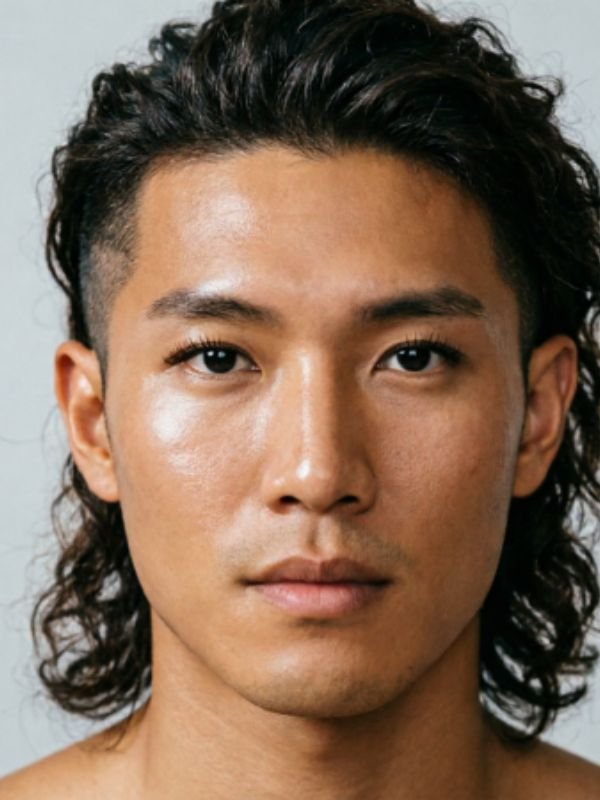
Short sides with a soft burst around the ear. Longer hair flows at the back. It’s the most talked-about pairing right now. A little texture spray adds movement.
2. Burst fade mohawk
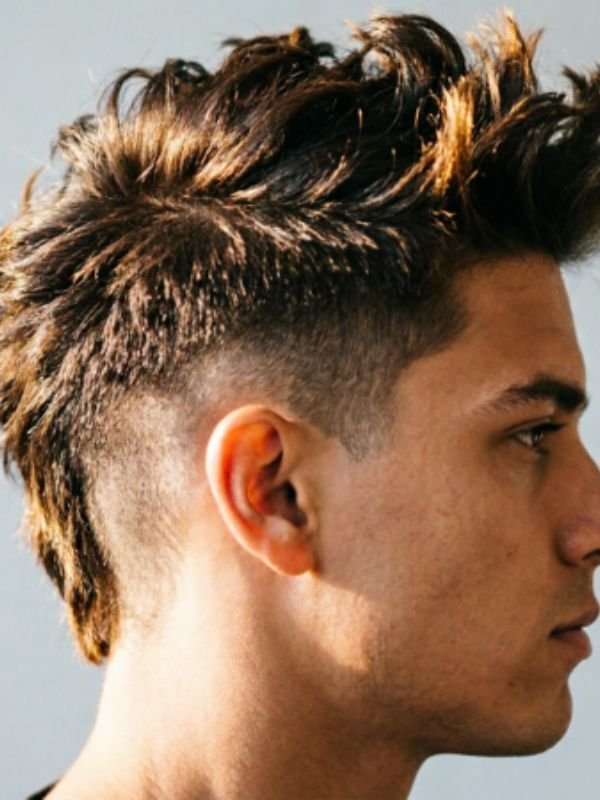
The sides go tight. A strip of length stays in the center. The burst fade is the softer cousin of a classic mohawk. The blend looks less harsh.
3. Burst fade faux hawk

The top rises in the middle. The sides stay clean. It’s easier to style than a full mohawk. A bit of clay holds the shape all day.
4. Curly top burst fade
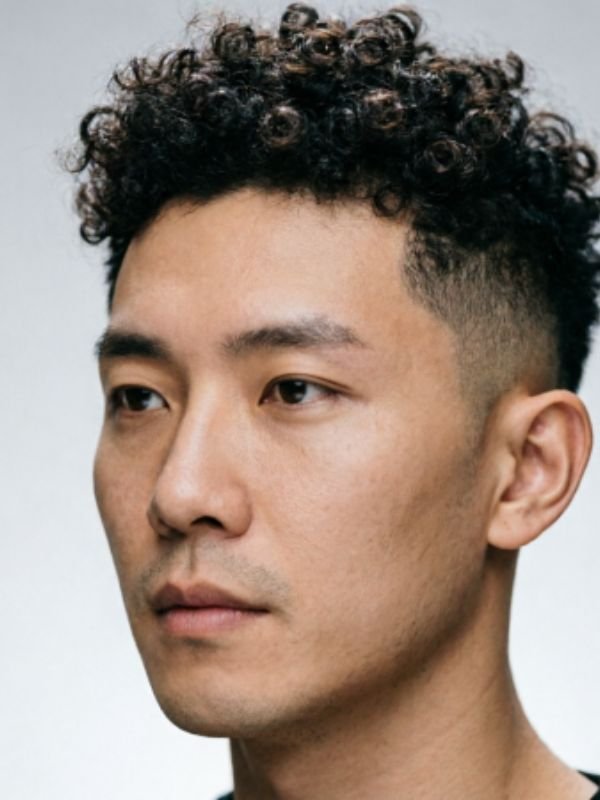
Curls sit on top like a crown. The faded sides frame them. Use curl cream to keep the pattern soft and defined.
5. Textured crop with a burst fade

The top is short and choppy. The fade stays sharp. It’s a neat choice for school or work. Matte paste adds grip.
6. Burst fade afro or frohawk
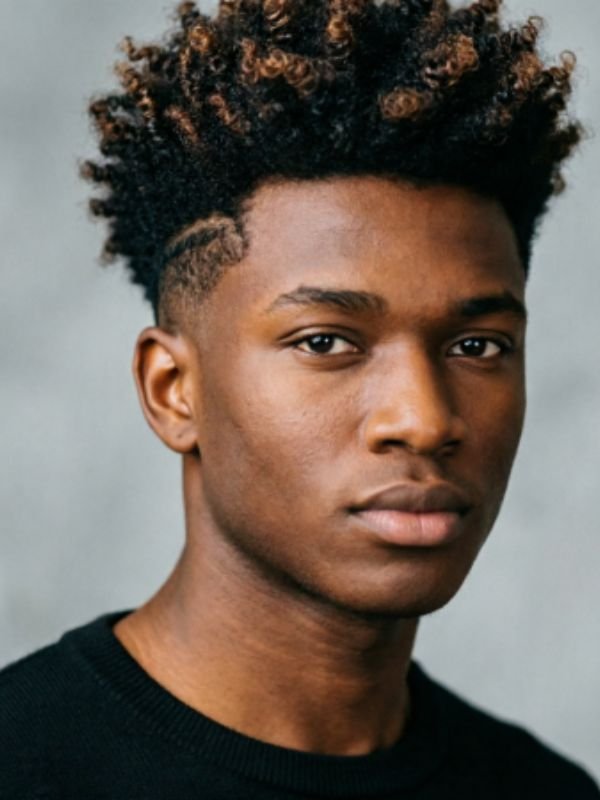
A round afro or frohawk loves this curve. The fade and the top echo the same shape. Keep the top shaped with an afro pick.
7. Burst fade quiff
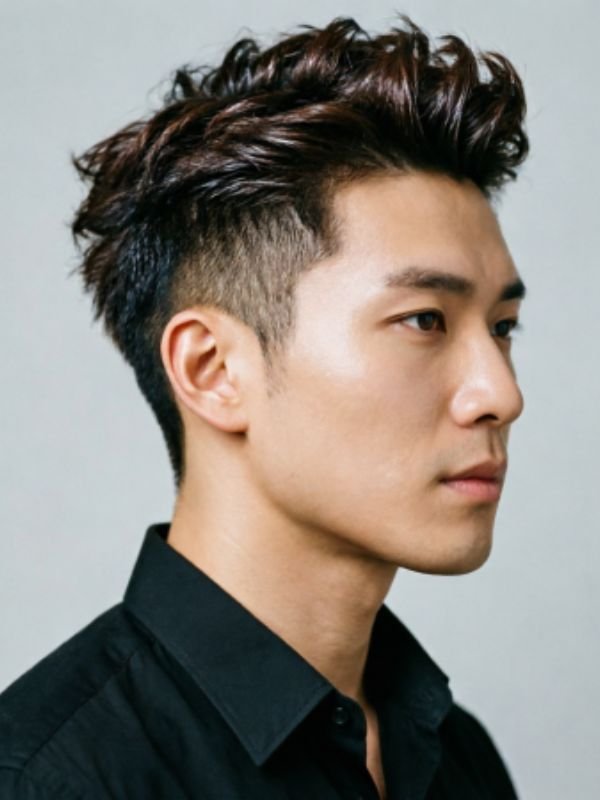
The front lifts and sweeps back. The sides stay tight. Blow-dry the front up. Then finish with a light powder.
8. Burst fade with a beard

The fade curves down and meets the beard at the jaw. A clean beard blend frames the face. Tell your barber where to connect the two.
9. Burst fade buzz cut

The top is clipper-short. The curve still adds shape. Little hair on top means the fade placement shows a lot. Choose your height with care.
10. Burst fade with design lines
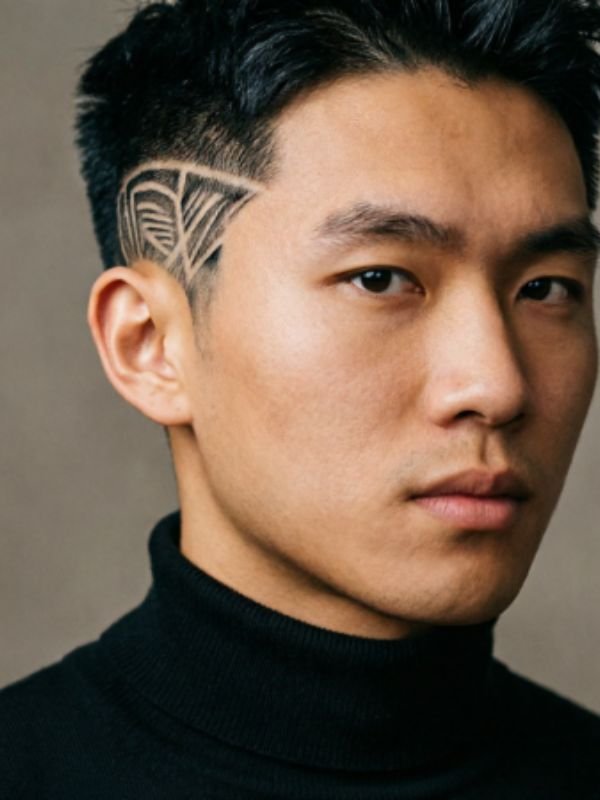
A shaved line or small design sits inside the faded area. It adds personality. Keep it simple at first. Complex lines need frequent touch-ups.
How do you choose a style?
Think about your top length first. Short top? Try a crop, buzz, or faux hawk. Medium top? Try a quiff or curly top. Long top? The mullet or afro is your match. Then think about upkeep. Messy styles forgive growth. Sharp styles do not. Every burst fade haircut looks better when the top fits your lifestyle.
📷 Image idea: a collage of a burst fade mullet, curly top, and faux hawk. Caption: Ten burst fade styles to save for your next barber visit.
Burst fade vs drop fade, taper fade and skin fade
A burst fade curves around the ear and stops. A drop fade dips behind the ear and wraps the back. A taper trims only the edges. A skin fade is about the finish, not the shape.
Barbershop names get messy. One barber’s “drop” is another barber’s “burst.” So here’s a clean cheat sheet. Use it before you book. A burst fade haircut is easier to get when you know the neighbors.
| Cut | Shape | Back and nape | Contrast | Keep it sharp |
| Burst fade | Semicircle around the ear | Stays longer | Medium to high | 2 to 4 weeks |
| Drop fade | Curves down behind the ear and wraps the head | Faded shorter | Medium to high | 2 to 3 weeks |
| Taper fade | Trims sideburns and neckline | Keeps length | Low | 2 to 3 weeks |
| Skin fade | Goes to bare skin | Very short | High | 1 to 2 weeks |
Burst fade vs drop fade
Both curve near the ear. A drop fade follows the head down to the neckline. It forms one connected line around the back. A burst fade stays around the ear. The nape keeps its hair.
Burst fade vs taper fade
A taper keeps most of the length. Only the sideburns and neckline get short. A burst fade cuts a bolder curve. It shows more contrast. Pick a taper if you want a quiet look.
Burst fade vs skin fade
A skin fade tells you how short the fade ends. It ends at bare skin. A burst fade tells you the shape. So you can mix the two. Ask for a skin burst fade if you want both.
Still confused? Use the ear as your guide. If the fade circles the ear and stops, it’s a burst. If it keeps sliding around the back, it’s a drop. Show your barber a photo of the back and the side. That one step settles most arguments about a burst fade haircut.
How to ask your barber for a burst fade
Say “burst fade.” Then name the height, the shortest point, and the top length. Bring photos.
Walking out with the wrong cut is a nightmare. Most mix-ups happen because the word “fade” means ten different things. A few clear words fix that. Here’s a simple plan for your next barber consultation and your first burst fade haircut.
- Bring photos. Show two or three from the side, back, and top.
- Say the name. Say “burst fade” and point behind your ear.
- Pick the height. Choose low, mid, or high.
- Pick the finish. Choose shadow, zero, or skin at the lowest point.
- Name the lengths. Tell your barber how much to leave on top and at the back.
- Mention extras. Ask for a beard blend, a neat neckline, or a line up if you want one.
Try this script: “Can I get a mid burst fade with skin at the lowest point? Leave about two inches on top. Keep the back long and blend it into my beard.”
Photos help most when they show the back. Many guys only show the front. But the burst lives at the side and rear. Ask for a picture from behind. Tell your barber what you like about it. Is it the curve? The length? The contrast? That detail guides the whole cut.
What if the barber says “drop fade”?
Some barbers call it a drop fade. Some call it a burst. Don’t argue about the name. Just say you want the fade to circle the ear and stay short behind it. Ask them to keep the nape hair. Then point to your photo.
Guard numbers made simple
Clipper guards use eighths of an inch. Most fades start near a #0 or #1 at the bottom. The top is usually cut longer with scissors.
| Guard | Length |
| #1 | 1/8 inch |
| #2 | 1/4 inch |
| #3 | 3/8 inch |
| #4 | 1/2 inch |
Who should cut it?
Ask who in the shop does the most fades. Fades take skill. A steady hand makes the blend look clean. A new barber can still do great work. Just start with a low burst fade haircut to test the waters. Also ask to see their work. Most barbers post photos of their fades online. Look for clean curves and no harsh lines.
How do you style a burst fade?
Use a small amount of matte clay, paste, or cream on damp hair. Shape it with your fingers or a blow dryer.
Worried about a 20 minute routine? Relax. The cut does most of the work. The sides stay clean on their own. You only need to shape the top and back. A well-cut burst fade haircut looks sharp even on lazy mornings.
Simple styling steps
- Wash and towel dry. Leave your hair slightly damp.
- Blow-dry the top in the direction you want.
- Warm a pea-sized amount of product between your palms.
- Work it through with your fingers. Start at the back.
- Shape the top. Add more product only if you need it.
- Finish with sea salt spray for extra texture.
Best products by hair type
| Hair type | Product | Finish |
| Straight | Matte clay or paste | Textured, no shine |
| Wavy | Sea salt spray and light paste | Natural flow |
| Curly | Curl cream | Soft, defined curls |
| Coily | Leave-in conditioner and light oil | Moisture and shine |
| Thin | Styling powder | Volume and grip |
Got length at the back? Use a lightweight pomade on the ends. Let a few pieces stick out. That relaxed look is part of the charm.
Less is more. Too much product weighs the top down. It also shows on a clean fade. Start small and add a bit at a time.
Your blow-dryer is a secret weapon. Use low heat. Point the nozzle down the hair shaft to cut frizz. Lift the roots for volume. Two minutes is enough. A polished burst fade haircut really can take that little time.
Quick tips for a fresh look
- Use low heat to protect your hair.
- Comb the back with a wide-tooth comb.
- Skip wet-look gel for a natural finish.
- Refresh with a little water and a touch of product.
How long does a burst fade last, and how do you maintain it?
Most last two to four weeks. Skin versions look sharp for about two to three weeks.
Nobody wants a cut that dies in a week. The tighter the fade, the faster growth shows. Skin shows every stray hair. A four-week-old skin fade can look like a totally different cut. That’s normal.
| Version | Looks sharp for | Book again in |
| Low burst | 3 to 4 weeks | 4 weeks |
| Mid burst | About 3 weeks | 3 weeks |
| High burst | 2 to 3 weeks | 2 to 3 weeks |
| Skin burst | 2 to 3 weeks | 2 to 3 weeks |
These are guides, not rules. Fast growers may need earlier visits. Slow growers can stretch it a bit.
Easy home care
- Wash with a gentle shampoo. Add conditioner if your hair is curly.
- Brush the faded area with a soft brush to lift loose hairs.
- Skip DIY shaving of the fade line. One slip shows.
- Use light product. Wash it out at night.
- Book your next visit before you leave the chair.
How do you know it’s time for a trim?
- The curve around your ear looks fuzzy.
- The nape hair touches your collar.
- The top feels heavier than usual.
- The blend looks flat instead of sharp.
If two of these show up, book a visit. Waiting too long makes a burst fade haircut lose its sunburst shape.
What about touch-ups?
Some barbers offer a quick clean up between full cuts. Ask about it. A five minute neckline tidy can buy you extra days. It also keeps your burst fade haircut looking planned instead of grown out.
Is a burst fade right for you?
Yes, if you like a sharp side and don’t mind regular trims. Maybe not if you want zero upkeep.
Let’s be honest. Every cut has trade-offs. A burst fade haircut gives you shape and style. It also asks for a little time. Here’s a quick look at both sides.
Pros
- Adds shape if the back of your head looks flat.
- Works with most hair textures.
- Keeps length at the back.
- Looks sharp with little styling.
- Pairs with mullets, mohawks, and curls.
Cons
- Needs trims every few weeks.
- Skin versions show growth fast.
- Poor blending looks messy.
- Barbers don’t always use the same names.
Is the burst fade still in style in 2026?
Yes. The mullet and curly top trends keep it popular. It works with short and long tops. That range keeps it fresh from year to year. The burst fade haircut isn’t a quick fad. It’s a shape barbers love to cut. So if you’re on the fence, you’re safe.
Here’s how I’d weigh it. If the pros sound like you, the cons are small. A quick visit every few weeks is a fair price for a sharp look. And if you skip a visit? The low version still grows out in a soft, easy way.
Quick self-check
Say yes to three of these and you’re ready:
- I can visit a barber every 3 to 4 weeks.
- I have some length or texture on top.
- I want a clean, bold side.
- I have a photo to show my barber.
What are the best alternatives to a burst fade?
Try a drop fade, low taper fade, temple fade, mid skin fade, or an undercut. Each one gives clean sides with a different level of edge.
Not sold yet? Fair enough. Maybe the curve feels too bold. Or maybe your workplace is strict. These options give a similar clean look. Some are calmer than a burst fade haircut. Others hit harder.
| Alternative | Why choose it | Edge level |
| Drop fade | Follows the head in one connected line | Medium |
| Low taper fade | Subtle and easy to grow out | Low |
| Temple fade | Clean edges at the temples and hairline | Low to medium |
| Mid skin fade | Sharp contrast all around | High |
| Undercut | Big gap between top and sides | High |
| Scissor cut | Soft and natural with no fade | Very low |
Want a low-key start? A low taper is your friend. Want more drama? Go with a mid skin fade. Ask your barber which one suits your hair growth.
Which alternative fits you?
- Strict dress code: Low taper fade.
- Fast hair growth: Scissor cut or low taper.
- Love sharp lines: Mid skin fade.
- Want a curve but less drama: Drop fade.
Burst fade for straight, wavy, curly and coily hair
The burst fade haircut works on every hair type. The top style and the product change. The shape of the fade stays the same.
Does your hair type change the plan? A little. Texture decides how the top sits. It also decides which product you’ll use. Here’s a simple breakdown.
Straight hair
Straight hair shows blending mistakes fast. So pick a skilled barber. Ask for texture on top so the cut doesn’t look stiff. A matte paste helps a lot.
Wavy hair
Waves add natural flow. A burst fade mullet looks great here. Sea salt spray boosts the wave pattern without weighing it down.
Curly hair
Curls and a burst fade are a classic match. The tight sides frame the curls. The round curve follows the shape of the head. Use curl cream and skip heavy gel.
Coily hair
Coily hair holds shape well. A burst fade with a shaped afro or frohawk looks sharp. Keep the top moisturized. Dry ends dull the look.
Thin hair
Thin hair needs a lighter touch. Keep some weight above the fade so the top doesn’t look hollow. Use styling powder for lift. Ask for a low or mid burst.
Whatever your texture, the barber matters most. A good blend beats any product. Share your hair type at the start of the visit. Mention if your hair grows fast or shrinks when dry. Those details help your barber pick the right lengths.
Common burst fade mistakes to avoid
Skip these six slip-ups: no photo, too high a fade, a stretched curve, heavy product, long waits, and the wrong barber.
Small errors can ruin a great burst fade haircut. These trip up lots of first-timers. The fix is easy each time.
- No reference photo. Words get lost. A photo doesn’t.
- Going too high. A very high fade can look hollow. Leave weight above it.
- Stretching the curve too far back. Ask for the burst to stay tight around the ear.
- Using too much product. A heavy top hides the sharp sides.
- Waiting five weeks. The blend fades away after about four weeks.
- Picking a random barber. Choose someone who does fades every day.
How to test a burst fade before you commit
Start with a low burst. Keep the top long. You can always go shorter or higher next time.
Scared of regret? Hair grows back. A smart test run lets you try a burst fade haircut without stress. Here’s a simple plan.
- Start low. A low burst is easy to grow out.
- Keep the top long for now. You can cut it later.
- Ask for a shadow finish instead of skin.
- Live with it for two weeks. Notice how you style it.
- Adjust at your next visit. Go higher, tighter, or to skin.
Make it yours: personalization tips
- Match the top to your hair type and daily routine.
- Choose a finish that fits your lifestyle.
- Add one small detail, like a line up or a beard blend.
- Save your barber’s guard numbers in your phone notes.
- Snap a fresh photo after every cut. Use it next time.
Burst fade FAQs
What is a burst fade?
A burst fade haircut is a fade that curves in a semicircle around the ear. The back and nape keep more length.
Is a burst fade the same as a mullet?
No. The burst fade shapes the sides. A mullet is about length at the back. They’re often paired.
What’s the difference between a burst fade and a drop fade?
A drop fade wraps around the back of the head. A burst fade stops behind the ear.
Does a burst fade work on straight hair?
Yes. Ask for texture on top and pick a barber with strong blending skills.
Is a burst fade good for curly or afro hair?
Yes. The round curve suits curls and afros very well.
How often should I get a burst fade trimmed?
Every 2 to 4 weeks. Skin versions need visits closer to 2 or 3 weeks.
Is a burst fade haircut hard to maintain?
Not really. Plan a trim every 2 to 4 weeks and use light product.
Can I cut a burst fade at home?
It’s tricky. The curve needs steady clipper work. A barber will get a cleaner blend.
Which is best for beginners: low, mid, or high?
Start with a low or mid burst. Both are easy to live with.
What is a burst taper?
It’s a softer, lower burst fade. The shortest area stays a bit longer.
Can I get a burst fade with a beard?
Yes. Ask your barber to blend the fade into the beard at the jaw.
Is a burst fade okay for school or work?
A low burst with a neat top usually fits. Check your dress code first.
Can women and kids get a burst fade?
Yes. It’s a cut shape, not a gender rule. Ask a barber who handles fades well.
The bottom line
A burst fade haircut is a curved fade around the ear with length kept at the back. Pick your height. Pick your finish. Show a photo.
- Low is subtle. Mid is balanced. High is bold.
- Tell your barber the height, finish, and top length.
- Expect a trim every 2 to 4 weeks.
- Use light product and keep the top textured.
The best burst fade haircut is the one that fits your hair, your face, and your week.
Want more fade guides?
Loved this burst fade haircut guide? Here are ideas to read next:
- Low taper fade: styles and barber tips
- Drop fade vs low fade
- Skin fade: everything to know
- Burst fade mullet ideas
- Curly burst fade haircut
- Mid fade vs high fade
Got a barber story? Drop it in the comments. Share this guide with a friend who needs a fresh cut. 🔥
Final take
A burst fade haircut gives you clean sides, a rounded shape, and room for length. Choose low for calm, mid for balance, or high for drama. Show a photo. Name the height.
Book a trim every few weeks and style with a little matte clay or curl cream. Start simple and adjust as you go. Now go try it. Which look will you pick first? Share your result with us. Your barber’s chair is waiting. 💈

1 thought on “Burst fade haircut: what it is, types, styles and barber guide”