

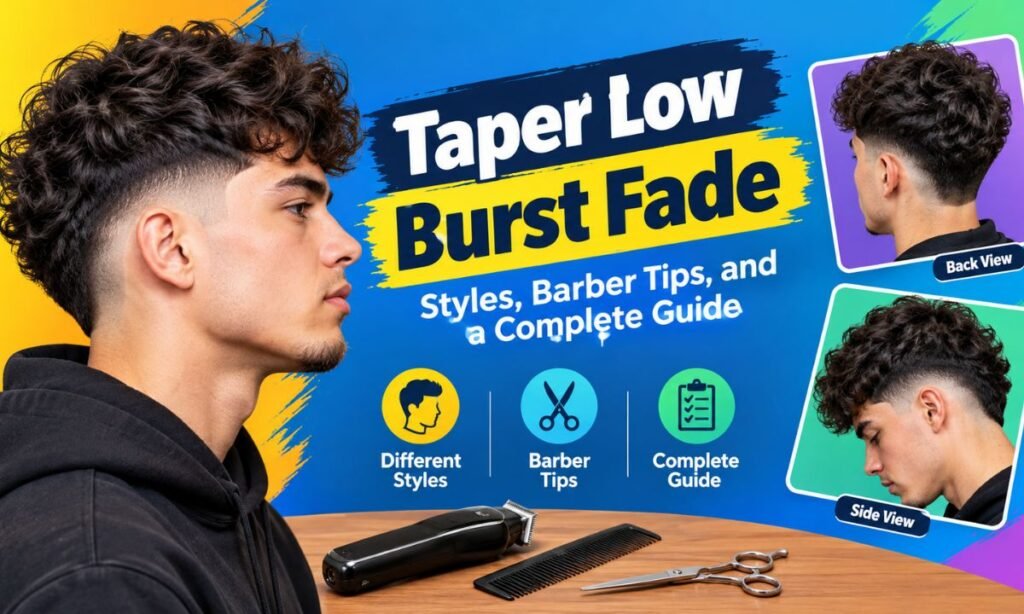
Ask for a “fade” and five barbers hand you five different haircuts. 😅 The taper low burst fade clears up the mess. It pairs a soft low taper with a curved burst around the ear. You get a cut that looks sharp, clean, and easy to live with.
Here’s what you’ll learn: what the cut is, who it suits, the best styles to ask for, and the exact words to say in the barber chair. You’ll also get upkeep tips and the mistakes to dodge.
What a taper low burst fade is
A taper low burst fade is a haircut that mixes a low taper with a curved burst fade around the ear. The low taper softens the sides and neckline. The burst adds a rounded arc that a plain fade doesn’t have.
Ever sat in the chair and wondered what your barber really means by “taper” or “burst”? You’re not alone. The words get tossed around loosely. So let’s split the cut into two simple parts.
The low taper part
The low taper trims hair shorter as it drops toward the sideburns, the ears, and the neckline. It starts low. That leaves more length on the sides. The blend stays soft. It rarely shows bare skin unless you ask for it.
Why does “low” matter? It sets where the shortest hair sits. A low start keeps the cut close to the ear and the nape. A mid or high start climbs toward the temple and looks louder.
The burst part
The burst is the curve. Instead of a straight line, the short hair arcs around the ear in a semi-circle. Picture a tiny sunrise sitting over your ear. The hair at the back stays longer. Your nape keeps its weight.
Look at it from behind and you’ll see the point. A plain fade runs across the back like a belt. A burst stops at the ear and lets the back fall long. That contrast is the whole charm.
Is it a real name or just a search phrase?
One honest note. The phrase taper low burst fade isn’t an official trade term. Some barbers say burst taper. Others say soft burst. A few just say “low burst.” A photo beats a name every time.
The low taper fade even turned into a meme in 2024. A joke song about the streamer Ninja getting one spread online. He later said he got the cut. Funny how a haircut can go that far. 😄
[Image] Caption: The curve that sets a taper low burst fade apart from a plain fade.
A quick history of taper and burst cuts
Fade-style cuts have deep roots. Many barbers trace the fade to Black barbershops and to military cuts. From there it spread into everyday style. The idea stayed the same: short at the bottom, longer on top, blended in between.
The temple fade, also called the Brooklyn fade, took off in the late 1990s and early 2000s as a spin on the bald fade. Tapers stayed the calm cousin. The burst grew popular more recently as a rounded twist. Now you’ll spot the shape in shops from Toronto to Sydney. 🌍
So where does a taper low burst fade fit? It sits between the classic taper and the bold burst. You get old-school neatness plus a fresh curve. Barbers like it because clients can describe it. It also repeats well from visit to visit.
Taper vs low fade vs burst fade
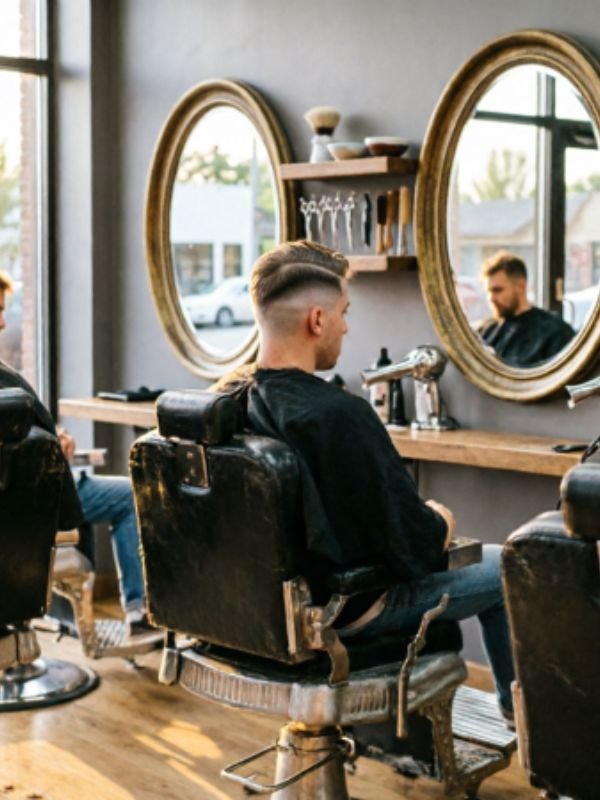
A taper trims gently. A low fade blends lower and shorter. A burst fade curves around the ear. Each one changes the shape in its own way.
Are these three just different names for one cut? Nope. They look close in photos. Up close, they act very differently.
| Cut | Where the blend goes | Shortest point | Look | Rebook |
|---|---|---|---|---|
| Taper | Sideburns and neckline | Short, not bare | Soft and neat | 3 to 5 weeks |
| Low fade | Starts low above the ear and wraps back | Zero or skin | Sharp and clean | 2 to 3 weeks |
| Burst fade | Half-circle around the ear | Skin, zero, or shadow | Bold and rounded | 2 to 3 weeks |
| Taper low burst fade | Low taper plus a soft curve | Shadow to zero | Clean with detail | About 3 weeks |
Think of them as volume knobs. A taper is the quiet setting. A burst fade is the loud one. This cut sits in the middle, which is why so many guys ask for it.
One detail trips people up. “Low” only tells you where the blend starts. “Burst” tells you the shape. “Taper” tells you how soft the finish is. Say all three words. Your barber sees the full picture.
Here’s a quick photo test to tell them apart:
- Straight line across the back? That’s a fade.
- Soft blend only at the edges? That’s a taper.
- Half-moon around the ear with a long nape? That’s a burst.
- Half-moon plus a soft, low finish? That’s your cut.
ALSO READ “Burst Fade Mullet: 25 Styles + How to Pull It Off“
Who a taper low burst fade suits
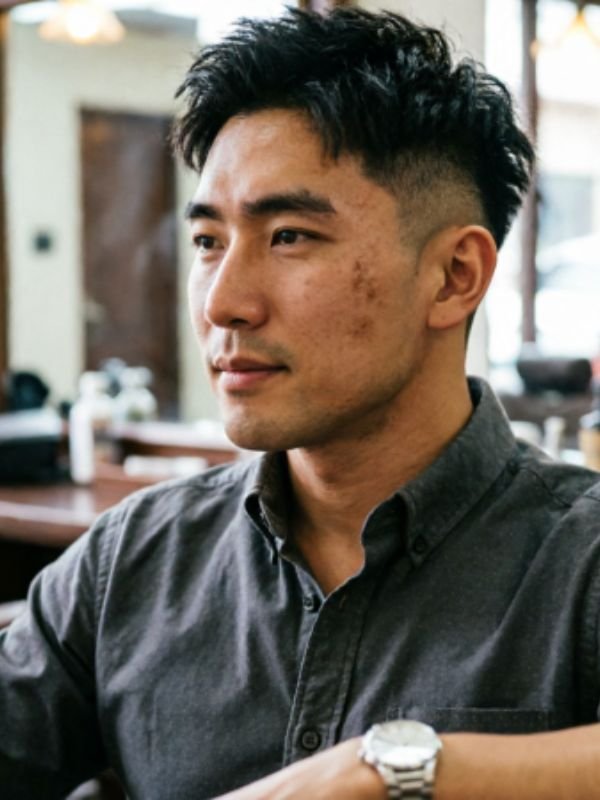
Nearly anyone with hair on top can pull off a taper low burst fade. It shines on guys who want a clean look with a little edge. Your hair type and face shape just guide the details.
Will it look right on your head? Will your hair play along? Fair questions. Let’s check hair first. Then we’ll look at face shape.
Hair types
- Straight hair: The curve shows up sharp and clear. Keep the top textured so it doesn’t look flat.
- Wavy hair: The arc looks relaxed and melts into your natural movement.
- Curly and coily hair: Curls add height. The burst gives them crisp edges to sit on.
- Fine or thinning hair: Ask for a shadow finish instead of skin. Softer sides hide scalp show-through better.
- Thick hair: A bit more taper work keeps the sides from puffing out.
Face shapes
| Face shape | What to ask for | Why it works |
|---|---|---|
| Round | Slightly higher burst, more height on top | Adds length and slims the jawline |
| Square | Low burst with a soft blend | Softens a strong jaw |
| Oval | Almost any height | Already balanced |
| Heart | Low taper, sides a touch fuller | Keeps focus off a wide forehead |
| Long or narrow | Low burst, shorter top | Avoids extra height |
[Image] Caption: Face shape guide showing how a low burst adapts to round, square, and oval faces.
Picture this. Your friend Bilal has a round face and thick curls. He asks for a low burst with a tall, fluffy top. The arc slims his sides. The height stretches his face. Small tweak, big change. 😎
What about a receding hairline?
Worried the fade will show it off? A soft low taper is kinder than a high skin fade here. It keeps some hair near the temple and hides the line. Ask your barber to leave the front edge natural. Skip a sharp line-up if the hairline is uneven.
Does head shape matter?
Yes. Your skull shape decides where the arc looks best. A flatter back of the head may want a slightly longer nape. A rounder head can carry a tighter curve. A good barber checks the contour of your head before the first pass.
If yours doesn’t, ask. A taper low burst fade works best when the curve follows your head, not just a photo.
Best styles to ask for
The best styles pair the burst with a top that matches your hair and your day. Here are eight that work. Pick one, then tweak it. Each comes with an “Ask for” line. Read it out loud at the shop. Change the numbers to fit your top length and your taste.
Textured crop
A short, messy top with a soft taper on the sides. Rough it up with matte clay. It’s easy to style and hard to mess up. This is the safest pick if it’s your first burst.
Ask for: a low burst, a shadow finish, and about two inches on top.
Curly top
Let the curls stack up while the sides stay tidy. Keep them soft with curl cream. The arc frames the shape like a picture frame. It’s a fun look on coily hair too.
Ask for: a low taper, a zero finish, and curls left long on top.
[Image] Caption: Textured crop with a low burst, the easiest first-timer look.
Burst fade mullet
Short sides, longer back. The burst leaves length at the nape. That fits this cut well. It’s bold. Go low if you want to keep things calm.
Ask for: a soft burst, a long nape, and short sides.
Buzz cut with a burst
A tight top with a rounded edge around the ear. Think lazy morning, sharp result. You skip the styling. The fade does all the talking.
Ask for: a #2 guard on top and a zero at the burst.
Wavy flow
Keep the top medium length and let it move. A spritz of sea salt spray adds texture. The soft burst keeps the waves from looking messy.
Ask for: a shadow burst and a medium top with light layers.
Side part
Neat, office-ready, and a little old school. Use pomade for a clean line. Ask for a shadow finish to keep it calm. Your manager will barely notice. You will.
Ask for: a low taper, a shadow finish, and a clean part line.
Slick back
Comb the top back and let the sides stay short. The low taper keeps it grown-up. The burst adds a small twist. It’s a good pick for dinners and dates. 🍽️
Ask for: a low burst and a top long enough to comb back.
Beard blend
Bearded? Ask your barber to melt the burst into the sideburn and beard line. The low taper gives the softest link. It looks planned, not patched.
Ask for: a burst that blends into the sideburn and the beard.
What’s trending with this cut right now
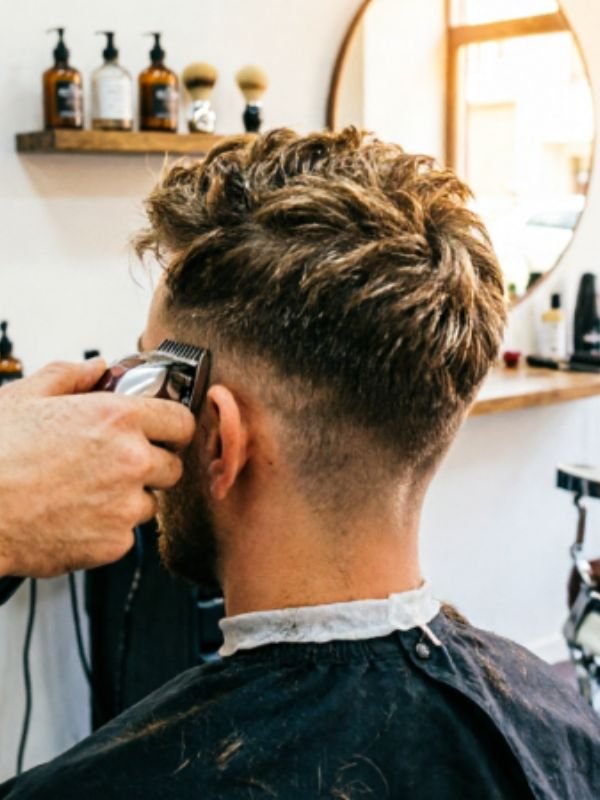
Barbers keep mixing the burst with other shapes. The blowout taper plus burst combo shows up all over short-video feeds. Longer tops, textured crops, and burst mullets are getting plenty of attention too.
Why the buzz? Guys want a cut that looks sharp with no fuss. A taper low burst fade fits. The low start keeps it friendly. The arc gives it a hook.
Two things stay steady across every trend: clean edges and a clear shape. Those never go out of style.
Trends move fast. Don’t chase every clip. Pick the version that suits your hair and your week. A good cut you can maintain beats a wild cut you can’t.
How to ask your barber for it
Say the shape, the height, the finish, and the top length. Then show a photo. That’s the whole trick.
Walking in and saying “just a fade” is a gamble. Barbers read that phrase ten ways. Give them four clear details instead.
- Shape: “A burst that curves around my ear.”
- Height: “Low, starting near the ear and neckline.”
- Finish: “Shadow, zero, or skin at the shortest point.”
- Length: “Keep the back long and blend it into the top.”
A script you can copy
“I’d like a low taper with a soft burst around the ear. Finish at a zero, not skin. Keep the length in the back and blend it into my top.”
Asking for a taper low burst fade by name is fine. Just add a photo so you both see the same haircut. Terms vary from shop to shop. Pictures don’t.
Photo rules
- Bring two or three photos.
- Include a side view and a back view.
- Pick hair that looks like yours.
- Say what you like about the photo. Say what you’d change.
Inside the chair: what your barber actually does
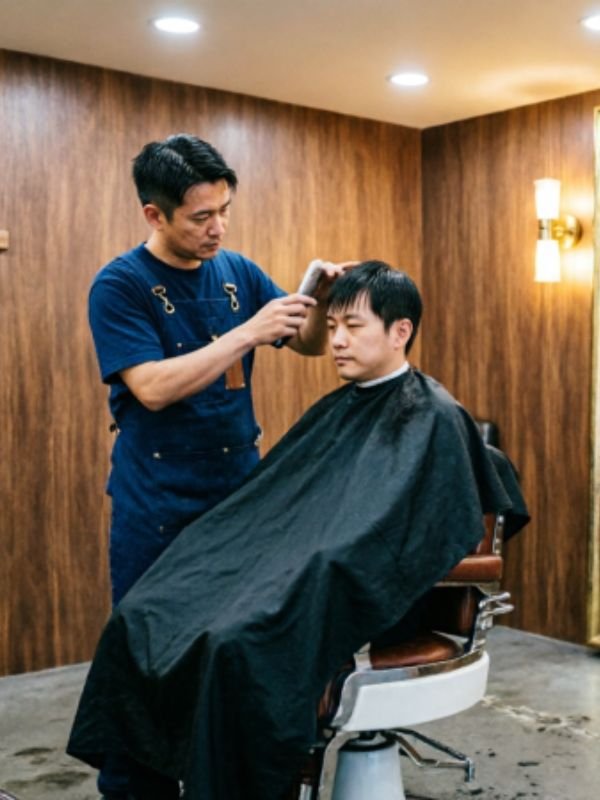
Your barber marks the shape, blends with clipper guards, then cleans the edges. Knowing the steps helps you spot a good cut.
Ever wonder why the chair time feels long? Blending takes patience. Each guard change is small. That’s what hides the lines.
- Map the shape. The barber picks where the arc starts and where the low taper begins.
- Start short, climb up. Guards go in steps, like a #1, then a #2, then a #3.
- Blend the lines. A flick of the wrist or clipper-over-comb work erases any hard edge.
- Detail the edges. A trimmer cleans the hairline, the sideburns, and the neckline.
- Check both sides. A hand mirror shows if the curves match.
[Image] Caption: Guard steps in action, from a #1 to a #3, blending softly around the ear.
A #1 guard leaves about an eighth of an inch. A #2 leaves a quarter. A #3 leaves three eighths. Those small jumps make the blend look smooth.
Now the finish at the shortest point:
- Shadow: faint stubble, soft and natural
- Zero: very close, cleaner contrast
- Skin: bare scalp, boldest look
Detail work takes a little longer than a basic cut. Book a longer slot and skip the rush. 🕒
Barber talk decoded
Barber words can sound like code. Here’s a cheat sheet to keep you sharp in the chair. Learn a few terms and you’ll sound like a regular. Keep it handy for your next taper low burst fade visit.
| Term | What it means |
|---|---|
| Guard | A clipper attachment that sets hair length |
| Shadow | A faint stubble finish at the shortest point |
| Zero | Very close, with just a hint of hair |
| Skin | Bare scalp at the shortest point |
| Edge-up | A quick clean of the hairline and neckline |
| Line-up | Straight, sharp lines cut at the front hairline |
| Weight line | The spot where long hair meets short hair |
| Nape | The back of the neck where the hairline ends |
| Temple | The area beside the forehead near the eyes |
Not sure what a term means mid-cut? Just ask. Barbers love a curious client.
Keeping a taper low burst fade sharp
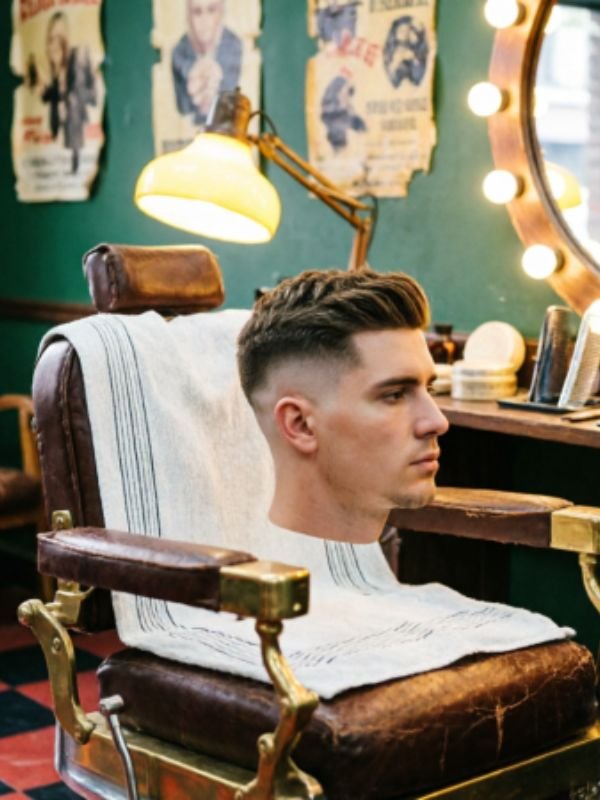
A trim every two to three weeks keeps the arc crisp. Stretch it to four weeks if you like the look softer.
Will it look bad after two weeks? Not bad, just softer. The curve blurs first. The neckline follows.
| Week | What you’ll see | What to do |
|---|---|---|
| 1 | Fresh and crisp | Wash as usual |
| 2 | Faint fuzz at the edges | Style lightly or ask for a quick edge-up |
| 3 | The arc softens and the nape grows | Best time to rebook |
| 4 and later | The fade looks blurry | Book now, since it takes more work to fix |
Picture this. Danny loves his fresh burst. He waits six weeks to rebook. The arc has blended into the back. His barber spends half the visit just rebuilding the shape. Two-week Danny would’ve had it easier.
A few habits help between visits:
- Moisturize your scalp. Short sides dry out fast.
- Wear sunscreen on the faded areas outside.
- Skip home clippers on the arc. One slip ruins the curve.
- Ask if your barber offers quick neck cleanups between full cuts.
Washing and daily care
Wash your hair as usual. Use a gentle shampoo and rinse well. Short sides show flakes fast. A light moisturizer helps. Pat the sides dry instead of rubbing. Fresh skin near the neckline can feel tender after a cut. Skip harsh products for a day.
If bumps or itching show up along the neckline, tell your barber. Clean tools and a lighter finish often help. Ongoing irritation is a job for a doctor or a skin specialist.
How often do you rebook? Tell us in the comments. I’m curious. 👇
Mistakes that ruin the cut
The biggest mistakes are vague requests, missing photos, and waiting too long between trims. Most are easy to dodge.
Picture this. Omar shows a front-facing photo. His barber can’t see the arc. He leaves with a straight fade and a sad face. Here’s how to avoid that story:
- Saying “just a fade.” It means ten things to ten barbers.
- Showing only a front photo. The burst lives at the sides and back.
- Copying a photo with different hair. Thick curls and fine straight hair act differently.
- Fading too high. Cutting above the point where the head rounds off can make your head look like an egg.
- Choosing skin by accident. Say shadow or zero if you want it soft.
- Skipping product on top. The fade does half the job. The top does the rest.
- Waiting six weeks. Your barber then has to rebuild the shape, not just refresh it.
- Ignoring your dress code. A bold arc at a strict workplace can cause friction.
Most of these come down to one thing: talking. A two-minute chat at the start saves two weeks of regret. A taper low burst fade rewards clear words, clear photos, and on-time rebooking. Speak up early. Barbers like clear clients.
Myths about the taper low burst fade
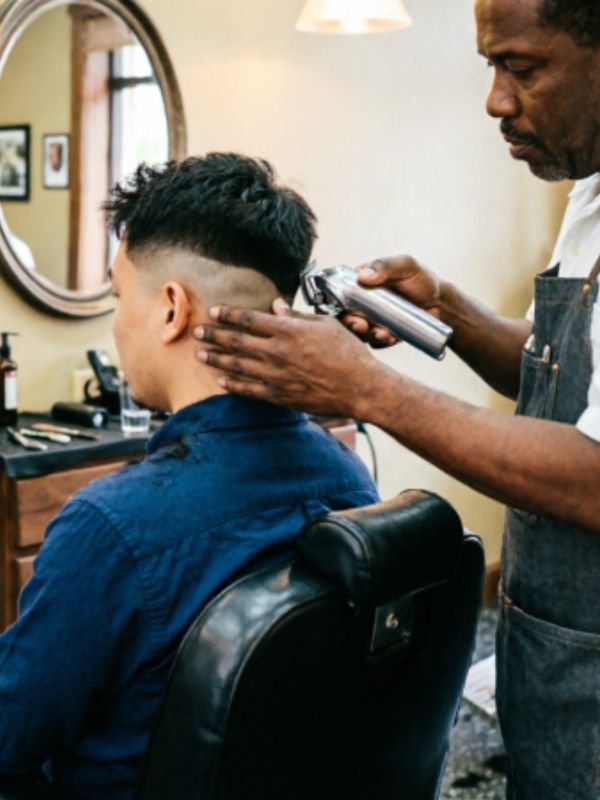
Let’s clear up a few things people say at the shop. Some are half true. Some are just noise.
- “It only works on curly hair.” Not true. Straight, wavy, and curly hair all carry a burst well.
- “It always means skin.” Nope. Shadow and zero finishes keep it soft.
- “Low means boring.” The low start sets the calm base. The burst adds the detail.
- “You can’t have a beard with it.” You can. Ask for a blend into the beard line.
- “It grows out perfectly.” Not always. On some hair the arc can look uneven as it grows. Rebook a bit sooner.
Heard another myth? Drop it in the comments. I’ll add it to the list. 💬
Styling it at home
Rough-dry the top, warm a pea-size dab of product, and shape it with your fingers. Five minutes is plenty.
Don’t have a big routine? Good news. A taper low burst fade does half the styling work for you. The sides stay neat. You only style the top.
- Wash and towel-dry. Leave the top slightly damp.
- Rough-dry with a blow dryer on medium heat. Lift with your fingers.
- Warm a pea-size dab of product between your palms.
- Work it from roots to tips.
- Shape it, then stop touching it. 😄
Curly hair? Put curl cream on damp hair and let it air-dry or diffuse. Fine hair? Try texture powder at the roots for lift with no shine.
| Product | Best for | Finish |
|---|---|---|
| Matte clay | Textured crops | Flat, gritty hold |
| Sea salt spray | Waves and messy tops | Light, beachy lift |
| Texture powder | Fine hair | Lift with no shine |
| Curl cream | Curls and coils | Soft definition |
| Pomade | Side parts and slick backs | Shine and firm hold |
Quick recipes by hair type
- Straight: Rough-dry, add clay, and push the top forward.
- Wavy: Spray sea salt on damp hair, scrunch, and air-dry.
- Curly: Work cream into damp hair, scrunch, and diffuse on low heat.
- Coily: Use a leave-in moisturizer, shape with your fingers, and pick out gently.
Too much product is the classic trap. Start small. You can always add more. You can’t take it out without a second shower. 🚿
Taper low burst fade vs blowout taper
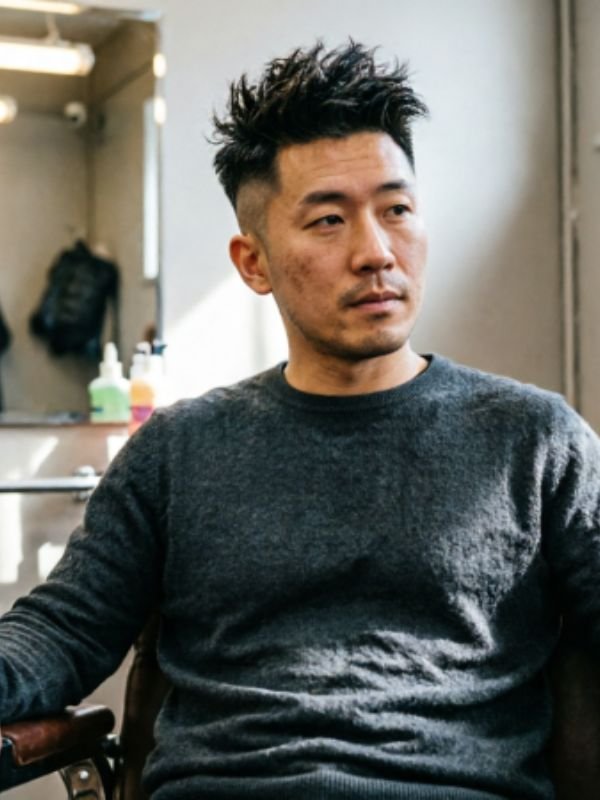
The taper low burst fade curves around the ear. The blowout taper keeps the short work in a narrow band and stacks height on top. One shapes the sides. The other shapes the volume.
Confused because both get called a “taper”? That’s normal. The clipper work is where they split. A blowout taper hugs the hairline and neckline. The burst wraps around the ear in a half-circle.
| Feature | Taper low burst fade | Blowout taper |
|---|---|---|
| Clipper work | Curved arc around the ear | Narrow band at hairline and neckline |
| Top | Any length | Longer and lifted |
| Daily effort | Low to medium | Medium, needs a blow dryer |
| Rebook | About 3 weeks | About 3 to 4 weeks |
| Best for | Clean shape with detail | Height and volume |
Round or shorter faces often like the extra height of a blowout taper. Long or narrow faces often do better with the burst. Want both? Ask for the top of a blowout taper and the sides of a low burst.
On very curly hair, some barbers lean toward the blowout taper. The soft blend can flatter the curls. A burst can look uneven as it grows out. Your barber knows your texture best. Ask.
Which one wins for a lazy morning? The burst. A blowout taper wants a blow dryer and a few minutes of lift. Skip a day and it can fall flat.
Is it okay for school, work, or formal settings?
Yes, a soft taper low burst fade fits most schools and offices if you keep the finish at shadow and the top neat. Loud versions are the ones that turn heads.
Will your teacher or manager side-eye it? It depends on the dress code. A strict code calls for the softest version. A relaxed one gives you room to go bolder.
- School: Check the handbook. Ask for a shadow finish and a neat top.
- Office: Pair it with a side part. Keep the arc small and low.
- Interviews and weddings: Book your trim two or three days before. Edges settle by then.
- Creative jobs: Go bolder with a mullet or a textured top.
Playing on a team or wearing a uniform? Ask a coach or teacher first. A quick question saves a haircut do-over.
Not sure where your workplace lands? Look at your boss’s haircut. Then look at the loudest cut in the room. Aim between the two. That’s your safe zone. 🎯
Three quick stories: which version fits which guy
Sometimes examples beat rules. Here are three guys and the cut that fits each one.
Ali works in a bank. His dress code is strict. He asks for a taper low burst fade with a shadow finish and a neat side part. The arc is small. Nobody blinks. He still feels fresh.
Sam is a college student who hates mornings. He gets a low burst with a textured crop and a zero finish. He rubs in clay and leaves. Five minutes, done. A taper low burst fade suits his lazy mornings.
Hamza hits the gym daily and wears a beard. He picks a low burst that melts into the beard line, with a short buzz on top. Sweat doesn’t bother it. His taper low burst fade stays sharp because he rebooks every two and a half weeks.
How to pick a barber who nails burst work
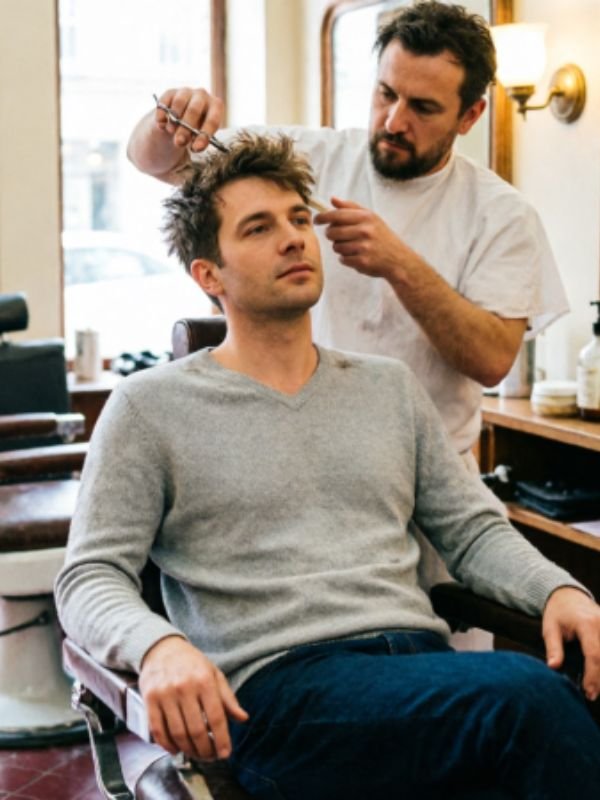
Look for a barber whose page shows clear side and back photos of burst cuts. Curves are hard to fake.
How do you spot a pro? Scroll their feed. Look for clean arcs and smooth blends. Skip patchy lines.
- Check their portfolio for side and back views.
- Read reviews that mention fades.
- Ask which guard they’d start with.
- Book a short chat first if you’re nervous.
- Trust the barber who asks how often you’ll rebook.
That last one matters. A barber who plans your next visit cares about the whole month, not just the chair time.
What about cost? Detail work often costs a little more than a basic cut. Prices vary by city and shop. Ask before you sit down. No surprises. 💸
Living with the cut: gym, hats, and hot weather
Life gets in the way of a fresh cut. Sweat, hats, and sun all play a part. Here’s how to keep the look calm through real days.
- Gym days: Sweat can soften the top. Rinse, towel-dry, and re-style with a dab of product.
- Hats and helmets: They press the top flat. Fluff it with your fingers when you take it off.
- Hot weather: Short sides feel cool, but the skin can burn. Put sunscreen on the faded areas.
- Pools and salt water: They dry the hair. Rinse after and add a little moisturizer.
Do you wear a cap every day? Tell your barber. They can leave a touch more length on top so it bounces back better. 🧢
How to test it before you commit
Start soft and go shorter next time. You can always take more off. You can’t put it back. 😬
Not sure about the burst? Try this plan:
- Ask for a shadow finish on the first visit.
- Take side photos on day one and day ten to see the grow-out.
- Ask your barber to sketch the line with a trimmer before the final cut.
- Wear it for two weeks before you decide on a bolder finish.
Before you lock in a taper low burst fade for good, treat the first cut like a test drive. You learn how it grows. You learn how it styles. Then you pick the exact height and finish for round two.
Personalization tips
Small tweaks make your taper low burst fade yours. Change the height, the finish, or the top. It becomes a new haircut.
- Match your job. Strict office? Keep the burst small. Creative? Go louder.
- Match your scalp. Sensitive skin does better with shadow than skin.
- Add a part. A hard part adds edge with no extra styling.
- Play with the top. A textured crop, curls, or a side part changes the whole vibe.
- Ask your barber about your head shape. Skull shape decides where the curve looks best.
Want a signature look? Keep one detail the same every visit. Maybe it’s the finish. Maybe it’s the part. People start to know your cut by that detail. That’s identity, not just hair. ✂️
Quick checklist before you book
Save this for the ride to the shop:
- Pick the height: low is the calm choice.
- Pick the finish: shadow, zero, or skin.
- Pick the top: crop, curls, part, or slick back.
- Save side and back photos.
- Plan your next trim for about three weeks out.
- Tell a friend so they stop saying “just a fade.” 😉
Go deeper: low taper fade guides
Want more? These reads cover the neighbors of this cut:
- Low taper fade with a textured fringe
- Low taper vs drop fade
- Low taper fade with a buzz cut
- Low taper vs burst fade
- Blowout taper explained
FAQs about the taper low burst fade
What is a taper low burst fade?
It blends a low taper on the sides and neckline with a curved burst around the ear.
Is it the same as a burst fade?
No. A burst fade is the curve. This cut softens it with a low taper.
How often should I get a trim?
Every two to three weeks keeps it crisp. Go up to four if you like it soft.
Does it work on curly hair?
Yes. Curls add height and the arc frames them cleanly.
Should I pick skin, zero, or shadow?
Shadow is softest. Zero is closer. Skin is the boldest.
What do I tell my barber?
Ask for a low taper with a soft burst around the ear. Bring side and back photos.
Is it office friendly?
Yes, with a shadow finish and a neat top.
Can I do it at home?
Leave the arc to a barber. Use home clippers only for light neck cleanup.
Final take
The taper low burst fade gives you a clean cut with a little swagger. It stays soft at the neckline and sharp around the ear. Ask with a photo, pick your finish, and rebook every three weeks.
Choose the height and top that suit your face and your week. Then walk in with confidence. Tried it already? Share your favorite version and tell a friend who’s stuck saying “just a fade.” 💈

1 thought on “Taper Low Burst Fade: Styles, Barber Tips, and a Complete Guide”