
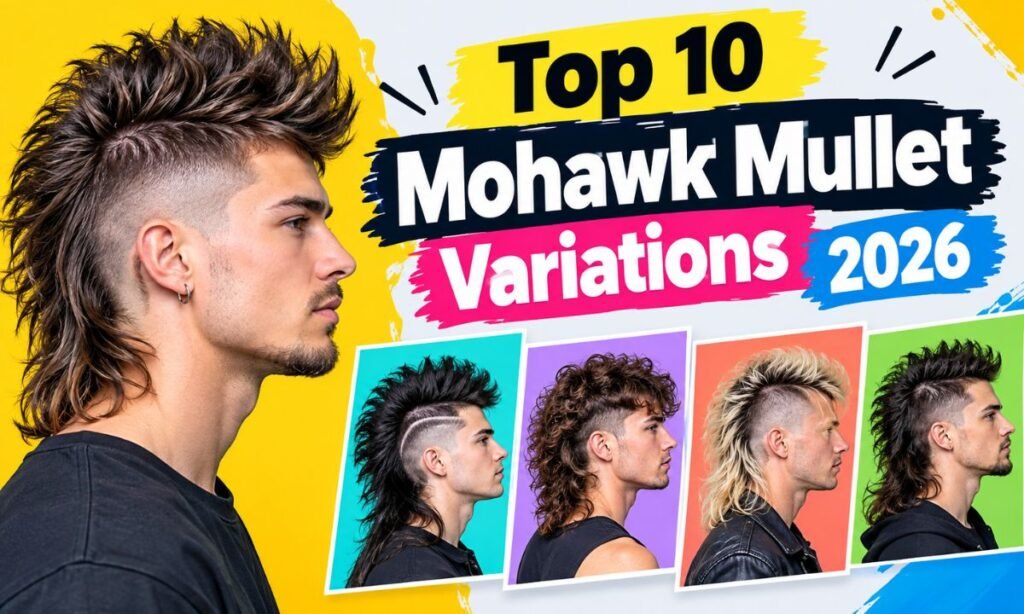
You want a haircut that turns heads. Not just “nice cut” heads. Full stop, double-take, “wait, go back” heads. That’s what the mohawk mullet does. It grabs the rebellious spike of a mohawk and mixes it with the party-in-the-back length of a mullet. The result is one of the boldest edgy haircuts you can walk into a barbershop and ask for right now.
This guide breaks down the top 10 mohawk mullet styles going into 2026, how to style each one, which fade pairs best with it, and how to keep it looking sharp between trims. By the end, you will know exactly which version fits your hair type and your face shape.
No two barbershops describe this cut the same way either, which honestly adds to the fun. Some call it a hawk mullet, others say hybrid mullet or punk mullet. Whatever the name, the bones of the style stay consistent across every version on this list.
[Image suggestion: split-screen photo of a burst fade mohawk mullet vs a classic long mullet, captioned “Mohawk mullet vs traditional mullet: spot the difference”]
The Ultimate Guide to Modern Mohawk-Inspired Mullet Styles
So what actually makes a mohawk mullet different from a regular mullet? It comes down to the top. A standard mullet keeps some length all over the crown. This hybrid cut shaves or fades the sides hard, leaving a raised strip or ridge down the center, while the back keeps that classic mullet length flowing down the neck.
Think of it as two haircuts having a conversation. The mohawk brings the punk energy. The mullet brings the “business up front, party in the back” attitude. Together, they make a cut that feels current without losing its rebellious roots.
This style first got popular in punk rock and skate scenes decades ago, then faded out for a while. Now it is back, thanks to festival culture, TikTok barbers, and a general shift toward haircuts that actually say something about who you are. You’ll spot it on musicians, athletes, and regular guys who just want their haircut to have a pulse.
The best part? A mohawk mullet is not one look. It is a whole family of styles. Some are tight and clean for the office. Others are wild enough for a mosh pit. That range is exactly why this list has ten distinct versions worth knowing.
Top 10 Modern Mohawk Mullet 2026
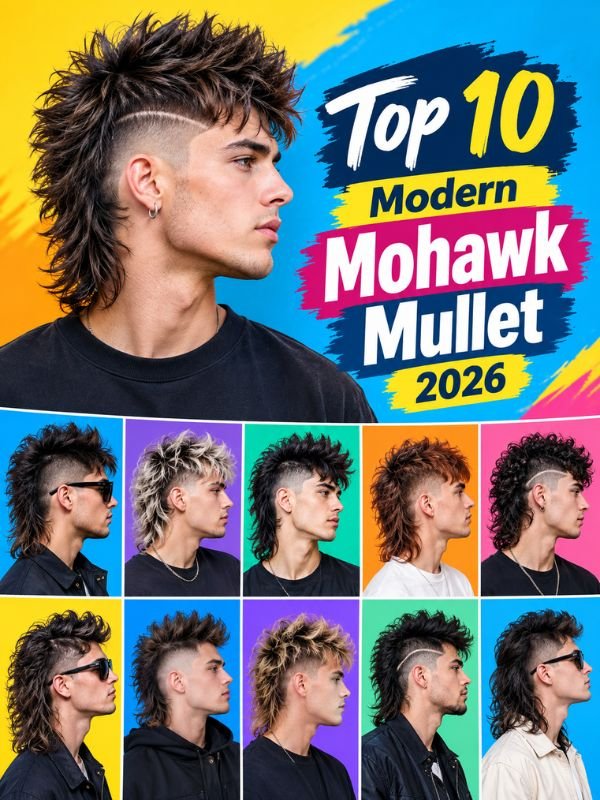
Before you book your next barber appointment, it helps to see these side by side. Here’s a quick snapshot of how the ten styles compare on maintenance, best hair type, and vibe.
| Style | Maintenance Level | Best Hair Type | Vibe |
|---|---|---|---|
| Mohawk Burst Fade Mullet | High | Straight, thick | Athletic, sharp |
| Mohawk Taper Mullet | Low | Any | Everyday, versatile |
| Mohawk V-Back Mullet | Medium | Straight, wavy | Clean, structured |
| Mohawk Curly Mullet | Medium | Curly, coily | Natural, expressive |
| Mohawk Straight Mullet | Low | Straight | Sleek, minimal |
| Mohawk Wolf Mullet | Medium | Thick, wavy | Shaggy, rugged |
| Mohawk Drop Fade Mullet | High | Straight, wavy | Modern, rounded |
| Mohawk Shag Mullet | Medium | Fine, wavy | Retro, layered |
| Mohawk Textured Mullet | Medium | Thick, coarse | Edgy, dynamic |
| Mohawk Fringe Mullet | Low | Straight, wavy | Youthful, playful |
Now let’s break each one down.
Mohawk Burst Fade Mullet
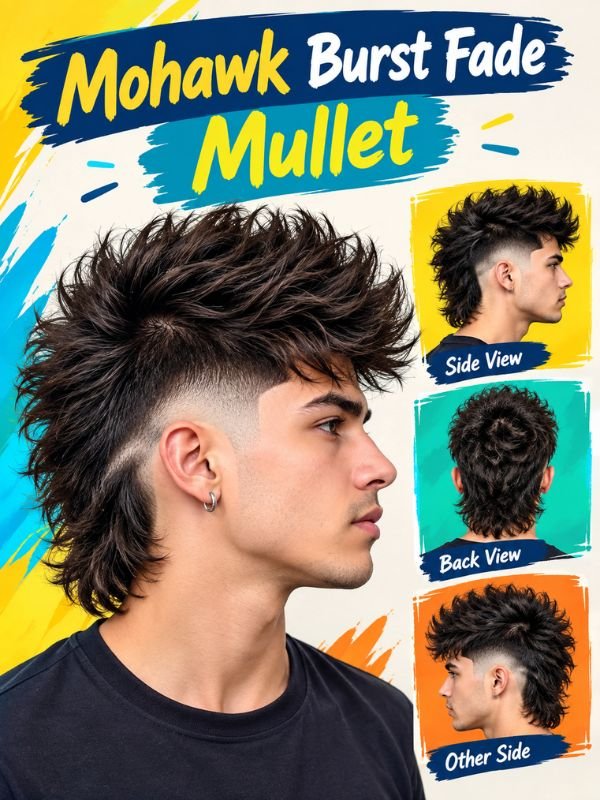
This is the version most people picture first when they hear mohawk mullet. The sides get a tight burst fade, meaning the fade curves around the ear instead of running in a straight line up the head. That curve makes the strip on top look like it is “bursting” outward.
The back keeps its mullet length, usually landing somewhere between the collar and the shoulders depending on how long you let it grow. Barbers love this cut because the burst fade shows off precision, and it photographs incredibly well under stage or festival lighting.
If your face shape is oval or square, this one works especially well. The sharp sides balance out stronger jawlines, and the height on top adds length to rounder faces. Just know this style needs a touch-up schedule every two to three weeks to keep the fade crisp.
Styling wise, a small amount of matte clay worked through the top gives you texture without shine. Comb it up and slightly back for a look that reads more “rockstar” than “just woke up.”
ALSO READ “Burst Fade Mohawk Haircut“
Mohawk Taper Mullet
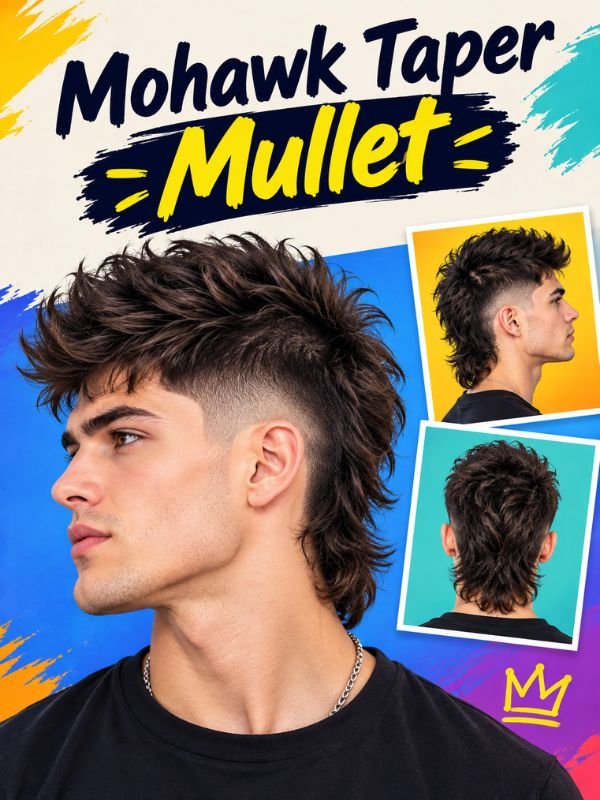
Want something you can wear to work and to a concert without changing a thing? The mohawk taper mullet softens the whole look. Instead of a razor-sharp burst fade, the sides taper gradually from skin to length, blending into the strip on top.
This is the low maintenance option on this list. Because there is no hard line to maintain, you can go four to six weeks between barber appointments and it still looks intentional. That makes it a smart pick if you are new to this whole world of hybrid cuts and not ready to commit to constant upkeep.
The top can be worn messy or slicked depending on your mood. Curly hair, wavy hair, straight hair, it honestly does not matter much here. The taper is forgiving across almost every hair type, which is exactly why it shows up on so many “first mohawk mullet” recommendation lists.
For styling, a light texturizing spray paired with a quick blow-dry for volume keeps things looking full without weighing the top down.
Mohawk V-Back Mullet
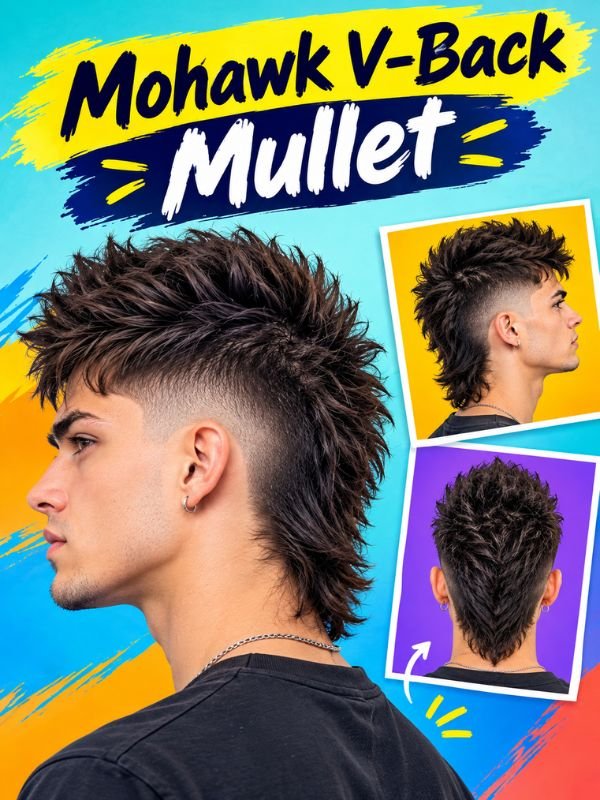
Here’s where things get architectural. The V-back mullet takes the classic shaved-sides-and-strip shape and cuts the nape into a sharp V instead of a straight or rounded line. That V draws the eye down the neck and gives the whole cut a tailored, almost formalwear feel.
This variation suits guys with straight or slightly wavy hair best, since the crisp V line needs hair that lays flat to really show. If your hair curls or coils naturally, the V can still work, but you’ll want your barber to define it a bit deeper so it doesn’t get lost in the texture.
The mohawk strip on top pairs beautifully with this back detail because both elements share that same sense of intentional geometry. Nothing about this cut looks accidental, and that’s the point.
Maintenance sits in the middle. The V-line needs a refresh every three to four weeks, but the sides can stretch a bit longer between visits since there’s no fade to blur.
Mohawk Curly Mullet
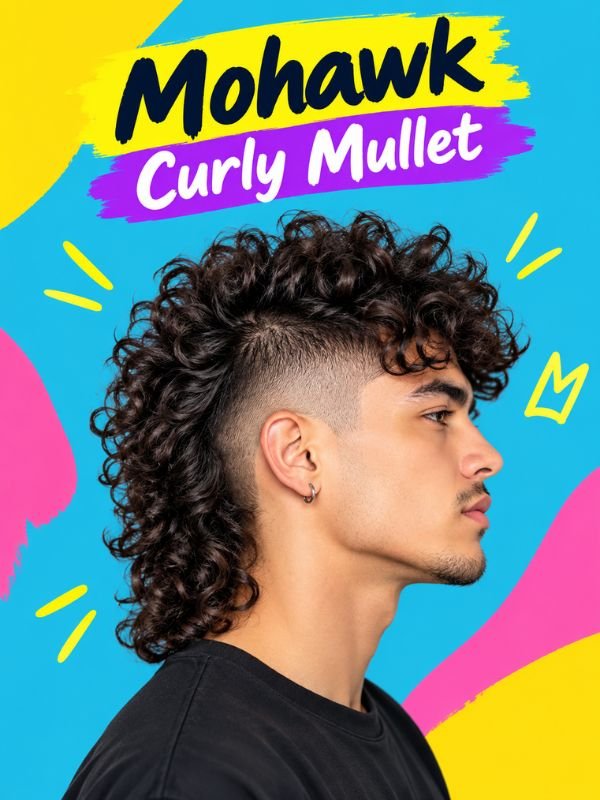
If your hair curls on its own, do not fight it. The curly mohawk mullet leans all the way into natural texture, letting spirals and coils do the heavy lifting instead of gel or pomade. The center strip puffs up naturally, and the back curls down the neck with real movement.
This is one of the most expressive versions on the list. Curly and coily hair types get compliments here because the volume looks intentional rather than forced. You genuinely need less product than the straight-hair versions, since curls hold shape on their own.
A curl-defining cream applied to damp hair, then air-dried or diffused, brings out ringlets on top while keeping the back soft and bouncy. Round and square faces both do well with this one, since the curl volume balances angles nicely.
Trims matter more here than fades do. A curl specialist trimming every six to eight weeks keeps the shape without stripping your natural pattern.
Mohawk Straight Mullet
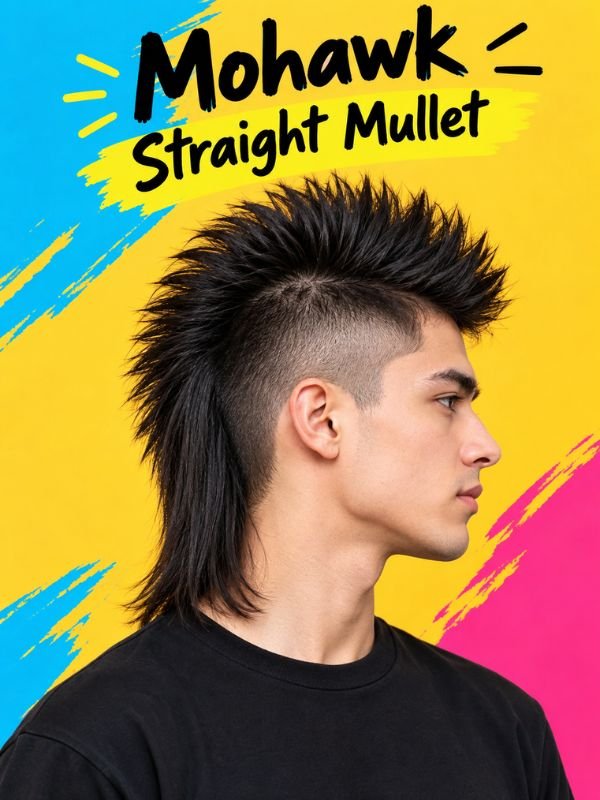
On the opposite end sits the straight mohawk mullet. Sleek, minimal, almost architectural in how clean the lines look. The top lies flatter than the burst fade version, more of a raised ridge than a spiky peak, and the back falls straight down without much layering.
This cut reads more “modern minimalist” than “punk rocker,” which makes it a solid pick for guys who like the hybrid concept but want something office-appropriate. Straight hair naturally suits this best, since there’s no texture fighting the sleek line.
Styling takes almost no effort. A comb, a small amount of light-hold gel, and you’re done in under two minutes. That simplicity is exactly why this version keeps climbing search trends heading into 2026.
Mohawk Wolf Mullet
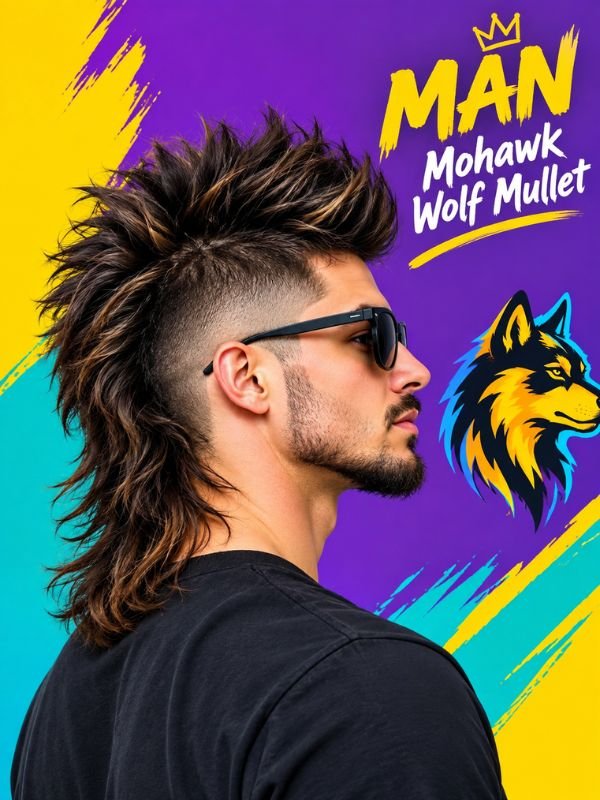
The wolf mullet already blew up as its own trend, a shaggy, choppy mullet with tons of layers. Add the mohawk element and you get a cut that looks like it belongs in an apocalypse movie, in the best way possible.
Thick or wavy hair works best here, since the layers need enough density to create that rugged, wind-blown shape. The top gets textured rather than sharply defined, more “tousled ridge” than “clean spike.” The back stays choppy and uneven on purpose, avoiding the neat lines of other mullet variations.
This is a genuinely low maintenance cut once it’s grown in, though the initial layering appointment takes real skill. Ask specifically for a barber who has done wolf cut work before, since not every shop is confident with this level of intentional messiness.
Finish with a sea salt spray and scrunch damp hair for that lived-in, festival-ready texture.
Mohawk Drop Fade Mullet
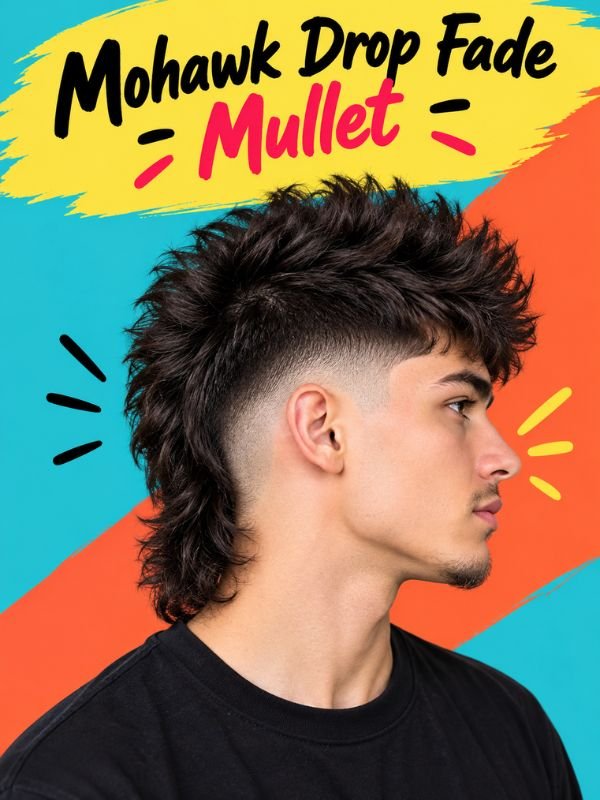
A drop fade curves downward behind the ear instead of staying level, and pairing it with this hybrid style gives the whole cut a rounder, more modern silhouette. It’s a favorite among barbers who like showing off fade skill without going full burst.
Straight and wavy hair types get the cleanest results, since the drop needs to read clearly against the mullet length in back. The top strip usually gets styled upward and slightly forward, adding height without looking like a costume.
This one demands regular upkeep, similar to the burst fade version. Every two to three weeks keeps the drop line sharp. Skip a few weeks and it starts blending into a regular taper, which some guys actually prefer as a low-effort in-between look.
Mohawk Shag Mullet
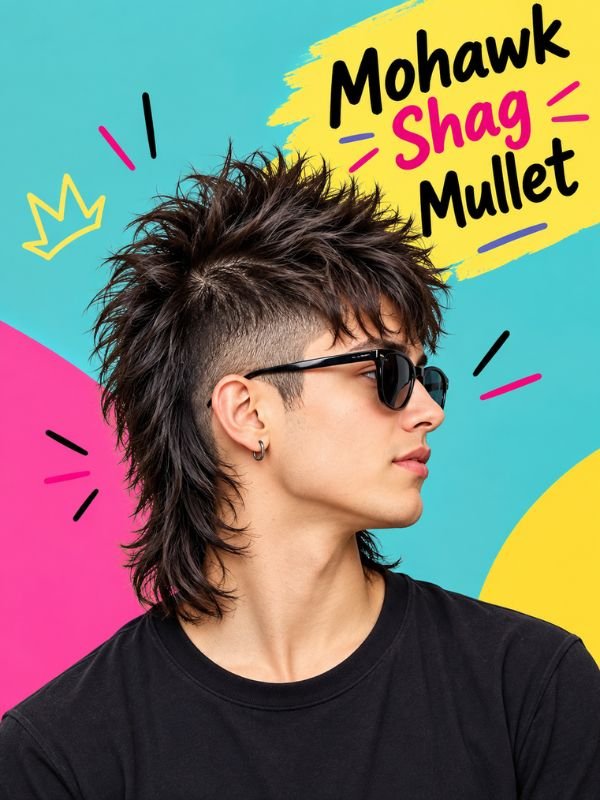
Retro lovers, this one’s for you. The shag mohawk mullet borrows heavily from 70s rock star hair, feathered layers, soft movement, and a top that’s textured rather than spiked straight up. It’s less aggressive than the burst fade version and more “vintage cool” than “punk rebellion.”
Fine to medium hair with some natural wave suits this best. The layering throughout the shag portion adds fullness that fine hair often lacks on its own. The mohawk element here is subtle, more of a raised center section than a hard shaved strip.
Styling relies on a round brush blow-dry to create movement, finished with a light texturizing paste for hold that still feels soft. It’s a genuinely versatile pick for guys wanting that hybrid energy without the maximum commitment.
Mohawk Textured Mullet
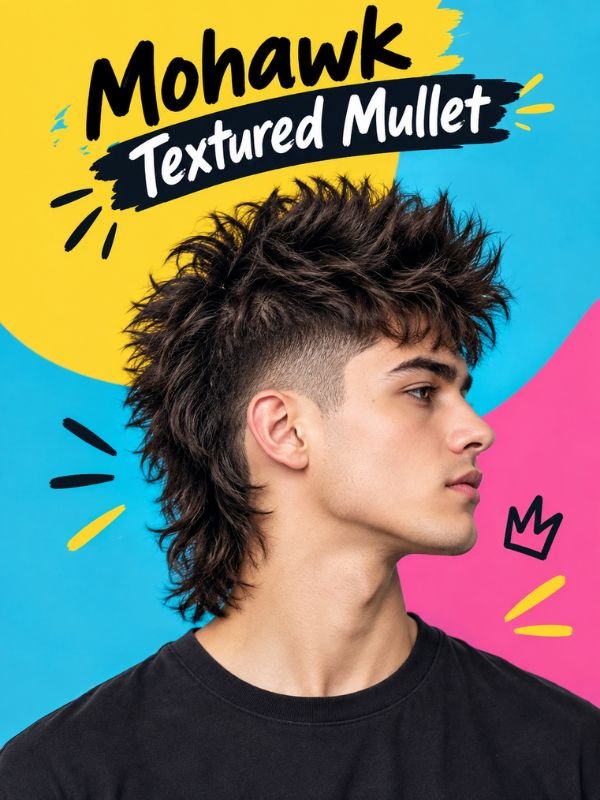
Texture is the whole point of this variation. The textured mohawk mullet uses point cutting and razor work throughout the top and back, creating choppy, piece-y movement instead of smooth lines anywhere on the head.
Thick and coarse hair types shine here, since that density holds textured pieces without going flat. The sides can be faded or simply cropped short, but either way, the emphasis stays on the broken, dynamic texture rather than a clean fade line.
This cut photographs incredibly well and hides minor growing-out awkwardness better than sharper styles. That makes it a smart choice if your schedule doesn’t allow frequent trims but you still want that bold, high-contrast silhouette.
A matte texture powder worked through dry hair with your fingertips is really all this style needs day to day.
Mohawk Fringe Mullet
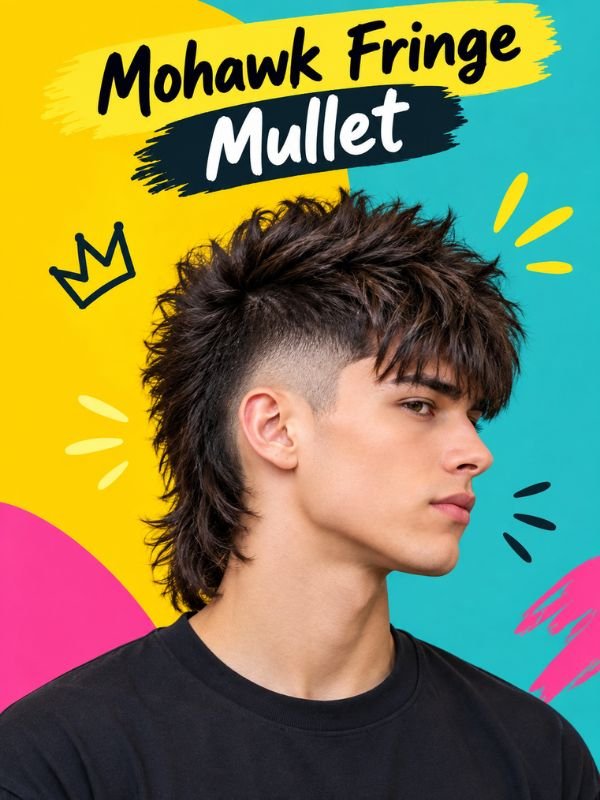
Last but not least, the fringe mohawk mullet adds a swept-forward fringe at the front instead of styling everything straight up and back. It softens the whole look, giving it a youthful, almost K-pop-inspired edge that’s picked up serious traction over the last year.
Straight and wavy hair both work well, since the fringe needs enough weight to sit forward without flipping up on its own. The mohawk portion sits mostly toward the crown and back, letting the fringe take center stage at the front.
This version tends to suit younger guys or anyone wanting a cut that reads more playful than aggressive. It pairs especially well with a soft taper or low fade on the sides, keeping the whole look balanced instead of top-heavy.
How to Choose the Right Mohawk Mullet Variation for Your Hair Type
With ten options on the table, picking one can feel overwhelming. Here’s a simple way to narrow it down fast.
- Straight hair: Try the straight mullet, V-back, or drop fade for the cleanest lines
- Wavy hair: The wolf mullet, shag mullet, or taper mullet handle movement well
- Curly or coily hair: Go with the curly mohawk mullet and skip heavy fades
- Thick or coarse hair: The textured mullet or burst fade give you plenty to work with
- Fine hair: The shag mullet adds volume where fine strands usually fall flat
Face shape matters too. Round and square faces usually benefit from extra height on top, like the burst fade or curly versions. Oval faces can handle almost anything on this list. Longer faces do well with the taper or fringe mullet, since both add width instead of extra height.
Lifestyle counts as much as looks. If you’re not into frequent barber visits, lean toward the taper, wolf, or textured versions. If you love the ritual of a fresh fade every two weeks, the burst fade or drop fade will reward that commitment with a consistently sharp look.
Mohawk Mullet by Face Shape
Barbers get asked “what suits my face” more than almost anything else, so here’s a quick reference table you can screenshot before your appointment.
| Face Shape | Best Variations | Why It Works |
|---|---|---|
| Round | Burst fade, curly, textured | Adds height on top, breaks up width |
| Square | Burst fade, drop fade, straight | Sharp sides match strong jawlines |
| Oval | Nearly all ten | Balanced proportions handle most shapes well |
| Long | Taper, fringe, shag | Adds width, avoids extra vertical height |
| Diamond | V-back, textured, drop fade | Softens sharp cheekbones with structured sides |
If you’re staring in the mirror trying to guess your own face shape, a simple trick helps. Trace your hairline and jaw on a fogged bathroom mirror or a photo. Wider cheekbones with a narrow forehead and chin usually mean diamond. Roughly equal width and length all over usually means round or square, depending on how sharp your jaw looks.
Don’t stress too hard over this chart though. Confidence changes how any haircut reads far more than millimeters of symmetry do. A barber who listens to what you actually want will always beat a rigid rulebook.
Mohawk Mullet Styling
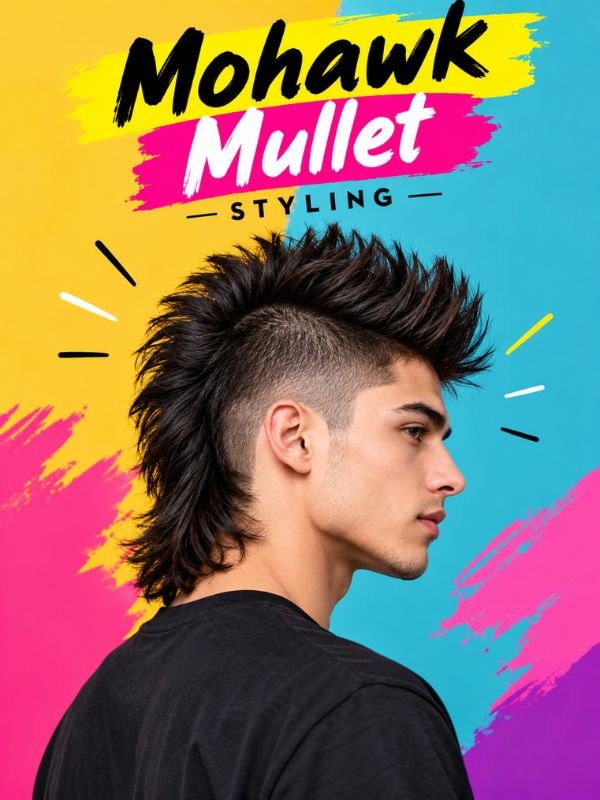
Getting the cut is step one. Styling it right every morning is what actually makes a mohawk mullet look intentional instead of just “grown out weird.”
Start with product choice. A strong hold gel or matte clay works for the spiked, sharper variations like the burst fade or drop fade. Softer versions, like the shag or fringe mullet, do better with a lighter texturizing spray that adds grip without stiffness.
Technique matters just as much as product. For height on top, apply product to damp hair and blow-dry with a round brush, lifting at the root as you go. For textured versions, work product through dry hair with your fingertips instead of a comb, twisting small sections to create separation.
Don’t ignore the back. Mullet length needs its own attention, whether that’s a quick comb-through for the straight version or a scrunch with sea salt spray for the curly and wolf variations. This cut only looks finished when both the top and the back get equal care.
Best Fade for Mohawk Mullet
Not every fade suits every version, so matching them correctly makes a real difference.
| Fade Type | Pairs Best With | Skill Level Needed |
|---|---|---|
| Burst Fade | Curly, wavy, festival looks | High |
| Taper Fade | Nearly every variation | Low to medium |
| Drop Fade | Straight, wavy hair | High |
| Skin Fade | Bold, high-contrast looks | Medium |
The burst fade stays the most popular choice for good reason. It curves naturally around the ear and complements the raised center strip better than a straight fade line does. If you want maximum contrast between the shaved sides and the mullet length, this is your fade.
The taper fade is the safest, most versatile pick, especially if you’re trying this style for the first time. It grows out gracefully and works across every hair type on this list without needing constant upkeep.
For guys chasing a rounder, more modern silhouette, the drop fade delivers. It takes real barber skill to execute cleanly, so this is worth asking about specifically rather than assuming every shop offers it.
A skin fade, meaning the sides go down to bare skin, gives you the most dramatic contrast possible. It suits the burst fade and textured mullet variations especially well, since both rely on bold visual statements.
Care Tips for Mohawk Mullet
Keeping a mohawk mullet looking fresh between appointments takes a little more effort than a basic buzz cut, but it’s manageable with the right routine.
- Wash smart, not often. Washing every day strips natural oils and makes styling harder. Two to three times a week with a sulfate-free shampoo keeps both the top and back healthy.
- Condition the length. The back portion needs moisture to avoid split ends, especially if you’re growing it out for a longer mullet section.
- Book regular trims. Even low maintenance versions like the taper or wolf mullet need a trim every six to eight weeks to keep their shape.
- Protect from heat. If you blow-dry for volume regularly, a heat protectant spray prevents damage to the top section over time.
- Sleep smart. A silk or satin pillowcase reduces friction and helps curly and wavy versions keep their shape overnight.
- Talk to your barber between visits. Send a quick photo update if the shape starts drifting. Most barbers would rather adjust early than fix a much bigger mess later.
Color-treated versions need extra attention. Use color-safe products and space out washes even further to keep vibrancy from fading fast. If you’ve added highlights to a curly or textured version, a weekly deep conditioner keeps strands from drying out.
FAQs
What is a mohawk mullet? It’s a hybrid haircut combining shaved or faded sides with a raised center strip on top, plus mullet-style length left in the back.
Which mohawk mullet is lowest maintenance? The taper mullet and wolf mullet both stretch well between trims without needing sharp fade lines maintained.
Does a mohawk mullet suit curly hair? Yes, curly and coily hair actually create some of the most striking looks in this whole lineup with minimal styling effort.
How often should I get a mohawk mullet trimmed? Every two to three weeks for fade-heavy versions, every six to eight weeks for low maintenance styles like the taper or wolf mullet.
Can I style a mohawk mullet without gel? Yes, texturizing spray or curl cream both work well as lighter alternatives to gel or pomade.
Is the mohawk mullet a trend or here to stay? It’s gained steady traction since resurfacing in festival and music scenes, and barbers report it staying strong heading into 2026.
What face shape suits a mohawk mullet best? Oval and square faces handle nearly every variation, while round and long faces do best with specific styles like the burst fade or taper mullet.
Does a mohawk mullet work for a professional setting? The taper mullet and straight mullet read cleaner and more office-friendly than the burst fade or wolf variations.
Conclusion
A mohawk mullet is not a single haircut. It is a whole lineup of styles, from the sharp burst fade mullet to the shaggy wolf mullet, each one built for a different hair type, face shape, and lifestyle. Whether you want something low maintenance like the taper mullet or something bold enough for the front row of a concert, there’s a version here for you.
Take this list to your next barber appointment and point to the one that matches your vibe. Ask questions, bring reference photos, and don’t be afraid to go bold. Your hair grows back, but a haircut this good is worth the confidence it brings.

1 thought on “Top 10 Mohawk Mullet Variations 2026”