

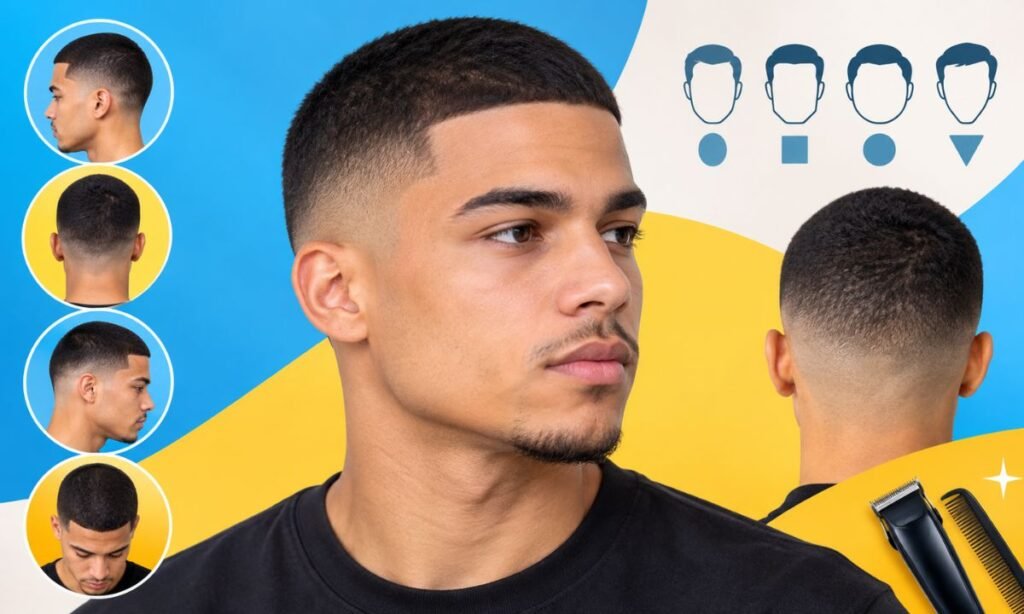
Want short hair that still looks sharp? A low taper fade buzz cut gives you one even clipper length on top and a soft blend around the ears and neckline. It needs almost no styling, and it works at the office, the gym, and weddings.
Below, you’ll get the best styles, guard sizes, hair type tips, and face shape picks. You’ll also learn what to tell your barber and how to keep the edges fresh. Ready to skip the guesswork? Let’s get your next cut sorted. ✂️
Show Image Caption: Fresh low taper buzz, soft ear blend and a clean neckline.
What is a low taper fade buzz cut?
A low taper fade buzz cut is a short haircut with one even guard length on top and sides that shrink gently near the ears and nape. The blend starts low, so most of your hair stays put.
Will it look too bald? Will it feel boring? Those are the two worries I hear most, and the answer to both is no. The taper adds shape without taking much hair off the sides.
Think of it as a regular buzz with better manners. The top stays simple. The edges do all the talking, and they talk in a quiet, confident voice.
Here are the key traits at a glance:
- The top is clipped to one length, often between a #2 and a #4.
- The blend begins low, around or just above the ear.
- The cut asks for very little styling.
- It suits most face shapes and hair types.
Why the starting point matters
Why does the word “low” matter so much? Because it tells the barber where the blend begins. On this cut, it begins just above the ear and dips down the back of the head.
A higher start climbs toward the temple and shows far more skin. That looks bold and sporty. A low start looks clean and calm, which is why office workers and first-timers love it.
Here’s a story I see a lot. A guy tries a high fade for summer and feels exposed by week two. He switches to a lower start and never looks back.
The starting point also decides how fast the cut grows out. Less skin on show means fewer awkward weeks. That alone makes the low version a smart pick for busy people.
What a taper adds that a plain fade doesn’t
Isn’t a taper just a fade with a different name? Close, but no. A taper trims the hair down in gentle steps and usually stops at a short length. A plain fade often runs all the way to bare skin.
That small gap changes everything. A taper keeps your hairline soft and natural. A fade looks sharper on day one, but it grows out fast and shows every wobble.
Most guys find the taper easier to live with. You get neat edges without booking a chair every single week.
Want the middle ground? Ask for a taper that finishes at a #1 or #0. You’ll see a clear blend without the hard contrast of bare skin.
Where the buzz and the taper came from
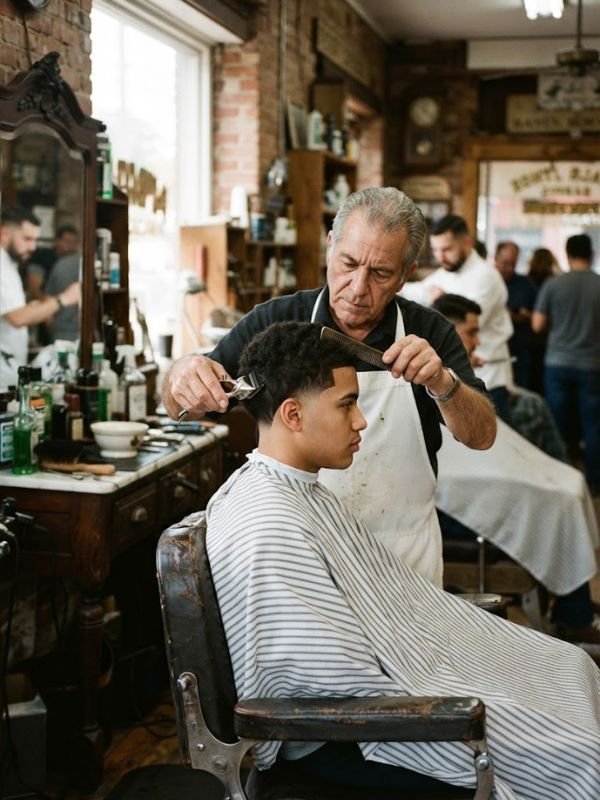
Is this cut just a passing trend? Not really. Short clipper cuts have been around for generations. Barracks barbers popularized the buzz because it was fast, cheap, and easy to keep clean.
The taper came from classic barbershops, where barbers blended the sides into the neck with scissors and a comb. Clippers made the blend smoother and quicker. Over time, the two ideas met in the same chair.
Today, the pairing is everywhere, from athletes to office workers. Why? It looks neat, it costs little time, and it forgives a lot of mistakes. A low taper fade buzz cut feels old and fresh at the same time.
ALSO READ “Low taper fade Asian hair“
Best low taper fade buzz cut styles
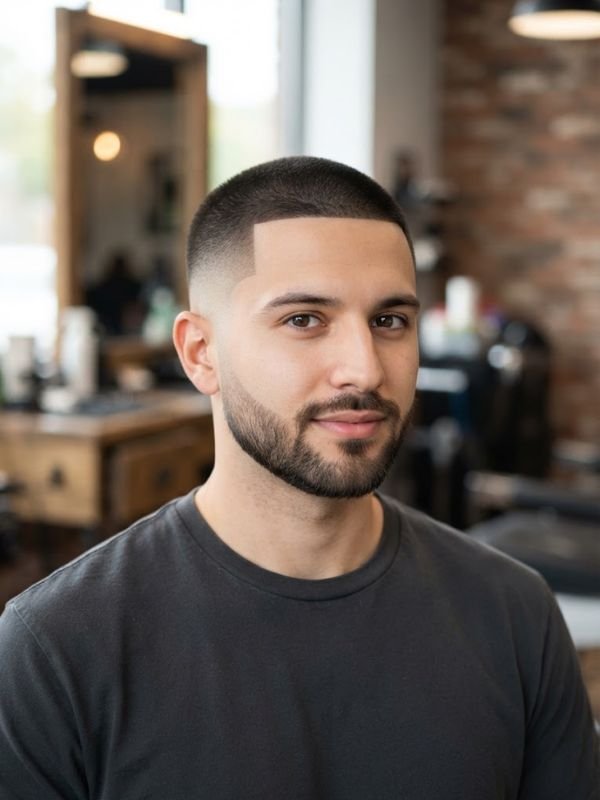
Which version should you pick? Here are eight looks barbers cut every week. Save a photo of your favorite and show it at the shop.
- Classic uniform buzz: One guard across the top, often a #3. The taper drops to a #1 near the ears. This is the best first-timer pick, because nothing about it is risky.
- Military crop: A #1 or #1.5 on top with a tight, low blend. It looks sharp and asks for zero effort. It also shows off your head shape, so be sure you like it.
- Long buzz: A #4 or #5 on top for visible texture. The taper keeps it from looking like a grown-out crew cut. It’s great if you’re moving down from longer hair.
- Textured buzz: The top is cut slightly uneven, so it moves a little. It adds life to a very short length and hides flat spots.
- Line-up buzz: A razor edge runs along the forehead and temples. It pairs well with a beard and gives a “just left the barber” feel.
- Skin-finish taper: The blend ends at bare skin right at the nape. It’s the boldest look while staying low. Expect a few extra trims to keep it crisp.
- Beard blend buzz: The side taper melts straight into a beard fade. Face and head look like one clean piece.
- Hard part buzz: A thin shaved line on one side adds a little edge. It’s a small detail with big personality.
Not sure where to start? Go classic. Your barber can always go shorter next time.
Need a rule of thumb? Pick the style based on your daily life. If you wear a hard hat or helmet, a longer buzz stays comfortable. If you love a sharp look, go for the line-up or skin finish.
Which style caught your eye? Tell me in the comments. 👇
Low taper fade buzz cut with a beard

Can you pair this cut with a beard? Yes, and it looks great. The taper on the sides flows into the sideburns, then into the beard, so nothing looks cut off.
Ask for the taper to end where the beard begins. A tiny gap looks like a mistake. A smooth blend looks like a plan. Keep the beard slightly longer than the sides for balance.
Low taper fade buzz cut for thinning hair

Does a short cut hide thinning? It often does. When all the hair is the same length, thin patches blend in. A #3 or #4 on top stays the safest choice.
Skip the very short guards. They put the scalp under a spotlight. The low taper keeps the sides neat, so the eye moves away from the crown.
Choosing your buzz length: a clipper guard guide
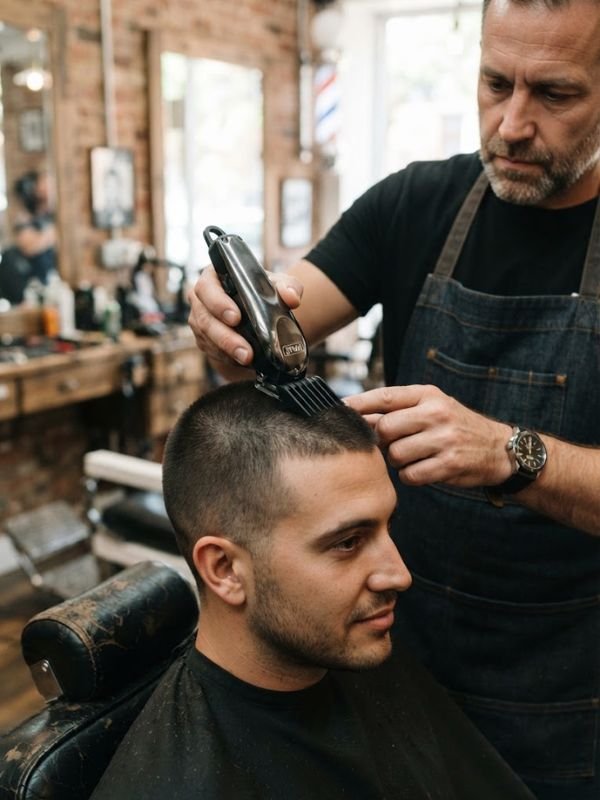
Which number do you say? That question scares more people than the clippers do. Guard numbers feel like a secret code, but they’re simple. Each step up adds about an eighth of an inch.
Here’s the quick breakdown. Bring it to your next visit.
| Guard number | Length left on top | Best for |
|---|---|---|
| #1 | 1/8 inch (3 mm) | Thick hair and strong jawlines |
| #2 | 1/4 inch (6 mm) | First-timers and most head shapes |
| #3 | 3/8 inch (10 mm) | Curly hair and a fuller look |
| #4 | 1/2 inch (13 mm) | Fine hair and a softer finish |
| #5 | 5/8 inch (16 mm) | Long buzz with real texture |
Pick the top guard first. Then ask your barber to step the taper down through shorter guards to a #1 or #0 at the edges. That second step is what makes the cut look planned.
Here’s how a barber builds the blend:
- Cut the whole head to your chosen top guard.
- Drop to a shorter guard around the ears and nape.
- Step down once more at the very edge.
- Soften the lines with the clippers open, or with a small comb.
Your head shape matters here too. A smooth, round skull handles a #1 with ease. A bumpy or flat one looks better at a #3 or #4, because a little length hides small dips. Ask your barber to feel the shape before they pick.
Many people also forget that the guard number only describes the top. The taper uses its own numbers. Mixing the two up is how a low taper fade buzz cut ends up too high or too short.
Still stuck? Go one guard longer than you think. You can always cut shorter, but you can’t glue hair back on. 😅 Remember, hair grows about half an inch a month, so a #3 starts to look shaggy within a few weeks.
Low taper fade buzz cut for straight, wavy, curly, and coily hair
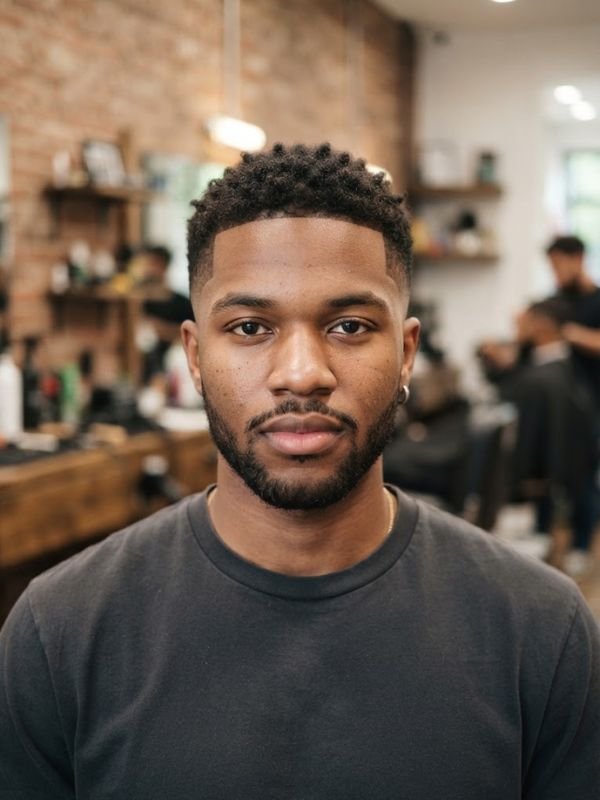
Does your hair texture change how a low taper fade buzz cut turns out? It does, a lot. The same guard can look totally different on two heads. Here’s how each type behaves.
- Straight hair: It shows the taper clearly, so every line of the blend looks crisp. A #2 gives the neatest finish. Watch for a cowlick at the crown, and go slightly longer there so it lies flat.
- Wavy hair: A #3 keeps a hint of wave alive on top. The low taper keeps the sides tidy so the waves look chosen, not messy.
- Curly hair: Curls shrink when you cut them short. Go one guard longer than you’d expect, so a #3 or #4. The cut will look fuller and rounder.
- Coily hair: Tight coils pack close, so a #2 can look dense and sharp. Ask for a rounded top and a tight, low blend. A soft front edge keeps the hairline natural.
- Thin or thinning hair: A #3 or #4 hides scalp show-through. Going too short can spotlight sparse patches.
Hair density matters too. Thick hair holds up at shorter guards and still shows texture. Fine hair looks fuller at a longer length, so don’t be shy about #4.
Here’s a small trick for any type. Ask your barber to test one guard on a small patch near the back. If you don’t like it, you’ve only lost a tiny strip. If you do, they can carry on with confidence.
What about your skin? An oily scalp shows shine under a very short cut, so a slightly longer guard helps. A dry scalp flakes more, so a light moisturizer matters. Neither one is a deal breaker.
Do you have a mix, like wavy on top and coily at the nape? That’s common. Tell your barber, and they’ll adjust the guard in each area.
Best low taper fade buzz cut for your face shape

Will this cut suit my face? Almost always, yes. The guard you pick simply tunes the look. Short sides frame the jawline, and a clean top draws the eye to your features.
Use this table as a starting point. Then tweak it with your barber.
| Face shape | Best top guard | Taper tip |
|---|---|---|
| Oval | #1 to #4 | Any low blend works |
| Round | #1 to #2 | Keep the sides tight to add angles |
| Square | #2 to #3 | Use a soft taper to calm sharp corners |
| Long | #3 to #4 | Stay very low so the face doesn’t look longer |
| Heart | #2 to #3 | Add a short beard to balance the chin |
Round faces gain the most from tight sides. Tight sides create the look of more angles. Long faces need the opposite, a little more on top and a very low start. A beard can reshape either one in seconds.
Not sure of your shape? Pull your hair back and look in the mirror. Trace the outline with a dry-erase marker, then step back. The widest point tells you most of what you need.
You can’t change your bone structure. You can pick a low taper fade buzz cut that frames it well. That’s the whole game.
Line-ups and shape-ups: getting the edges right
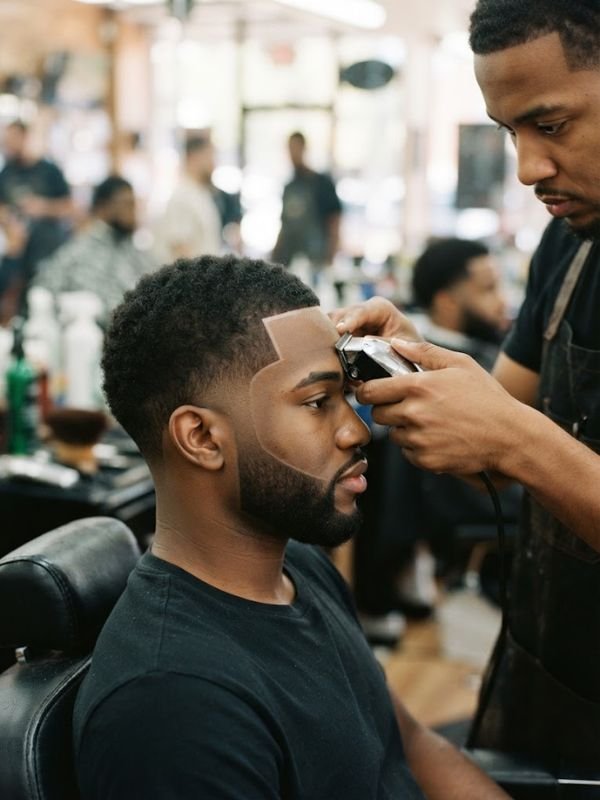
Do you actually need a line-up? Only if you love crisp edges. A line-up straightens the hairline across the forehead and temples with a trimmer or razor. A shape-up goes further and cleans the sideburns and neckline too.
You’ve got three choices:
- Natural edge: The barber blends the hairline without a hard line. It looks soft and grows out kindly.
- Soft line-up: A light trim removes strays but keeps a gentle edge. It’s the middle road.
- Hard line-up: A razor-sharp border across the front. It looks bold, but it fades within days.
The neckline matters too. A tapered, natural neckline blends into your skin. A blocked, squared-off one looks neat on day one and odd by week two.
Here’s the trade-off in plain words. Sharper edges look better for a few days, then they blur. Softer edges look calmer and last longer. Pick the one that matches how often you can visit.
If you’re new to edges, start soft. You can always ask for a sharper line next visit. Sharp edges are fun, but they need more upkeep.
One more thing. Don’t let anyone push your hairline back to look “cleaner.” A hairline set too far back never grows forward again.
How to ask your barber for a low taper fade buzz cut
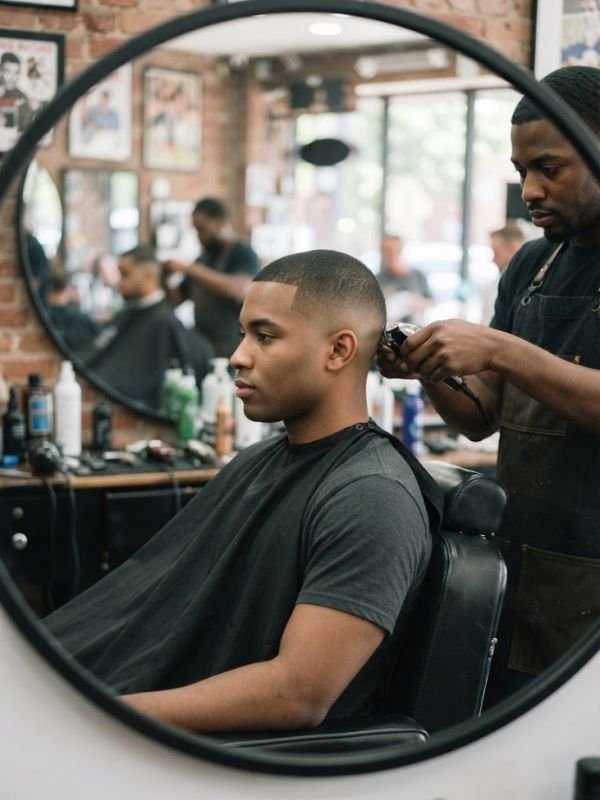
Scared of getting the wrong cut? Say three things out loud. Top guard, taper finish, and edge style. That’s it.
- Top length: “A #3 on top.”
- Taper height and finish: “A low taper starting just above my ear, finishing at a #1.”
- Edge style: “Natural neckline and a soft front edge.”
Now put it together. Here’s a script you can copy:
“I’d like a low taper fade buzz cut. Keep the top at a #3. Start the taper just above my ears and finish at a #1. Natural neckline, no hard line-up, please.”
A friend of mine once asked for “just a number 2” and walked out with sides near bare skin. The barber heard “2” for the whole head. Naming the taper would’ve saved him a month of hat days.
Bring a photo if you can. Then repeat the guard and the fade height back before the clippers start. It takes ten seconds and prevents most disasters.
Have a beard? Add this line: “Blend the taper into my beard, no gap.” Have curly hair? Add: “Keep a little extra length so it doesn’t shrink too much.”
Words to skip: “short,” “clean,” and “normal.” Everyone means something different by them. Numbers and body parts, like “above my ear,” are the only words that never confuse a barber.
What to expect in the chair
How long will it take? Most cuts last 20 to 30 minutes. The barber starts with the top, then blends the sides, then cleans the edges with a trimmer or razor.
They may brush off your neck and finish with a hot towel or a little aftershave balm. If something feels off, speak up while they’re still working. Fixing it early is easy.
Tip your barber if you were happy. A good one remembers you, and that makes every visit smoother.
Low taper fade vs mid taper vs skin fade
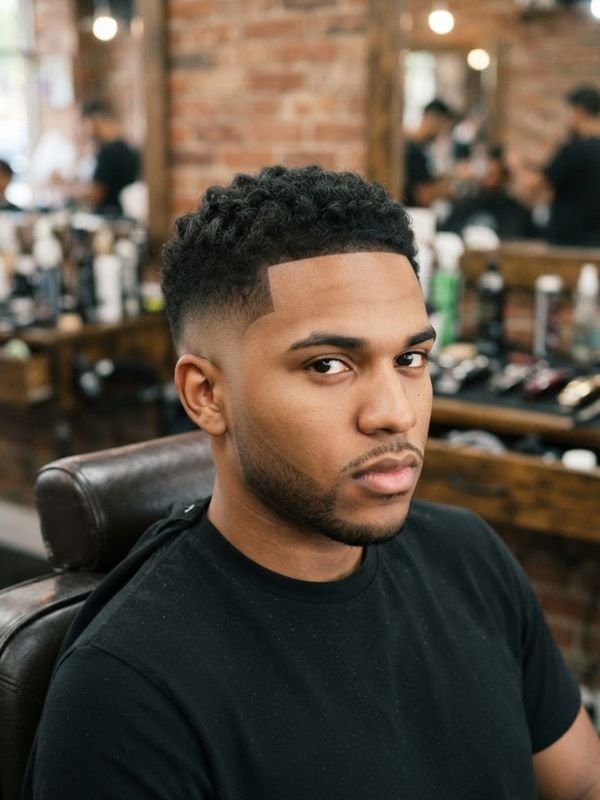
Which fade is right for you? Two things set them apart: where the blend starts and where it ends. Here’s the side-by-side.
| Cut | Where the blend starts | The look |
|---|---|---|
| Low taper | Just above the ears and nape | Clean, subtle, work-safe |
| Mid taper | Around temple level | Balanced and a bit bolder |
| High taper | High on the sides | Sporty with more skin showing |
| Low skin fade | Low, but ends at bare skin | Crisp, needs frequent touch-ups |
A low taper keeps a little length at the bottom. A skin fade goes to bare skin, so it looks sharper but grows out faster. A mid taper sits in the middle of the road.
My advice? Start with low taper. If you love it, go to a mid taper or a skin finish next time. Moving up is easy. Moving back down takes weeks.
Think about your job and your free time too. A low taper fade buzz cut fits almost every dress code. Someone who meets clients all week may prefer the quiet low blend. Someone who plays sports every weekend might love the bolder high taper.
Who should skip this cut?
Is every head a good match? No, and that’s okay. If you have a deep scar, a big bump, or a very uneven skull, a close cut will show it. A longer guard softens those spots.
Some workplaces also have grooming rules. If you’re unsure, ask first. And if you love your hair on top and want to style it every morning, a buzz may feel too plain.
Skin type counts too. If your scalp burns or breaks out easily, ask your barber to go gentle with the razor. A good one will use a light touch and a clean blade.
Not ready to commit? Try a #4 first. It grows back to a normal length in a couple of months.
What it costs and how long it lasts
How much should you pay? Prices change by city and shop, so call ahead. A buzz with a taper often costs about the same as a regular men’s cut. Add a little extra for a razor line-up or a beard blend.
The cut holds its shape for about two to three weeks. After that, the taper softens. If you book every three weeks, a low taper fade buzz cut gives you great value for the money.
How to maintain a low taper fade buzz cut
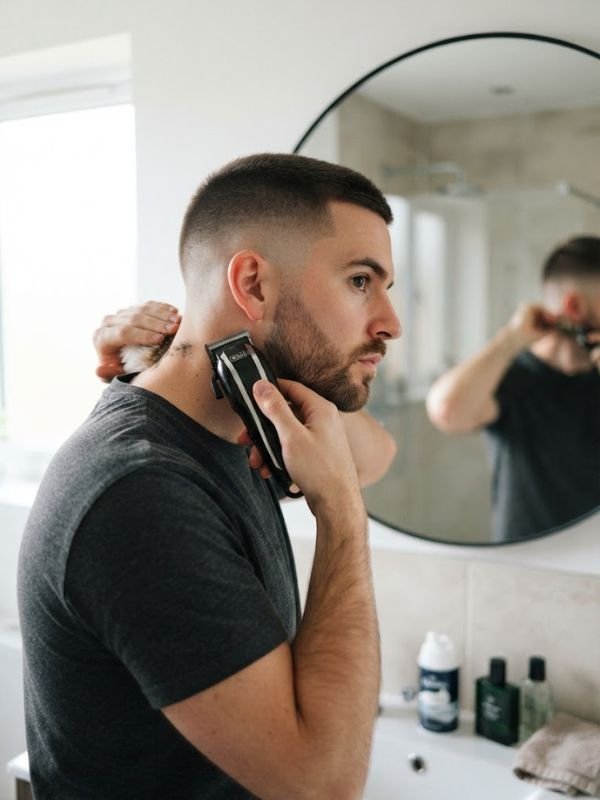
How often do you need a trim? Every two to three weeks keeps the taper tidy. The sides and neckline lose their shape first. The top can stretch to four weeks without much trouble.
Short hair means your scalp is on show, so treat it well. Here’s a simple routine:
- Wash: Use a gentle shampoo two or three times a week.
- Moisturize: A light moisturizer stops dry, flaky skin.
- Sunscreen: Your scalp burns easily with no hair to cover it. Put sunscreen on before you head out.
- Tidy the neck: A trimmer can clean stray hairs between visits. Leave the taper itself alone.
Resist the urge to fix the edges yourself. One slip near the ear can undo a perfect blend. Let your barber handle the fine work.
Want a simple calendar? Week one, enjoy the fresh cut. Week two, tidy the neck. Week three, book your next visit. By week four, the taper starts to fuzz.
Want to keep the cut fresh without extra visits? Book your next appointment before you leave the chair. And share this guide with a friend who keeps putting off a haircut. 😉
Signs it’s time for a trim
How do you know the cut has aged? Your body gives clear hints. Look for these:
- The taper looks fuzzy instead of smooth.
- Hair starts curling over the ears.
- The neckline looks messy in photos.
- The top feels thick and bushy.
When two of these show up, book a visit. Waiting longer means the low taper fade buzz cut loses its shape.
Tools worth owning
Want to tidy up at home? You don’t need a full kit. A small trimmer, a soft bristle brush, and a mirror are enough for neck cleanup.
Use the trimmer only below the taper line. Brush your head after every wash to lift loose hair. And keep a handheld mirror so you can check the back.
Seasonal care
Summer is the easy season. Short hair keeps you cool, but your scalp needs SPF. Winter flips the problem. Dry air can leave flaky skin, so add a heavier moisturizer.
Wear a hat in both seasons. Just wash it often, so sweat and dirt don’t reach your skin.
Common mistakes that spoil the cut
Why does the cut sometimes go wrong? It’s rarely the barber’s fault. Most problems come from a few easy slips.
- Naming only a guard number: Always describe the taper too, or the barber will guess.
- Going too short, too fast: Start longer, then trim down later. Hair can’t be un-cut.
- Ignoring head shape: Bumps and flat spots show more on a short cut, so pick the guard with that in mind.
- Skipping scalp care: Dry, sunburned skin ruins a clean look.
- Waiting too long: Past four weeks, the taper turns fuzzy and the edges lose their point.
Fix those five, and you’ll beat most people at the barbershop.
How to test a new length before you commit
Scared of regretting the cut? Test it first. Here is an easy plan that costs nothing.
- Ask the barber to start at a #4 on top.
- Look in the mirror from the front, side, and back.
- Step down one guard at a time if you want it shorter.
- Stop when your head shape and hairline both look good.
Starting long is the safest path. A longer top still looks neat with a low taper. Next time, you’ll know your perfect number.
Take a photo after each cut and keep it on your phone. Over a few visits, you’ll see which guard and taper height look best on you. That small habit saves you from guessing later.
Questions to ask yourself before you sit down
Which version fits your life? Run through these quick questions.
- How often can I visit a barber?
- Do I want a sharp look or a soft one?
- Is my hair thick, fine, curly, or coily?
- Do I wear a hat or helmet at work?
- Do I have a beard that needs a blend?
Your answers point to a guard and a taper height. If you can visit every two weeks, a skin finish works. If you can only go every month, stay with a classic low taper fade buzz cut and a soft edge.
Make it yours: simple ways to personalize
Worried that every buzz looks the same? Small tweaks fix that. You don’t need a dramatic change to stand out.
- Try a bleached or lightly colored top for a bold summer look.
- Add a tiny hard part for a sharp detail.
- Switch your top guard by one number each season.
- Match your sideburns to your beard length.
Test one tweak at a time. If you hate it, it grows out in weeks.
The best part about a low taper fade buzz cut is how much room it leaves for personality. Your guard, your edge, and your beard all tell a story. Treat the haircut like a base layer, then add your own twist on top.
Fast facts at a glance
Short on time? Here is the quick version of a low taper fade buzz cut.
- The top guard usually runs from #1 to #4.
- The taper begins low, just above the ear.
- Trim every two to three weeks.
- Curly hair needs a longer guard.
- A beard blends in well.
- Always say the guard and the taper height.
Frequently Asked Questions
What guard is best for a low taper fade buzz cut?
A #2 or #3 on top suits most people. Step the taper down to a #1 or #0 at the edges.
How often should I trim a low taper fade buzz cut?
Every two to three weeks keeps the edges crisp. The top can wait a little longer.
Is a low taper fade buzz cut good for thin hair?
Yes, if you pick a #3 or #4. A longer guard hides scalp show-through.
Can I do this cut at home?
You can buzz the top with a guard at home. Let a barber handle the taper the first time.
What’s the difference between a low taper and a skin fade?
A low taper keeps a little length at the bottom. A skin fade goes to bare skin.
Will it work on curly or coily hair?
Yes. Go one guard longer, since curls shrink when cut short.
Is it professional enough for work?
Yes. The subtle blend reads as clean and polished in almost any office.
Does a low taper fade buzz cut suit older men?
Yes. It looks tidy and ageless, and a longer guard softens the look.
Can women wear a low taper fade buzz cut?
Yes. Ask for a #2 to #4 on top and keep the edges soft around the ears.
How fast does it grow out?
Hair grows about half an inch a month. Expect the shape to soften in three to four weeks.
Final Takeaways
The low taper fade buzz cut is simple, sharp, and easy to live with. Pick your guard length, match it to your hair type and face shape, and ask for the taper by name. Keep your scalp healthy, and book a trim every few weeks.
You now have the words to walk into any shop with confidence. So which guard are you trying first? Tell me in the comments, and send this guide to a friend who needs a fresh cut. ✂️