

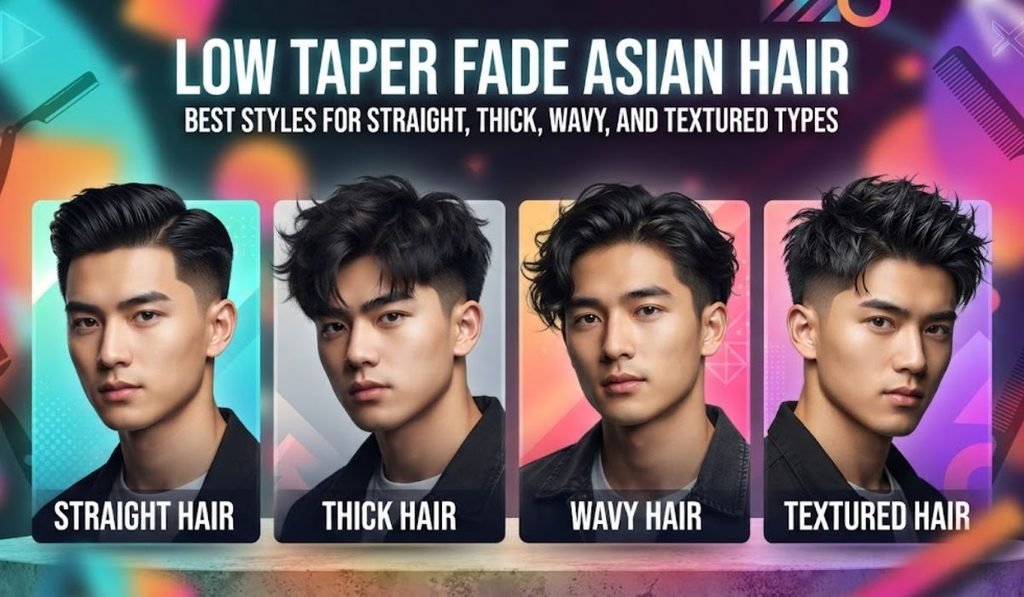
Low Taper Fade Asian Hair: Best Styles for Straight, Thick & Wavy Types
A clean haircut can change how you look in one afternoon. For many men, the low taper fade Asian hair combination is the easiest way to get there. It looks sharp at work, relaxed on weekends, and it grows out without drama.
This guide walks you through the cut from start to finish. You will learn how it differs from other fades, which styles suit your hair type, and exactly what to say in the barber’s chair. Use it as a checklist before your next low taper fade Asian hair appointment.
Quick answer: A low taper fade shortens the hair only around the ears and the nape. The rest of the sides stay close to natural length. That restraint suits thick, straight strands, because it removes bulk without leaving a harsh line.
What is a low taper fade for Asian hair?
A low taper fade is a haircut where the sides and back get gradually shorter as they move down toward the ears and neckline. The word “low” tells you where the shortening starts. It begins near the bottom of the head, not up at the temples.
Your barber blends the length so there is no visible step. The result is a soft, tidy outline. Nothing about it looks severe.
For a low taper fade Asian hair client, the cut is usually built around density and growth direction. Two men can ask for the same thing and leave with different results. That is normal, and it is the reason a good consultation matters. Learning the basics of low taper fade Asian hair puts you in control of that conversation.
Low taper vs mid vs high fade
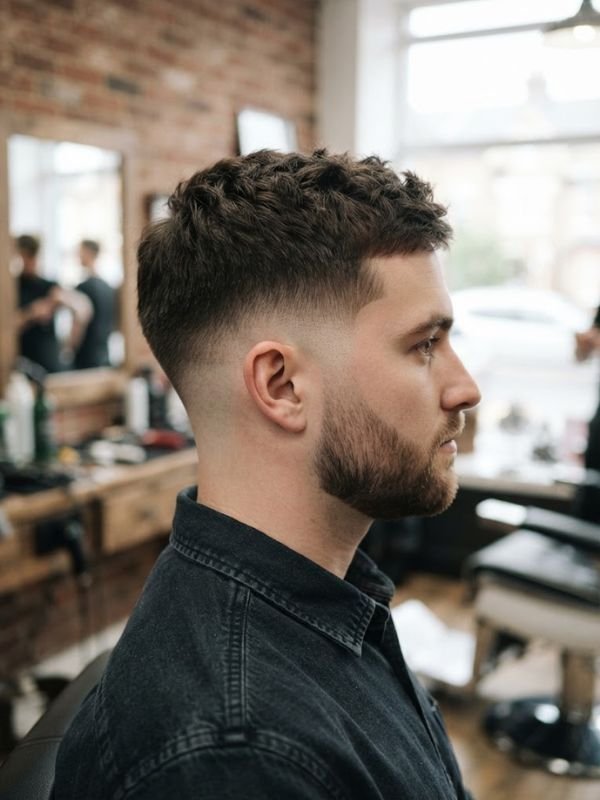
Fade height controls how much of the side is shortened. A low taper is the most conservative option, a mid taper sits in the middle, and a high taper climbs toward the crown.
- Low taper: starts around the ears and nape, often stops at a short length rather than skin.
- Mid taper: begins roughly at temple height for more contrast.
- High taper: starts near the top of the head and creates a bold, dramatic shape.
Each one changes how much scalp you see. It also changes how noticeable the grow-out becomes after two weeks.
Many men start with the low version because it feels familiar. It looks like a neat regular haircut, only cleaner. If you want a quick refresher on the cut, remember this: a low taper fade Asian hair style is about subtle refinement, not shock value.
Why the technique suits Asian hair density and texture
Asian hair tends to be thick in diameter and grows fairly straight. It also tends to grow downward and outward rather than curling back in. Long sides can therefore puff out and make the head look wider.
A low taper fade Asian hair cut solves this in a quiet way. It trims the areas that flare the most, and it leaves enough length above to keep the shape natural.
The technique also helps with weight. Dense hair looks heavy when the sides are left long. A gentle taper lightens the silhouette, so the top can take center stage.
Growth patterns matter as well. Some Asian men have a strong crown swirl or a flat back of the head. The taper lets a barber work around those quirks. When a cowlick fights the length, a shorter blend near the nape keeps it under control. This is why a low taper fade Asian hair consultation should always include a quick check of your crown and hairline.
ALSO READ “Low Taper Fade Styles for Wavy Hair“
Best low taper fade styles for straight and thick hair
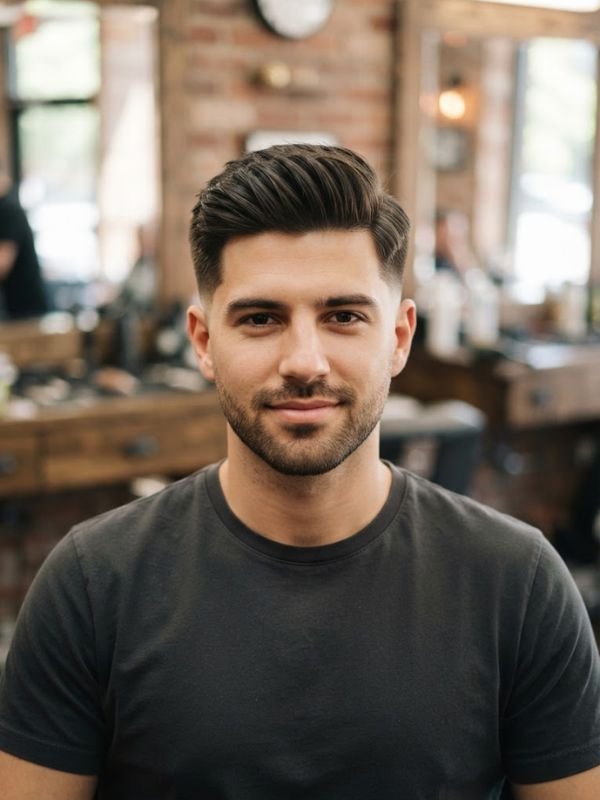
Straight, thick hair holds a shape well, which makes it ideal for a low taper fade Asian hair look. The main risk is a “ledge,” where dense top hair meets the tapered zone in a hard line. Ask your barber to remove bulk above the fade, not just below it.
Here are the styles that work best.
- Textured fringe with a low taper. Short, choppy bangs sit over the forehead while the sides stay clean. It reads youthful and modern.
- Side part with a soft taper. A neat parting gives a polished, office-ready result.
- Two-block cut. The sides are shorter than the top, with a visible but soft separation. It is very popular in Korean-inspired barbering.
- Crew cut with a low taper. Short all over and easy to manage. It is a solid pick if you dislike styling.
- Slick-back with tapered sides. Longer top hair combed back for a sharper, more formal mood.
- Curtain-style top. Hair parts in the middle and falls gently to each side, framing the face.
| Style | Best for | Top length | Effort level |
| Textured fringe | Everyday, casual | Short to medium | Low |
| Side part | Work, events | Medium | Medium |
| Two-block | Fashion-forward looks | Medium to long | Medium |
| Crew cut | Busy schedules | Very short | Very low |
| Slick-back | Formal settings | Long | High |
| Curtains | Softer face shapes | Medium to long | Medium |
If your strands are thick and coarse, add a debulking step. A barber can thin the interior with texturizing shears. This stops the sides from sticking out and keeps the fade neat as it grows.
Point-cutting the top is another trick. Instead of snipping straight across, the barber cuts into the ends at an angle. This creates natural separation, and it stops heavy hair from clumping into a solid block. On a low taper fade Asian hair cut, that soft movement is what makes the difference between a plain haircut and a stylish one.
Fine or thin straight hair needs the opposite approach. Ask for a slightly longer taper zone and softer transitions. Too much shortening can make a thin top look flat.
How the cut works on wavy and textured Asian hair
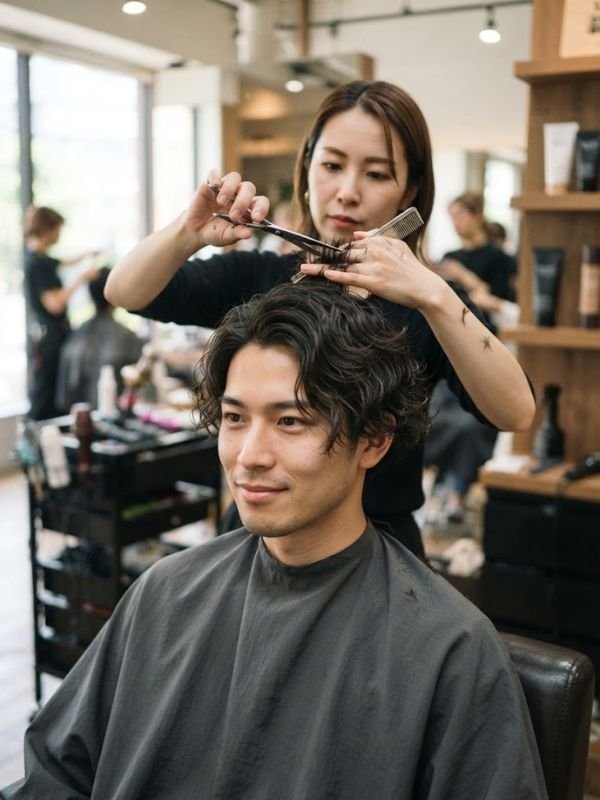
Not every Asian man has pin-straight hair. Many have natural waves, mild curls, or a mix of textures on one head. The low taper fade Asian hair approach still works, and it may look even better with movement on top.
Waves add volume and shape without any product. The taper keeps that volume from turning into a bush around the ears.
Here is what changes for wavy and textured hair:
- Leave more length on top. Waves need weight to lay well. Cutting too short makes them spring upward.
- Cut when the hair is dry. Waves shrink and shift, so a dry cut shows the real finished length.
- Soften the transition. Textured hair can show clipper lines more easily, so blending matters.
- Choose a lighter product. Sea salt spray or a light cream enhances natural pattern without stiffness.
Popular options include a wavy quiff, a messy textured crop, a curly top with tapered sides, and a loose “perm” look. Men who have had a Korean-style perm often pair it with a low taper because the contrast keeps the curls looking deliberate.
Use a diffuser or air-dry when possible. Blasting wavy hair with a hot dryer can add frizz.
Men with tighter curls should think about shape more than length. A rounded top with a low taper keeps the outline balanced, and it avoids the triangle effect. Your barber can also lift the curls at the crown with a comb. Done well, the low taper fade Asian hair combination gives curls a clean frame instead of a messy halo.
Choosing a style for your face shape

The right cut balances your face rather than fighting it. A low taper fade Asian hair style has plenty of flexibility, so you can tweak the top to fit your features.
| Face shape | Recommended top | What to avoid |
| Round | Volume on top, textured quiff, side part | Flat, heavy fringe that widens the face |
| Oval | Almost anything; try slick-back or crop | Very little to avoid |
| Square | Textured crop, soft fringe to soften the jaw | Hard, blocky lines |
| Long or oblong | Fringe or curtains to shorten the forehead | Extra height on top |
| Heart | Side-swept fringe, medium length | Very tight sides with big volume |
Round faces benefit from height. Lift the front and keep the sides close, and the face looks longer. Long faces do the reverse. A fringe adds width across the forehead, which brings balance.
If you are unsure, bring two or three reference photos of men with a similar face shape. It is much easier for a barber to adjust a picture than to guess.
Glasses change the equation too. Thick frames look great with a textured crop, while thin metal frames pair well with a slicked or side-parted top. Facial hair matters as well. A light stubble beard blends nicely into a low taper fade Asian hair cut, because the sideburn area can flow into the beard without a visible break.
Low taper vs mid taper: which should you pick?
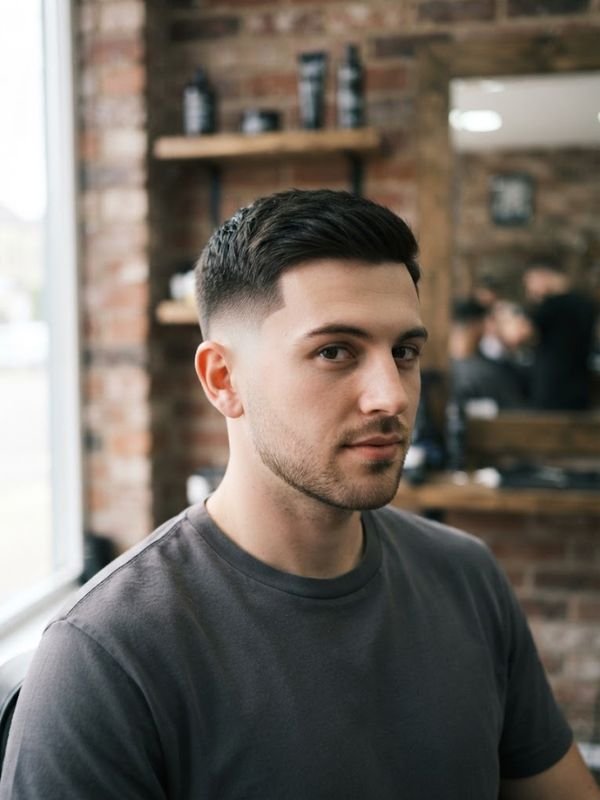
Both options are stylish for low taper fade Asian hair, so the decision comes down to lifestyle and hair density. Pick the low version if you want subtle and safe. Pick the mid version if you want more contrast and a cleaner outline.
| Feature | Low taper | Mid taper |
| Starting point | Ears and nape | Around the temples |
| Contrast | Soft | Medium to strong |
| Grow-out | Very forgiving | Shows sooner |
| Best for | Thick hair, conservative workplaces | Fine hair, bolder looks |
| Maintenance | Every 3 to 4 weeks | Every 2 to 3 weeks |
Some guides suggest thick hair needs a higher fade to show off density. Others recommend the low option to avoid a harsh jump. Both can work. In practice, a low taper handles heavy hair with fewer surprises, which is why many barbers suggest it for first-timers.
If you have never had a fade, start low. You can always go higher next visit. You cannot add length back.
Think about your job and your habits before deciding. Creative workplaces welcome bold contrast. Conservative offices favor softer edges. A low taper fade Asian hair style sits comfortably in both worlds, so it is rarely the wrong answer. Consider the season too. Summer heat makes shorter sides more appealing, while winter lets you keep extra length for warmth.
How to ask your barber for a low taper fade
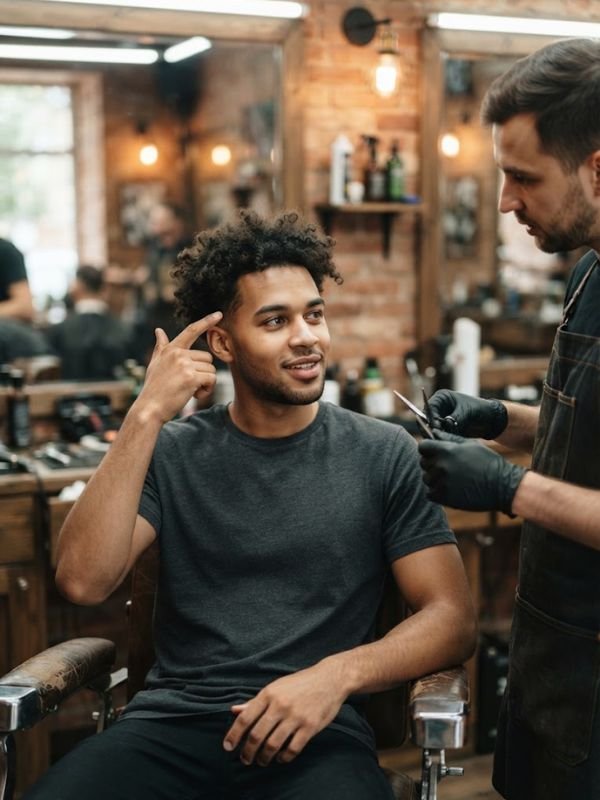
Clear communication saves you from a bad haircut. When you request a low taper fade Asian hair cut, remember that barbers are used to vague requests, but details help them deliver exactly what you picture.
Follow these steps:
- Show photos. Pick images of hair with a similar texture and density to yours.
- Name the height. Say “low taper” and point to where you want the shortening to begin.
- State the finish. Tell them if you prefer a skin finish or a short length at the bottom.
- Mention your top. Explain how long you want it and whether you use a fringe or part.
- Ask about bulk. Request debulking above the taper if your hair is thick.
- Confirm the neckline. Choose between a natural, rounded, or squared edge.
A simple script works well: “I’d like a low taper fade with a textured top. Please keep the sides a little longer, remove some bulk so they don’t puff out, and leave a natural neckline.”
Barbers appreciate honesty about your routine. If you only spend one minute styling, say so. They will shape the cut to suit that.
Guard sizes vary by barber, so describe the look rather than only quoting a number. Ask them to explain their plan before they start.
Watch how the barber works. A careful professional checks the blend from several angles and uses a comb to lift hair evenly. They finish by cleaning the edges around the ears and neckline. If you like the result, book the same barber again and mention that you want the same low taper fade Asian hair cut. Consistency gets better with every visit.
How to style the top: fringe, quiff, or textured crop

The taper handles the sides. The top gives the haircut its personality. Pick a look that matches your hair type and the time you actually have each morning.
Fringe

A fringe is the go-to for a low taper fade Asian hair style, and it looks natural on straight hair. Cut it a little uneven so it does not look like a bowl.
Style it on damp hair. Blow-dry forward, then break up the ends with a small amount of matte clay. Keep it light so it stays soft.
Quiff

A quiff lifts the front for height and shape. It suits round faces and anyone who wants a confident, structured look.
Blow-dry the front upward and backward with a brush. Add a dab of paste or a pomade with a medium hold. Finish with a light spray if you need all-day control.
Textured crop
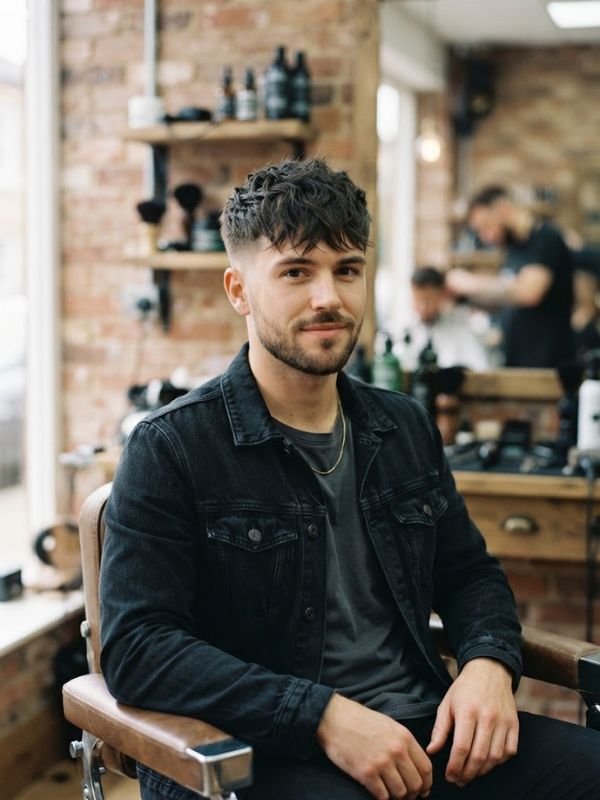
A textured crop is short, choppy and low fuss. It works especially well on thick straight hair because cutting it short reduces weight.
Rub a pea-sized amount of texture powder or clay through dry hair. Push the strands forward and across. It should look tousled rather than tidy.
Before you leave the mirror, check the sides. The taper should look clean while the top stays relaxed. That contrast is what makes a low taper fade Asian hair style feel intentional.
A quick tip on products: dense hair often looks stiff under heavy gel. Matte formulas give control without a greasy shine.
How often to maintain a low taper fade
Plan for a barber visit every three to four weeks. The low version grows out gently, so it forgives a slightly late appointment. Fade haircuts start looking untidy sooner than most people expect, though.
Here is a simple schedule:
- Every 2 to 3 weeks: if you want the edges crisp and the neckline perfect.
- Every 3 to 4 weeks: the sweet spot for most men.
- Every 5 to 6 weeks: possible with a natural neckline, but expect a softer look.
Between visits, protect your low taper fade Asian hair shape at home. Keep the neckline tidy with a small trimmer. Wash regularly with a gentle shampoo, and use conditioner if your hair is dry or wavy. Avoid over-washing, which can strip natural oils and make hair harder to control.
Sleep habits matter too. Thick hair can flatten on one side overnight. A quick spritz of water and a short blow-dry in the morning resets the shape.
Product buildup is a hidden problem. Clay and powder pile up on the scalp, and this can cause itching and flakes. Wash out styling products every night if you can. Once a week, use a clarifying shampoo to reset your scalp. Clean hair also takes a cut better, so your next low taper fade Asian hair appointment will look sharper.
If your top is long, book a trim at the same time as the taper refresh. This keeps proportions balanced.
Track your growth for the first month. Notice which week the cut starts to lose its shape. That is your personal rebooking date. Everyone’s hair grows at a slightly different speed, so a low taper fade Asian hair maintenance plan should be tuned to your own calendar rather than copied from someone else’s.
Frequently Asked Questions
Is a low taper fade good for thick Asian hair?
Yes. A low taper fade Asian hair cut reduces bulk around the ears and nape without a harsh contrast line, so thick hair stays neat.
Can Asian men with thin or fine hair get a low taper fade?
Yes. Ask for a longer taper zone and softer blending so the top does not look flat.
What is the difference between a taper and a fade?
A taper shortens hair gradually and usually keeps some length at the edge. A fade blends down to skin or very short stubble.
How much does a low taper fade cost?
Most barbershops charge between the price of a standard men’s cut and a slightly higher rate, depending on your city and the barber’s experience.
Does a low taper fade suit round faces?
Yes. Add height on top and keep the sides close, and low taper fade Asian hair styles will make the face look longer.
What products work best for styling?
Matte clay, texture powder and light paste give hold without looking greasy on thick strands.
How long should the top be?
Two to four inches works for most textured styles. Go longer for slick-backs and curtains.
Is the cut suitable for the office?
Yes. A side part or short crop with a low taper looks polished in almost any workplace.
Final Takeaways
A low taper fade Asian hair cut is one of the most flexible, low-risk choices in men’s grooming. It controls thick density, tidies the edges and leaves plenty of room to change the top.
Remember the essentials of low taper fade Asian hair. Pick the fade height that matches your comfort level, choose a top style that suits your face shape, and be specific with your barber. Ask for debulking if your hair is heavy, and keep a regular maintenance schedule.
If this is your first fade, begin low and adjust from there. With the right cut and a matte product, a low taper fade Asian hair style will look sharp for weeks.

1 thought on “Low taper fade Asian hair: best styles for straight, thick, wavy, and textured types”