

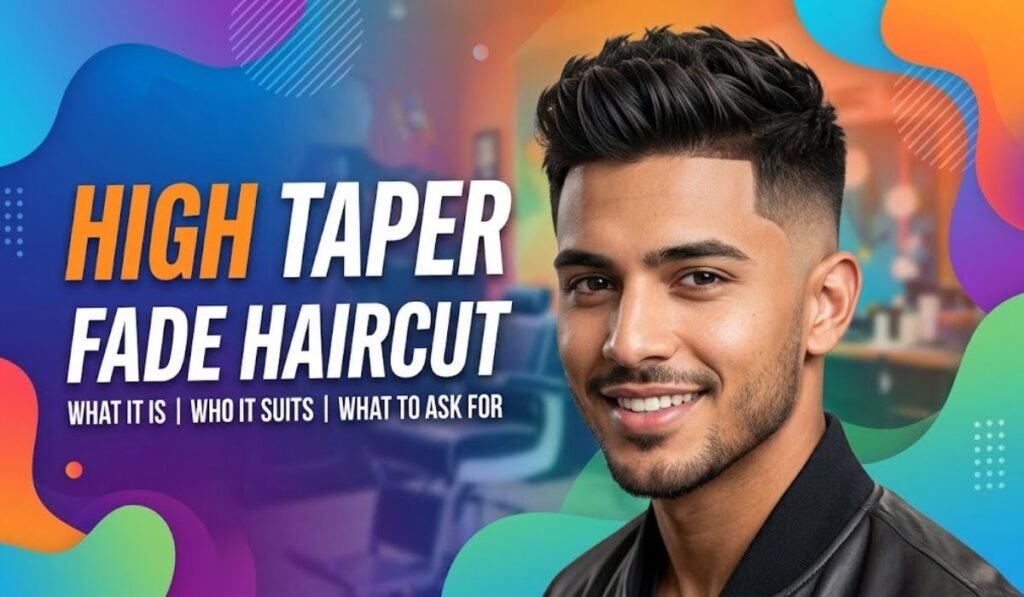
A high taper fade haircut starts short high up on the sides, right near your temples and above the ears. The hair then blends down to the skin or a very short length at the neckline. It looks sharp and neat, and it never looks like you tried too hard.
Wondering if it works for you? Good news, because it fits most face shapes and most hair types. Straight, wavy, and curly hair all look great with it. If you have a big forehead or a round face, this cut can balance things out.
Talking to a barber can feel awkward. Lots of guys just say “make it short” and then leave the shop unhappy. I’ll show you the exact words to use, which clipper guard numbers to ask for, and what to avoid.
I’ll also share simple tips to keep your high taper fade haircut fresh between visits. Have you tried this cut before? Tell me how it went in the comments, and share this with a friend who needs a new look. 💈
What is a high taper fade?
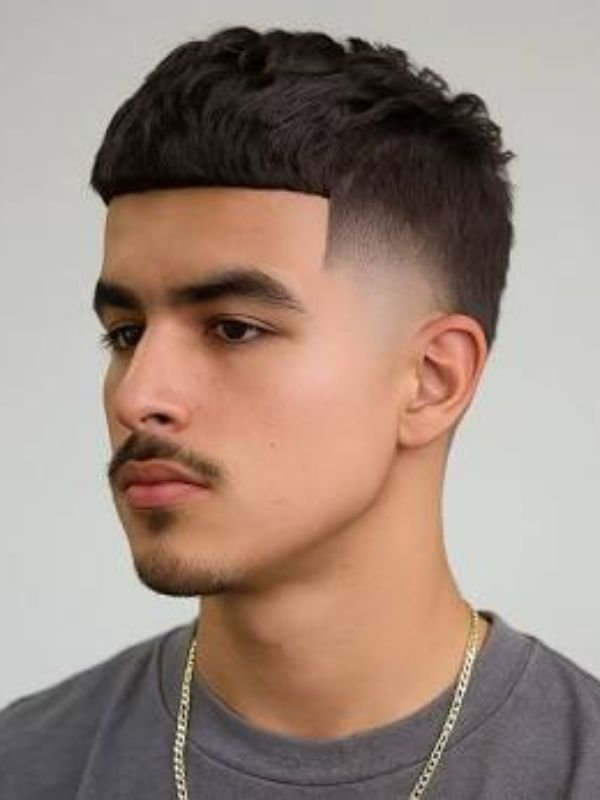
A high taper fade is a haircut where the sides and back get shorter as they go down, and the change begins high on the head, around the temples. The hair on top stays longer. The result is a clean, bold shape with a smooth gradient.
Think of it like a dimmer switch on a lamp. The light does not snap off. It fades slowly. That is the feel you want on the sides.
Most men pick this cut because it looks sharp on day one and still looks decent on day ten.
Here is a story from my own circle. A friend used to ask for “short on the sides” and got a different cut every visit. Once he learned the words temple line, guard number, and blend, his haircut stayed the same from visit to visit.
That is the power of knowing the parts. You stop guessing, and your barber stops guessing too.
Have you ever left a shop thinking, “That’s not what I meant”? Most of the time the gap is in the wording, not the skill.
Cut anatomy: fade zone, blend, and retained length
The cut has three parts. The fade zone is the area where the length drops. The blend is how smoothly the lengths melt together. The retained length is the hair left on top and, sometimes, on the upper sides.
Barbers use clippers with guard numbers to set the length. A number 1 guard leaves about 1/8 inch. A number 2 leaves about 1/4 inch. A number 3 leaves about 3/8 inch.
Ask yourself three quick questions. Where should the fade start? How short should it end? How long should the top stay? Those three answers shape the whole haircut.
The fade zone can be short or tall. A tight zone looks sharp and dramatic. A taller zone looks softer and takes longer to grow out. You get to choose how much of the side changes.
The blend is where skill shows. A rough blend shows lines or patches. A good blend looks like smoke. If you can see the exact spot where one length ends, the barber needs a few more passes with a lever-adjusted clipper or a blending shear.
The retained length also frames your crown. If the top is too short, the high start can look like a helmet. Two inches gives most guys room to play.
Terminology: why the name varies between barbers
Barbers do not all use the same words. One says “high taper,” another says “high fade,” and a third says “high taper fade.” They can mean slightly different things.
A taper leaves more length at the bottom and keeps the shape natural. A fade often goes down to skin or very close to it. Many shops mix the two, which is why the names blur.
So don’t trust the name alone. Say the height, the end length, and the finish. I’ll show you how in the barber section below.
Different countries use different slang too. In some places a “number 2 on the sides” is a full haircut order. In others, nobody uses guard numbers at all and they talk in millimeters.
If you travel or move, your favorite word may not travel with you. That is why a photo saves so much time. Pictures speak every barbershop language.
A simple habit helps. Repeat your order back in your own words before the barber starts. It takes ten seconds and prevents a lot of regret.
High taper fade vs high fade, low taper, and mid taper
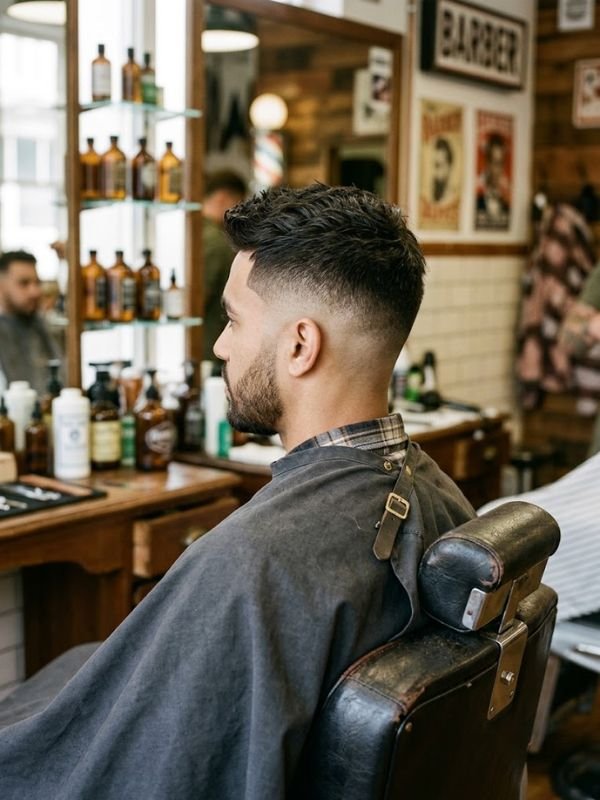
The difference comes down to where the change starts and how short it ends. A high fade is the boldest. A low taper is the softest. A mid taper sits in between.
Here’s the thing most guys miss. Height is only half the story. The end length matters just as much. A high cut that ends at a number 2 looks very different from one that ends at bare skin.
Use the table below as a quick map before you book.
| Cut | Where it starts | Look and upkeep |
| Low taper | Near the ear and neckline | Subtle, easy, lasts longest |
| Mid taper | Around the middle of the sides | Balanced, works for most jobs |
| High taper | Around the temples | Bold contrast, needs regular refreshes |
One more thing before we compare each pair. A high fade is the most dramatic and often goes all the way to bare skin. A high taper stays a bit gentler and leaves more hair on the sides. Many shops sell both under the same name, so always confirm the end length.
High taper fade vs low taper: what is the difference?
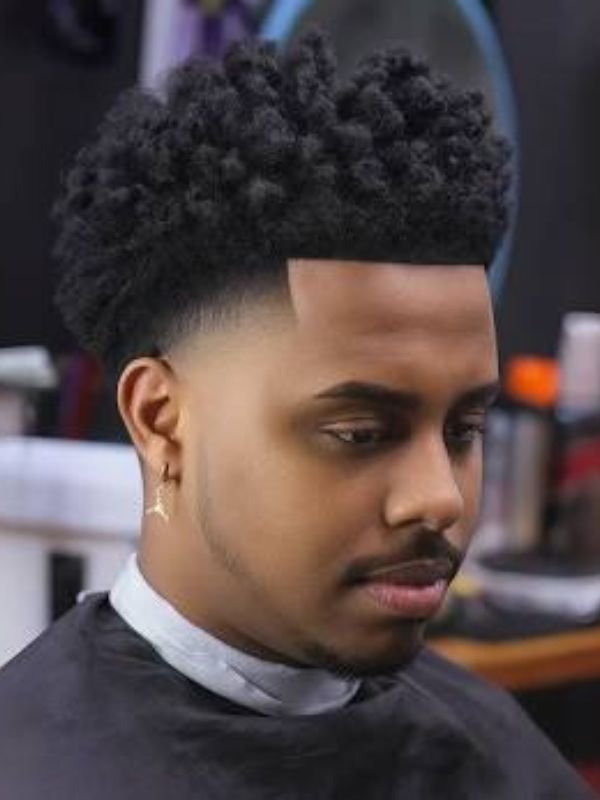
A low taper starts near the ear and nape, so most of the side hair stays. A high taper starts near the temples, so more of the side gets shorter. That makes the high version look sharper and more dramatic.
The low version forgives a late appointment. The high version shows grow-out faster because the contrast is stronger. If you can only visit every five or six weeks, go lower.
I once watched a friend switch from a low taper to a high one before a wedding. He loved the photos. He did not love how fast it grew out. Plan your calendar before you pick.
Picture two friends. One wears a low taper to a desk job and rarely thinks about it. The other wears a high one to weekend events and books every second Saturday. Same hair type, different lifestyle, different pick.
There is no wrong answer. There is only a mismatch between the cut and your calendar.
ALSO READ “High Taper Fade for White Guys“
What is a 3 fade haircut?
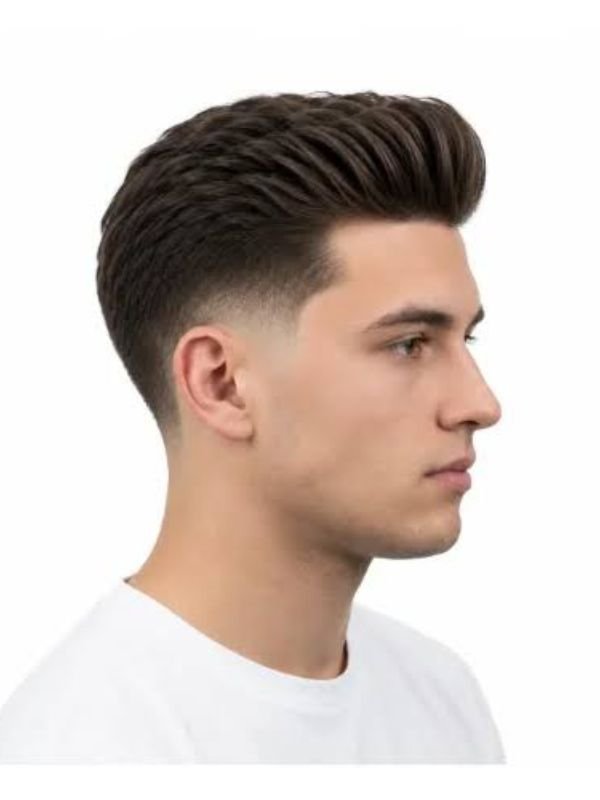
A “3 fade” usually means the fade ends at a number 3 guard, which leaves about 3/8 inch of hair. It is a softer finish than a skin fade because some length stays at the bottom.
Some barbers also use “3 fade” to mean a three-step blend. Names vary from shop to shop. So ask your barber what they mean, and say the number you want.
If you like a shadow of hair instead of bare scalp, a number 2 or 3 finish is a good place to start.
Tell the barber whether you want the sides “clean” or “soft.” Clean means close to skin. Soft means a visible shadow. Those two words save a lot of back and forth.
If you are trying a fade for the first time, start with a number 2 or 3 finish. You can always go shorter next visit, but you cannot add length back.
What are the main benefits of a high taper fade?
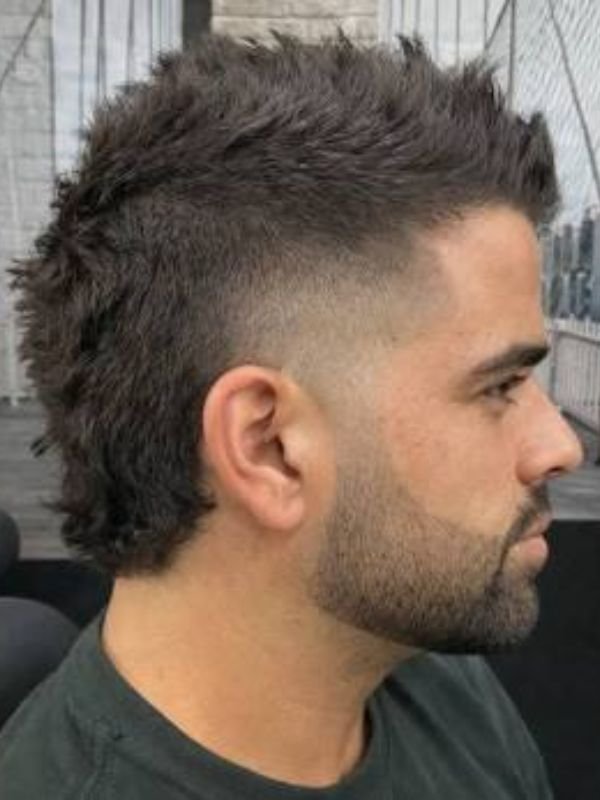
The main benefits are strong contrast, a clean shape, and easy styling on top. It also frames the face and makes the hairline look crisp. Barbers love it because it gives them room to show off their blending.
Here are the perks I hear about most:
- Sharp look. The high start creates a clear line between the sides and the top.
- Works with many tops. You can pair it with a quiff, a pompadour, a textured crop, curls, or locs.
- Neat on camera. The clean sides make the top stand out in photos and video calls.
- Cooler in summer. Shorter sides mean less heat on your ears and neck.
- Simple mornings. Short sides need no styling at all.
There is one trade-off. The sharp look fades fast. I’ll cover that in the upkeep section.
My favorite benefit is how well it plays with beards. A high fade above a neat beard looks like one clean design. The transition from head to face feels planned, not accidental.
Another perk is confidence. People say a fresh cut changes how they walk into a room. It may sound small, but it is real, and this cut delivers that lift quickly.
Which perk matters most to you? Save that answer for your barber. It will guide the height and end length.
Who does a high taper fade suit?
It suits most men, but a few details decide how well it works for you. Your hair texture, head shape, hairline, and how much time you have all matter. Let’s go through them one by one.
Hair texture, density, and growth pattern
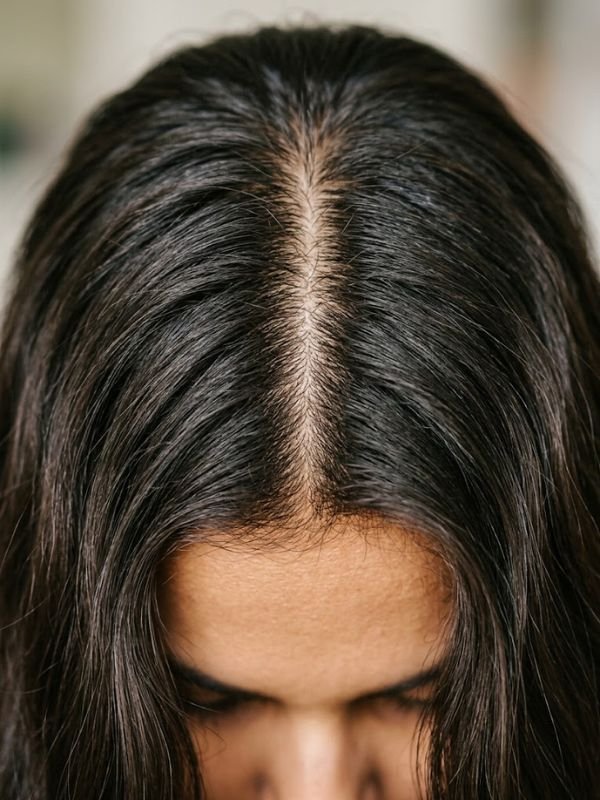
Straight, wavy, curly, and coily hair can all wear this cut. Thick hair gains a lot of definition because the sides shrink and the top stands out. Fine hair works too, but the top needs some texture so it does not look flat.
Watch your growth pattern. A strong cowlick at the crown or a swirl near the nape can change how the blend sits. A good barber will cut with the pattern, not against it.
If your hair grows fast and dense, expect to visit more often. Dense hair shows the fade line sooner.
Here is a quick test. Run your fingers through the hair at your temples. If it feels coarse and springs back, it will hold a sharp line well. If it feels soft and lies flat, ask for a slightly softer blend so it does not look thin.
Also check the back of your head. Some people have a low hairline at the nape, others have a high one. The barber should shape the fade to match yours.
Face, head shape, hairline, and scalp visibility

Longer faces do well when the top has some volume and the fade is not pushed too high. Round faces often like the extra height on top because it stretches the shape. Square faces suit almost any version.
Pay attention to scalp visibility. A skin finish shows scars, birthmarks, and uneven head shape. A shadow finish hides more. If you have a receding hairline, ask the barber to soften the front instead of cutting a hard line-up.
Bring up any bumps or scars before the clippers come out. A good barber will adjust.
Ask your barber to feel your head shape before they start. Bumps, dips, and flat spots show up more under a short cut. A pro can shift the height of the fade by a finger width to hide them.
Glasses matter too. If you wear frames, the cut around the ear has to sit cleanly around the arms. Bring your glasses to the chair and ask the barber to check the ear line.
Lifestyle and upkeep tolerance
Be honest with yourself here. Do you have time for a barber visit every two or three weeks? If not, ask for a lower start or a softer finish.
Work matters too. Most offices are fine with this cut when the top is neat. Gyms, sports, and helmets are fine too since the sides are short. Here is a simple guide.
| Your routine | Better pick | Visit rhythm |
| Barber every 2 to 3 weeks | High taper with skin finish | Fresh, bold look |
| Barber every 4 weeks | Mid taper or shadow finish | Balanced look |
| Barber every 6 weeks | Low taper with tapered nape | Forgiving grow-out |
Budget is part of upkeep. A bi-weekly visit costs more over a year than a monthly one. Some shops offer cheaper line-up or cleanup visits between full cuts, so ask what your barber offers.
Sports and work gear matter as well. Hard hats, helmets, and caps rub the edges. If you wear a hat all day, pick a softer finish so the sides do not look patchy.
Which high taper fade style fits your hair?
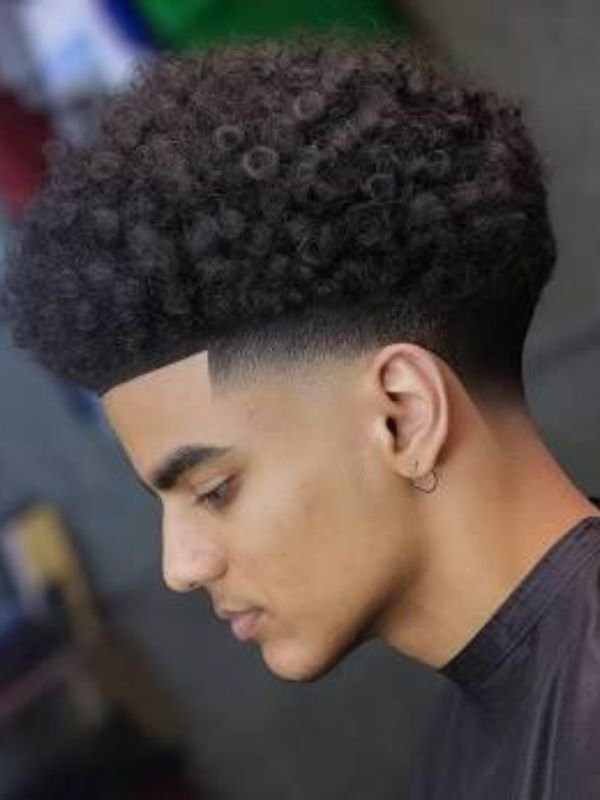
The best style is the one that matches your hair type and your morning routine. Curly hair loves volume on top. Straight hair likes texture and direction. Short hair loves low effort. Pick a lane and go from there.
Try this quick decision path. If you have thick curls, go for a rounded top. If you have straight hair and like structure, go for a side part or crop. If you hate styling, go short and textured.
You can always change the top later. The fade stays the same, so the top is where you get to play.
High taper fade styles for curly and coily hair

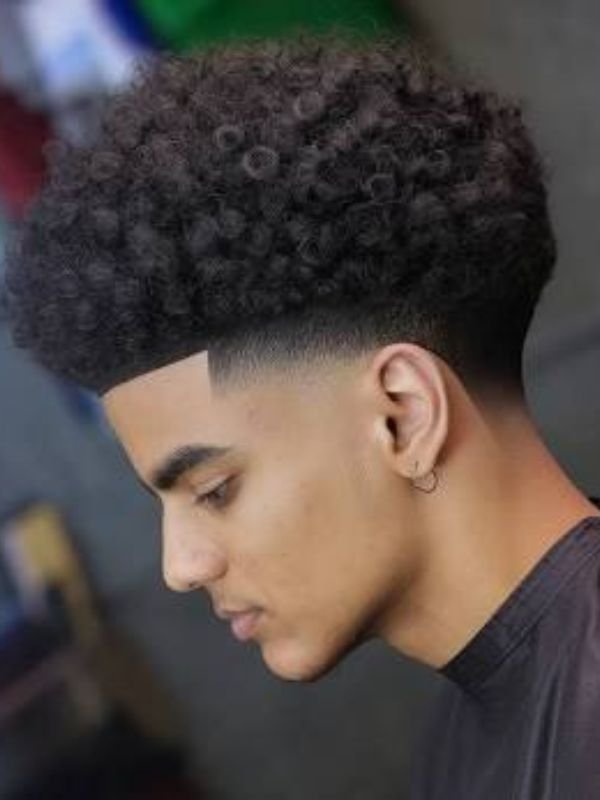
Curls and coils look great with a high taper because the tight sides show off the top. The contrast makes the curl pattern pop. You get shape without a heavy look.
Keep the top moisturized so the curls stay soft and defined. Dry curls look frizzy and fight the clean sides.
One tip that changes everything: cut curly hair when it is dry, or ask the barber to check the length dry. Curls shrink as they dry, so a top that looks long when wet can end up much shorter.
Tell the barber how much shrinkage to expect. It saves you from a top that looks smaller than planned.
Rounded afro or defined curly top
Ask for a round, even top that follows your head shape. Your barber can trim the edges with scissors or a shaping comb for a neat outline.
Finger-shape the curls with a curl cream while the hair is damp. Let it air dry or use a diffuser on low heat. Skip heavy gels that make the curls crunchy.
A shape-up at the front keeps the outline clean, and a soft edge around the fade keeps it natural. Ask for a slight taper at the temples so the curls do not look pasted on.
Sleep on a satin pillowcase or wear a satin bonnet. It protects the curl pattern and cuts down on frizz.
Twists, locs, or braids with a high taper
Twists, locs, and braids stand out beautifully against short sides. The fade acts like a frame. Just be clear about where the parting and roots sit so the fade does not cut into them.
Keep the scalp clean and lightly oiled under the style. Book the fade refresh a few days before you retwist so everything looks fresh together.
If you are growing locs, talk about the timeline. Short sides with long locs look great, but you need the barber to plan the parting line so locs stay neat as they lengthen.
Braids like cornrows also pair well. Ask for the fade to end before the braid parting begins, so both shapes stay separate and clean.
High taper fade styles for straight and wavy hair
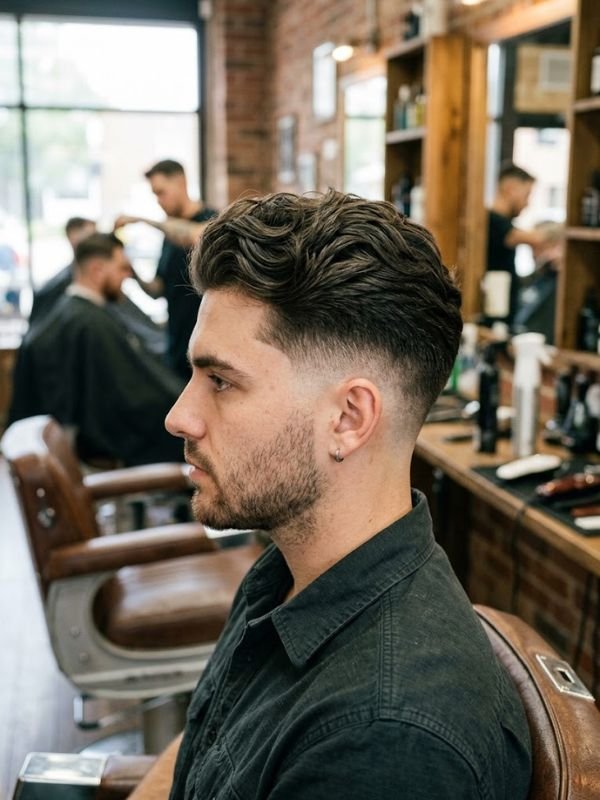
Straight and wavy hair gives you the most styling choices. The top can sit forward, sweep back, or lift up. Product does most of the work here.
Wavy hair adds natural movement, so a light sea salt spray or cream goes a long way.
Straight hair shows every line, so the blend has to be smooth. Wavy hair hides small mistakes better, which makes it a forgiving canvas.
Both types benefit from a blow dryer and a small round brush. A minute of heat sets the shape, and product locks it in.
Textured crop or forward fringe
A textured crop has a short, choppy top that falls forward into a fringe. The high sides keep it tidy. It is a great pick if you want a look that feels current and relaxed.
Use a small amount of matte clay or paste. Rub it between your palms, then push the top forward and break it up with your fingers.
Keep the fringe about one to two inches long, and ask for point cutting so the ends look broken up instead of blunt. This gives the top a lived-in look that does not need much effort.
Watch the length of the front. If it falls into your eyes, ask for a slightly shorter fringe or a side sweep.
Side part, quiff, or pompadour
A side part gives you a clean, classic shape. A quiff lifts the front for height. A pompadour pushes volume up and back for a bold, retro feel. All three look sharp against high sides.
Blow-dry the top first, then finish with pomade for hold and shine. Comb it into place and check the side view in a mirror.
For a side part, ask the barber to mark the part line with a comb or a shaved line. For a quiff, ask for extra length at the front. For a pompadour, you need three to four inches on top to get real lift.
A hair dryer and a comb are your best friends here. Style the front upward first, then set the sides.
Short high taper fade options with less daily styling
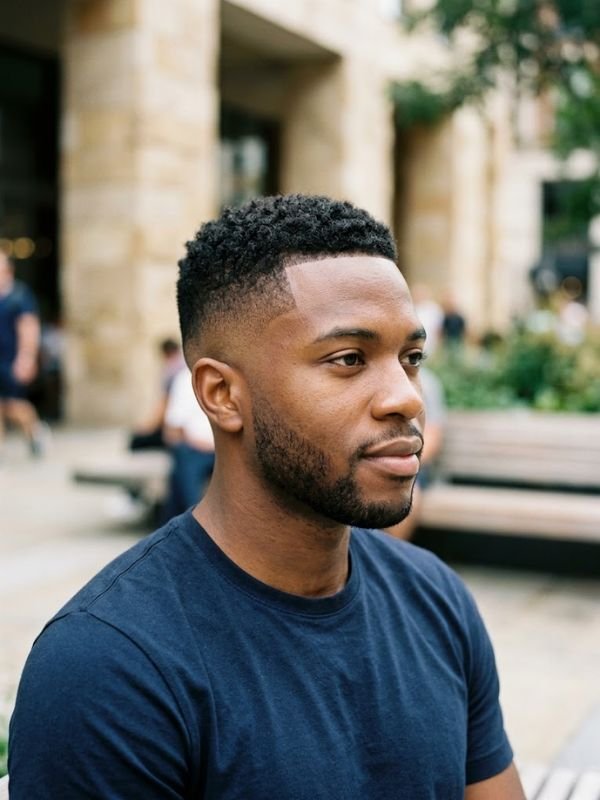
Short tops save time. You can shower, towel off, and leave. This is the best route if you hate product or do not have ten minutes to spare.
The trade-off is fewer choices later. If you might want a bigger style next month, keep a bit more length on top now.
This is the pick for busy mornings, new parents, and anyone who hates mirrors. You can wake up, wash, and go, and the sides keep you looking tidy.
Just remember the trade-off. Short tops show the hairline more, so any uneven edge stands out.
Buzz cut or crew cut
A buzz cut uses one length all over the top, and a crew cut keeps the top slightly longer at the front. Both pair well with a high taper because the fade adds shape to a very simple cut.
Ask for a number 2 to 4 guard on top. Add a skin finish on the sides if you want maximum contrast.
A buzz cut with a high fade is a favorite in summer. It is cool, clean, and quick. Ask the barber to keep the top even and the fade smooth so it looks planned.
If you are new to short hair, start with a number 4 on top. You can go shorter next time.
Short textured top
A short textured top sits around one to two inches long. Your barber cuts it with scissors or a texturizing technique so it looks messy in a good way.
A dab of paste is enough. Scrunch it, shape it, and go. It is the easiest look on this list.
If your hair is fine, use a tiny bit of sea salt spray to add grip. If it is thick, use a light paste so it does not puff out.
Ask the barber to remove some weight with thinning shears. That keeps the top from looking bulky above the tight sides.
Beard and neckline pairings
The fade and the beard should look like they belong together. A random gap between them looks unfinished. Talk about both at the same time.
I always tell friends to think about the back view too. Most people see it more than you do.
Beards can be full, short, or stubble. The fade should match the beard length. A long beard with a high fade looks bold. A short stubble with a high fade looks clean and current.
Tell the barber your beard plan before the haircut. It affects where the fade ends near the ear.
Temple-to-beard blend
A temple-to-beard blend connects the fade on the side of your head to the beard along the jaw. The hair should shorten step by step from sideburn to cheek, with no sudden break.
Tell your barber where you want the beard line and how sharp the cheek line should be. Ask them to match the blend heights on both sides.
If you want your sideburn to look joined to your beard, ask for a connected blend. If you want a gap, say so. Barbers see both requests often, but they do not guess well.
A quick trick is to point to the exact spot on your face where you want the beard line to start. The barber will mirror it on the other side.
Tapered nape versus defined neckline
A tapered nape fades into the neck, so it grows out softly. A defined neckline is cut square or rounded, so it looks crisp for a short time and then gets messy.
If you skip appointments a lot, pick the tapered nape. If you love a hard edge, pick the defined line and accept the extra visits.
A squared neckline looks strong on a broad neck. A rounded neckline looks softer and grows out more gently. A tapered nape fades into the skin and looks natural even at week four.
Ask which one suits your neck shape and how often you plan to visit.
How do you ask a barber for a high taper fade?
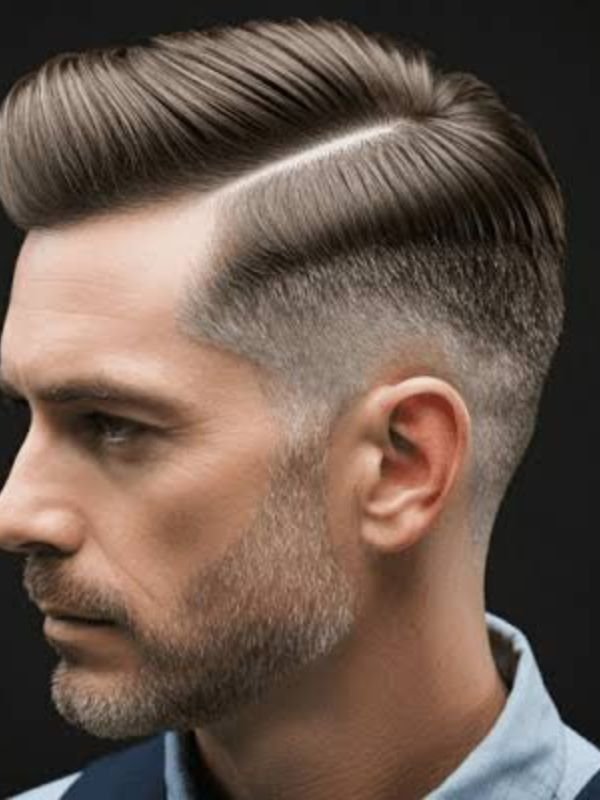
Say the height, the end length, the finish, and the top length, and bring a photo. That is the whole trick. Clear words beat vague ones every time.
Barbers are not mind readers. A photo plus five clear details gets you what you want.
Seven haircut specifications to agree on
Go through this list before the clippers start:
- Fade height. Say “start at the temples.”
- End length. Skin, shadow, or a guard number like 1 or 2.
- Blend style. Ask for a smooth, natural blend.
- Top length. Use inches or a guard number, such as “about two inches.”
- Top finish. Scissor cut, textured, or blunt.
- Neckline. Tapered, rounded, or squared.
- Edges. Say if you want a sharp line-up at the front or a softer hairline.
Write them on your phone if you like. Barbers respect a client who knows what they want, and it often leads to a better cut.
If any spec feels unclear, ask the barber to show it on your head before cutting. A quick point with the clipper guard is enough.
Reference-photo checklist
A photo does half the talking. Use these tips so it works:
- Pick a photo with hair like yours in texture and thickness.
- Save one front view, one side view, and one back view.
- Circle or point to the part you like most.
- Show one photo of what you do not want.
- Check the lighting so the fade line is easy to see.
A good photo also shows the mood. Do you want a polished look or a lived-in one? A photo of a smiling guy with tidy hair tells a different story than a moody shot in bright light.
If you cannot find a perfect photo, bring two and say, “The fade from this one and the top from that one.” Barbers do this all day.
Copyable barber script
Here is a script you can read straight from your phone:
“Hi, I’d like a high taper fade, starting at the temples. Take the sides down to a number 1 guard, with a soft shadow finish and a smooth blend. Leave about two inches on top, textured with scissors. Tapered neckline, natural hairline, and please keep the front soft, not a hard line-up.”
Change the numbers to match your taste. Keep the same order so nothing gets missed.
Here is a shorter one for a quick visit:
“High taper fade, number 2 at the bottom, two inches on top, tapered neckline.”
And a softer version for a first-timer:
“I’d like a high taper with a soft finish, not bald. Keep some length on the sides and blend it smooth.”
Say it with a smile, and thank them at the end. Good manners go a long way.
Your pre-appointment checklist
- Wash your hair so the barber sees its real texture.
- Bring two or three photos.
- Decide your end length before you sit down.
- Know how often you can come back.
- Mention scars, thin spots, or sensitive skin early.
Book earlier in the day if you can. Barbers are fresher and less rushed, and you get more time to talk. Also plan around events. Visit two to four days before a wedding or shoot so the cut has settled in but still looks sharp.
Bring cash for a tip and check the shop’s policy on cancellations.
How do you maintain and style a high taper fade?
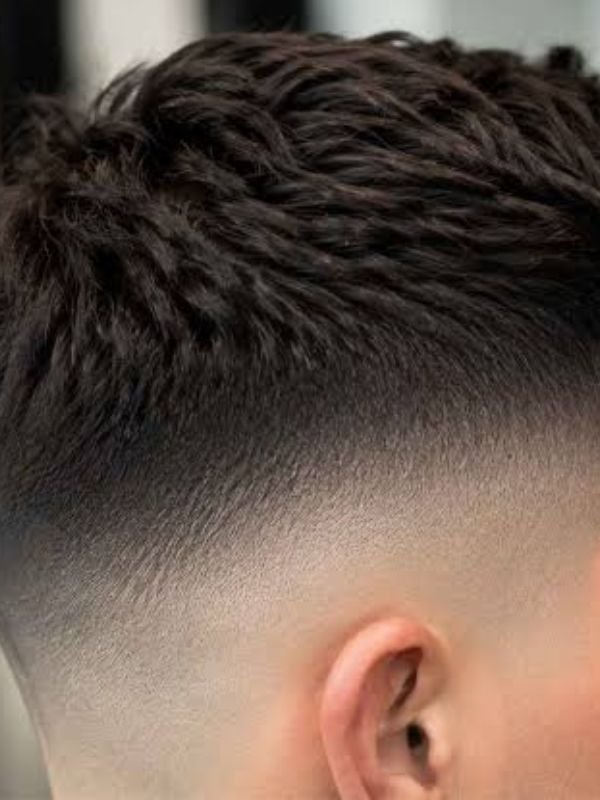
Book a refresh every two to three weeks, style the top daily, and keep home trimming light. That plan keeps the contrast crisp without stress. Simple habits beat big fixes.
I think of it like a lawn. A little regular care looks great. A long gap needs a full reset.
Refresh schedule and grow-out
Most barbers suggest a touch-up every two to three weeks for a high cut. Thick or fast-growing hair may need it closer to ten to fourteen days. Some shops say one to two weeks for a bare skin finish.
Grow-out happens in stages. First the fade softens. Then the blend gets fuzzy. After that the lines disappear and the cut looks shaggy.
| Hair type | Refresh gap | What grow-out looks like |
| Fine and straight | 3 weeks | Soft and slow, easy to hide |
| Thick or dense | 10 to 14 days | Fade line blurs quickly |
| Curly or coily | 2 to 3 weeks | Edges fuzz first, top stays full |
If you hate the “fuzzy” stage, plan your next visit before you leave the chair. Most shops let you rebook on the spot. Put it in your calendar so it does not slip.
Another trick is to ask for a slightly softer start height. It gives the cut a longer life before it looks messy.
Daily styling by hair texture
Straight hair likes a light paste or clay on damp or dry hair. Wavy hair likes a sea salt spray and a quick blow-dry. Curly and coily hair likes leave-in conditioner and a curl cream.
Use a small amount of product, then add more if needed. Too much makes the top heavy and hides the fade.
Wash a few times per week, not daily, if your hair runs dry. Your scalp will thank you.
Here is a simple routine. Towel dry, add a leave-in or sea salt spray, shape the top with your fingers, and finish with paste or clay. Ten minutes at most, and often five.
At night, keep it easy. A quick rinse and a satin pillowcase protect the shape.
Safe between-visit cleanup
Keep home work small. Use a trimmer to tidy stray hairs around the neckline and ears. Leave the fade line alone. Trying to redo the blend on your own is how a good cut turns into a bad one.
Use clean tools and take your time. Stop right away if your skin feels sore.
A hand mirror and good light help a lot. If in doubt, leave it for the barber.
Do not use a razor on the fade line. It leaves harsh edges and raises the chance of razor burn. A trimmer with a guard on it is safer.
After trimming, splash cool water and use a gentle aftershave balm or moisturizer to calm the skin.
What are the drawbacks and safety considerations?
The main drawbacks are fast grow-out, regular visits, and possible skin irritation. Most are easy to manage with a little planning. Knowing them upfront saves you surprises.
Practical drawbacks and edge cases
Cost adds up when you visit every two or three weeks. A skin finish shows uneven skin tone or marks. Thin hair on top may need a lower fade or a softer transition so the sides do not look heavy against the top.
Edge cases matter. A strong cowlick, patchy beard growth, or a very narrow head can change the result. Talk about them at the start.
Also, a very high start can make the top look small. Keep enough length on top to balance the shape.
If you have a birthmark, eczema patch, or scar near the fade zone, tell the barber before they start. They can leave a bit more length around it or pick a shadow finish.
Also think about seasons. In winter, a short neck can feel cold. A scarf and a slightly softer finish keep you comfortable.
Irritation, razor bumps, and barber-tool hygiene
Close shaves near the neckline can cause razor bumps and ingrown hairs, especially with curly hair. Shaving with the grain, using a sharp blade, and moisturizing afterward all help.
Watch for tool hygiene too. A good barber cleans and disinfects clippers, combs, and blades between clients, and uses a fresh neck strip. It is fine to ask about it.
If you get persistent redness, pus, or pain, see a doctor or a dermatologist. Don’t scratch or pick at bumps.
Look for shops that show clean stations, fresh capes, and sealed or sanitized blades. You can also ask for a cold towel or a soothing lotion after the neckline work.
If you often get bumps, try changing to a clipper finish instead of a razor finish. It is gentler on curly and coily skin.
Common high taper fade mistakes to skip
The biggest mistakes are vague requests and pushing the fade too high for your head shape. A few small tweaks avoid most bad haircuts.
- Saying only “a high fade” without an end length.
- Skipping the reference photo.
- Asking for a bare skin finish when you visit every six weeks.
- Trying to reshape the fade at home.
- Picking a top that is too short to balance the height.
Fix these and your next visit gets a lot easier.
Products worth keeping in your bathroom
You do not need a shelf full of bottles. A few basics cover most looks, and they last a long time.
- Matte clay: strong hold with no shine, great for textured crops.
- Paste: light hold for short, messy tops.
- Pomade: shine and control for side parts and pompadours.
- Sea salt spray: grip and volume for fine or wavy hair.
- Curl cream or leave-in conditioner: softness and definition for curls and coils.
- Aftershave balm or moisturizer: calms the skin after neckline cleanup.
Buy one product at a time and see how it feels. Ask your barber what they used on you. They will usually tell you.
Real-world fixes when the cut comes out wrong
Sometimes a haircut lands off target. Do not panic. Most problems have a simple fix, and a good barber wants to hear about it.
If the fade sits too high, ask the barber to blend it lower over the next visit, and wait for regrowth. If the blend looks patchy, go back within a few days for a quick touch-up. If the top is too short, grow it out and style it with paste for a textured look.
Speak up while you are still in the chair. Say, “Can we go a little lower on the sides?” It is a normal request, and it keeps you from stewing later.
If you keep getting the wrong result at one shop, try another barber. Ask friends whose hair you like, or scroll local shop pages and look at their fade photos.
One more mistake is copying a celebrity photo without checking your own hairline. What works on a photo model may not suit your head. Use photos as a guide, then let the barber adjust for you.
Another is skipping product. A great cut with dry, messy hair still looks unfinished.
What are the best alternatives to a high taper fade?
If the high version feels too bold, try a mid taper, a low taper, or a drop fade. If you want something softer, a scissor cut with a tapered neckline is a calm option.
Here is a quick list:
- Low taper: subtle and easy to grow out.
- Mid taper: a middle path with some contrast.
- Drop fade: curves down behind the ear for a fresh shape.
- Burst fade: a rounded fade around the ear, popular with mohawks and curls.
- Classic scissor cut: no clippers on the sides, a neat and natural look.
Alternatives are not a step down. Many men pick a lower taper because it lets them skip a few visits. Others love the burst fade for its round shape around the ear.
Try one at your next visit. If you like it, keep it. If not, you can move back up to the high version.
High taper fade FAQs
What taper fade is best?
The best one matches your hair, face, and schedule. A high taper suits bold contrast, a mid taper suits balance, and a low taper suits easy upkeep.
Bringing it together
A high taper fade gives you a sharp, clean shape that works with curls, waves, and straight hair. Pick the fade height, the end length, and the top style, then say all three clearly to your barber. A photo and a short script make it easy.
Keep your refresh schedule realistic and treat your skin well. Small habits keep the cut fresh, and the right top style makes it yours. Try it once and see how it feels. 😄
Want more taper fade guides?
Love this cut? Here are a few more guides to explore next:
- Low Taper Fade Textured Fringe: 12 Fresh Looks for 2026
- Taper Low Burst Fade: Styles, Barber Tips, and a Complete Guide
- Burst Fade Haircut: What It Is, Types, Styles and Barber Guide
- Blowout Taper Textured Fringe: Low, Mid and High
Tell me in the comments which one you’re trying next, and share this guide with a friend who’s due for a haircut.
Frequently Asked Questions
What is a high taper fade haircut?
It is a cut where the sides shorten from the temples down, with longer hair on top. The blend is smooth and the contrast is bold.
How long does a high taper fade last?
It looks best for about two to three weeks. Thick hair may need a touch-up in ten to fourteen days.
Is a high taper fade good for thin hair?
Yes, with a textured top and a soft blend. The contrast can make the top look fuller.
Can curly and coily hair get a high taper fade?
Yes. It shows off the curl pattern and keeps the sides neat.
What is the difference between a taper and a fade?
A taper keeps some length at the bottom. A fade usually goes down to skin or very close to it.
How do I ask for a high taper fade?
Say the fade height, end length, top length, and neckline, and show a photo. A clear script helps.
Can I do a high taper fade at home?
A full one is hard to do on yourself. Limit home work to tidying the neckline.
What top length works best?
One to two inches is a safe start. Go longer for curls, quiffs, or a pompadour.
Final Takeaways
- A high taper fade starts near the temples and gets shorter as it moves down.
- Agree on height, end length, blend, top length, finish, neckline, and edges.
- Refresh every two to three weeks for the sharpest look.
- Choose a lower taper if you visit the barber less often.
- Keep home trimming to the neckline and stray hairs.
- Clean tools, moisturized skin, and a good barber prevent most problems.
- Bring a photo and use the script so your haircut matches your plan.