

Thinking about a high taper fade for white guys but worried it might look too bold? I get it. Short sides feel like a big jump when you have worn the same cut for years. The good news is this haircut gets easy once you know the height, the guard, and the top length to ask for.
This guide covers what the cut is, who it suits, and how to talk to your barber. You will also get styling tips, common mistakes to skip, and solid alternatives if it turns out not to be your thing.
What Is a High Taper Fade?
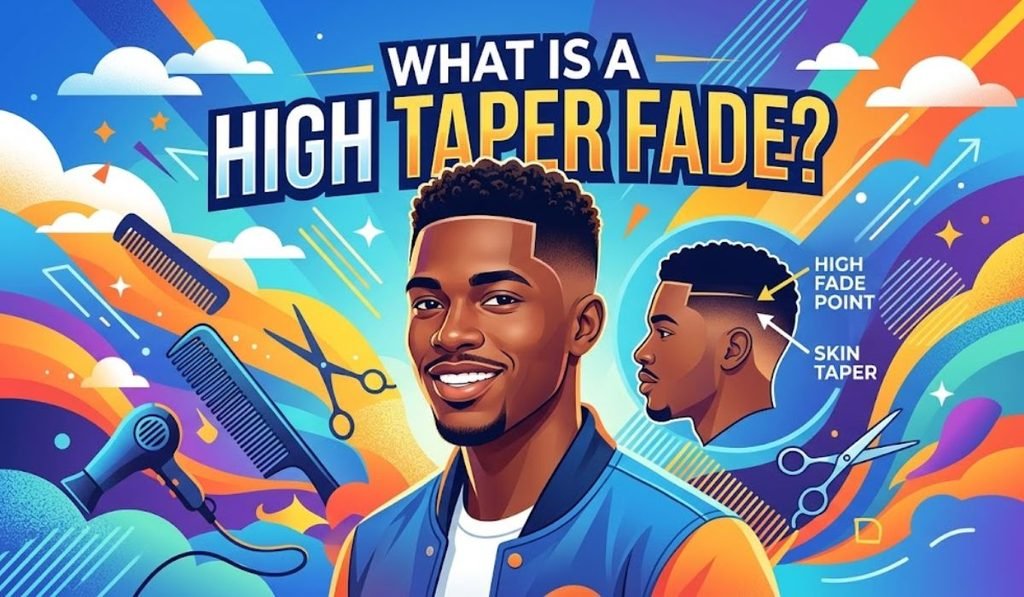
A high taper fade is a haircut where the sides and back start getting shorter high on your head, near the temples and the crown. The hair keeps shrinking until it reaches the neckline. The top stays longer, so you get a clear contrast between the sides and the top.
Ever sat in the barber chair, heard “high, mid, or low?” and just froze? You are not alone. Most guys say “short on the sides” and hope for the best. Let me clear this up so you can answer in two seconds.
The barber builds the cut in steps. They start with a longer clipper guard near the top of the sides, then switch to shorter ones as they move toward the ears and the nape. Each step is tiny, which is why the blend looks soft. The shortest point can be bare skin, a zero, or a #1 guard, and that one choice changes the whole mood of the cut.
Quick guard refresher, because numbers beat guessing. A #1 leaves about one eighth of an inch. A #2 leaves a quarter inch, a #3 leaves three eighths, and a #4 leaves half an inch. Lower number, shorter hair. That is all you need to know to sound like a regular.
Here is the part most guides skip. A taper usually stays more local than a full fade. The shortening happens around the temples, sideburns, and neckline, so the upper sides keep a bit more weight. A full fade wraps further around the head and cuts closer. Barbers use these words in different ways, so always describe what you want instead of trusting the name alone.
Let me name the parts of the head, so the barber talk makes sense. The temples sit on the sides near your eyes. The parietal ridge is the curve where the top of your head turns into the side. The nape is the back of your neck. A high taper starts near that curve and follows it around the head.
Once you know these spots, you can point to them and say, “start the blend here.” That one move prevents most mix-ups. It also shows your barber that you did your homework.
Why is this cut everywhere right now? It solves two problems at once. It keeps the sides neat, and it lets you play with the top. A high taper fade for white guys also sharpens the jawline and cleans up the ear line, so the face looks crisper in photos. No wonder it shows up in barbershop feeds and gym selfies.
Does a High Taper Fade Work for White Guys?

Yes, it does. A high taper fade for white guys works on straight, wavy, thick, and curly hair. The cutting method stays the same across hair types. What changes is how the top behaves and how much contrast you see against the scalp.
Worried that it only looks good on other people? Picture a guy with fine, light brown hair. His sides go from a #3 down to a #1. His top stays two inches long and gets pushed forward with a little matte clay. The look reads clean and sharp, not extreme. That is the real range of this cut, and it fits most guys.
Hair color matters more than people admit. Dark brown or black hair shows the gradient clearly, so the fade looks bold. Blond, red, or gray hair blends into the skin, so the same fade looks softer. If you have very pale skin, a skin finish can make the scalp glow. In that case, ask for a shadow or a light guard at the bottom instead.
There is also a bit of history worth knowing. The fade grew out of Black barbershop culture, where barbers perfected blending tight coils into smooth gradients. That skill now travels to every hair type in the shop. When you sit in the chair, you are getting a technique that took decades to refine. Pick a barber who respects that craft, not just one who is cheap.
One more thing. The high version is the loudest of the tapers. It shows more skin and grows out faster than a low taper. If your job has strict grooming rules, or you want something quiet, keep reading. I will show you the middle ground.
Let me break it down by hair type, since that is where guys get stuck. Straight hair lies flat, so it shows every line in the blend. It loves a neat crop or a side part. Wavy hair adds body without effort, and a high taper fade for white guys with waves looks relaxed and natural. Curly hair gives you volume on top, and the tight sides keep the shape from getting too wide.
What about thick versus fine hair? Thick hair needs thinning or texturizing, so the top does not puff up like a helmet. Fine hair needs volume, so a light spray and a shorter top work better. A high taper fade for white guys with fine hair looks best when the top stays near two inches, since longer fine hair falls flat by lunchtime.
Skin tone plays a part too. Fair skin with a skin finish shows the scalp clearly, which some guys love and others hate. Olive and tan skin blend nicely into the fade, and the contrast reads smooth. If you burn easily, a longer bottom guard adds a little sun cover.
ALSO READ “Mid Taper Fade Curly Hair: Styles“
High Taper Fade vs High Fade, Mid Taper, and Low Taper
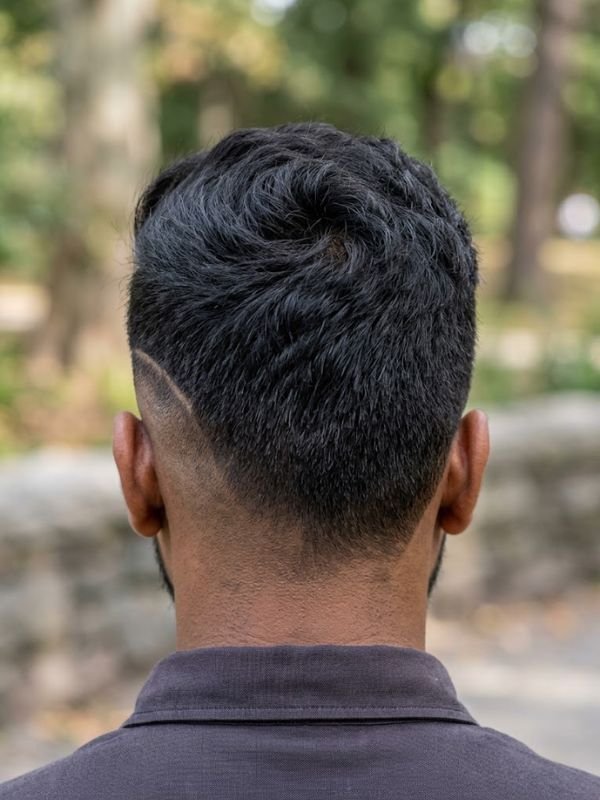
Which one should you pick? That is the top question guys ask, and it is fair. All of these cuts look alike from across the room. Up close, the height and the shortest length make a big difference.
Here is the simple version. A low taper starts just above the ear. A mid taper starts around the temple. A high taper fade for white guys starts near the crown. A high fade does the same thing but cuts closer and wraps further around the head. The table below puts them side by side.
| Cut | Where the blend starts | Best for |
|---|---|---|
| Low taper | Just above the ears | Office jobs, first-timers, a quiet look |
| Mid taper | Around the temples | Most guys, most face shapes, easy upkeep |
| High taper | Near the crown | A sharp look with more contrast |
| High fade | Near the crown, cut much closer | Bold style, very short sides, round faces |
Notice something. The height only tells you where the blend begins. How short the bottom goes is a separate choice. You can have a high taper fade for white guys that ends in a #1 guard, or one that ends in bare skin. Those two cuts feel totally different, even though both are “high.”
Grow-out is where these cuts split apart. A taper softens as it grows, since it never had a hard edge. A skin fade loses its shape much faster, because the contrast fades within a week. If you stretch your appointments, a taper forgives you. A high skin fade does not.
Not sure yet? Try this rule of thumb. If you want people to notice the cut, go high. If you want people to notice you and not the cut, go mid or low. Simple, and it saves you a lot of regret.
Three Real-World Examples of the Cut
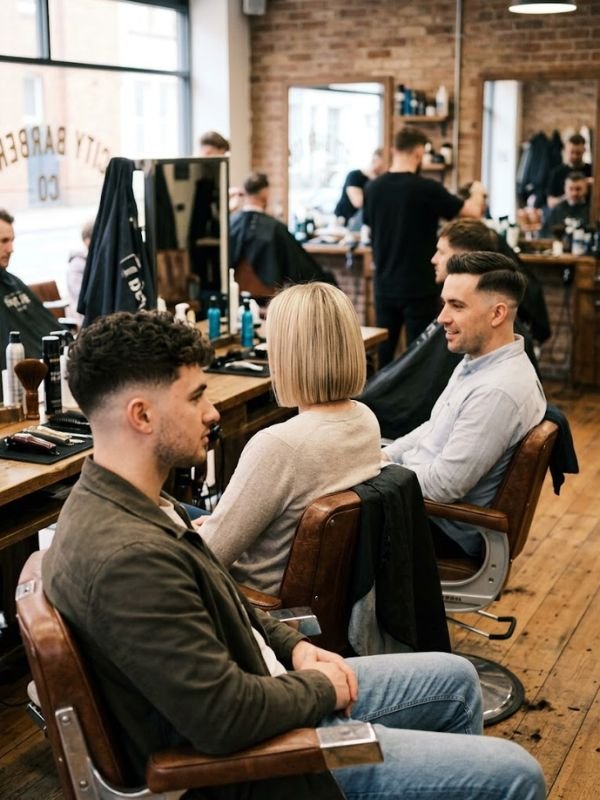
Numbers and terms only go so far, so let me paint some pictures. These are made-up guys, but the details are the kind you will see in any shop.
Example one: the office guy. Call him Mark. He works in sales, has straight brown hair, and wants something clean. He asks for a high taper with a #2 at the bottom, and two and a half inches on top with a side part. The blend is soft, the part is sharp, and no one at work raises an eyebrow. A high taper fade for white guys like Mark proves you can go high and still look professional.
Example two: the gym guy. Call him Tyler. He has thick blond hair and no time for products. He picks a buzz cut taper, a #3 on top, and a #1 at the bottom of a high taper. He walks out in fifteen minutes and needs zero styling. Blond hair means the contrast is gentle, so the cut looks fresh but not harsh.
Example three: the curly-haired student. Call him Ben. His hair is brown and curly, and it grows wide when it gets long. He asks for a high taper with curls left three inches on top. The sides stay tight, so the curls form a neat shape instead of a cloud. He uses a curl cream and a diffuser, and it takes him five minutes.
See the pattern? Each guy used the same base cut and changed the guard, the top length, and the styling. That is the beauty of a high taper fade for white guys. It is a frame, and you choose the picture.
Best High Taper Fade Styles for White Guys
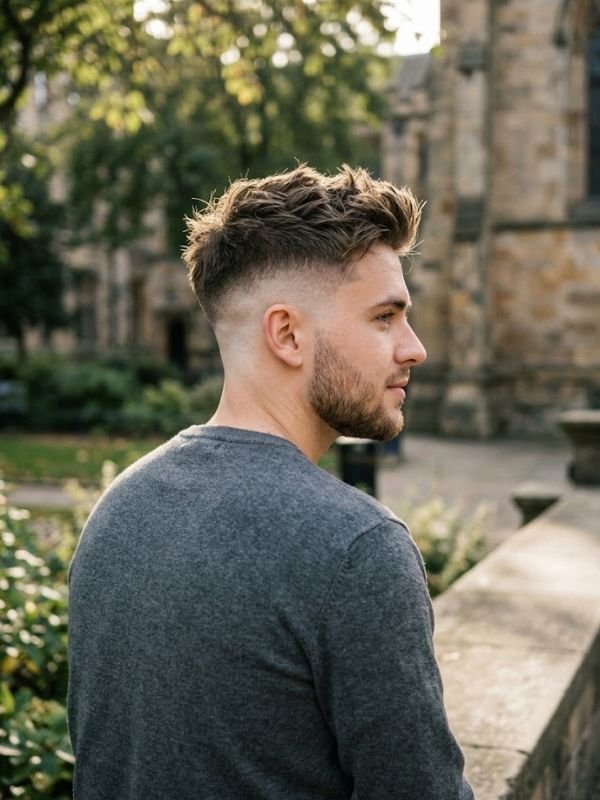
Now for the fun part. With a high taper fade for white guys, the sides are only half the story, and the top decides the vibe. Picture the same taper with four different tops, and you get four different looks. Here are the styles I would put at the front of the line.
- Textured crop: short, choppy, and easy. Works on straight and wavy hair.
- Quiff: lifted at the front with volume. Great for a night out.
- Pompadour: bigger, bolder, and more retro. Needs a blow dryer and some patience.
- Slick back: clean and polished. Fits suits and weddings.
- Side part: the classic. Looks sharp with a high taper and a hard part line.
- Buzz cut taper: the whole head is clipped short, and the sides fade down. Zero styling.
- Curly top: curls stay loose on top while the sides stay tight. Nice shape control.
- French crop: short and blunt at the front. Hides a high forehead.
Here is a quick table to help you pick a top for your high taper fade for white guys. Check your hair type first, then pick the row that fits your morning routine.
| Top style | Top length | Works best with |
|---|---|---|
| Textured crop | 1 to 2 inches | Straight and wavy hair, low effort |
| Quiff or pompadour | 3 to 5 inches | Thick hair, a blow dryer, a little time |
| Slick back or side part | 2 to 4 inches | Straight hair, work and formal settings |
| Buzz cut | Under 1 inch | Thinning hair, gym guys, zero routine |
| Curly top | 2 to 4 inches | Curls and waves, a curl cream |
Which one fits you? Ask yourself one question. How many minutes do you want to spend on your hair each morning? Two minutes points to a crop or a buzz. Ten minutes opens the door to a quiff or a pompadour.
Which Fade Haircuts Work Well for White Guys?

Beyond the high taper, a few other fades work great. The temple fade, also called a temp fade, keeps a sharp lineup with a high blend. It lets you keep some hair for comfort and still looks neat at work. The drop fade curves down behind the ear, which adds a shaped edge to textured hair.
The mid fade is the safe default. It sits halfway between ear and crown, and it flatters almost every face shape. The low fade is the quietest of the group, and it looks like a “sharp haircut” and not a “fade haircut.” The burst fade wraps around the ear in a semicircle, and it pairs well with longer curls or a mohawk-style top.
Want a fun mix? Try a high taper with a longer top pulled back into a small ponytail. Guys with medium or long hair use this to keep length and still look tidy. It is a bit unexpected, and it gets compliments.
Which Face Shapes and Hair Types Suit It?
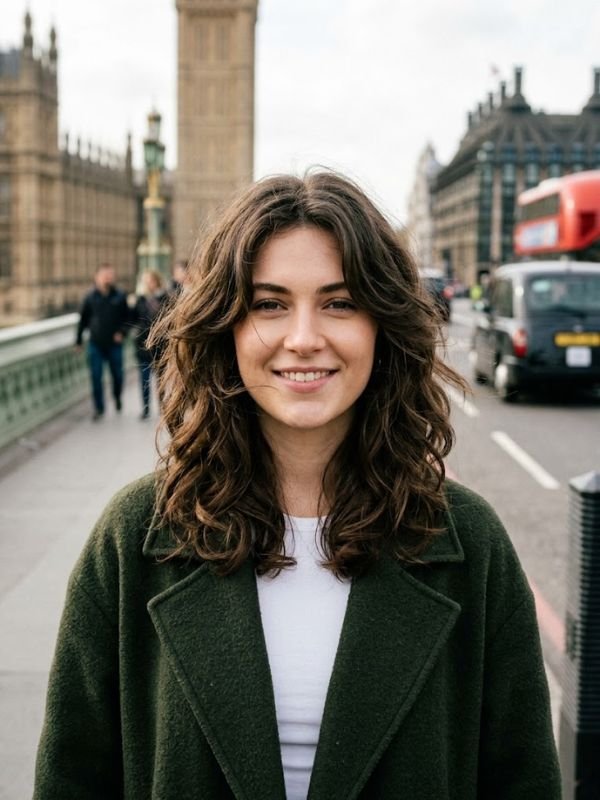
Face shape is the first thing a smart barber checks. A round face gains from a high taper fade for white guys because the cut adds height and makes the face look longer and slimmer. A square face looks softer when you keep more length on top. A heart-shaped face often looks best with a mid or low taper, since a high one can make the forehead look wider.
What about a long face? Go easy on the height. Too much lift on top can stretch the face even more. A crop with a fringe, or a side part, keeps things balanced. An oval face has it easiest, since nearly everything works.
Hair type is the second check. Straight hair shows every line of the blend, so the barber has to be neat. That is why straight-haired guys should pick a barber with a strong portfolio. Wavy hair hides small mistakes and gives natural texture on top. Curly hair holds shape well, and the fade keeps the curls defined instead of puffy.
Thin or receding hair can look great with this cut too. A short top with a high taper fade for white guys makes the hair look even, so you stop trying to hide problem spots. A buzz cut taper is a nice answer for a receding hairline. Fewer tricks, more confidence.
How Do You Ask Your Barber for a High Taper Fade?
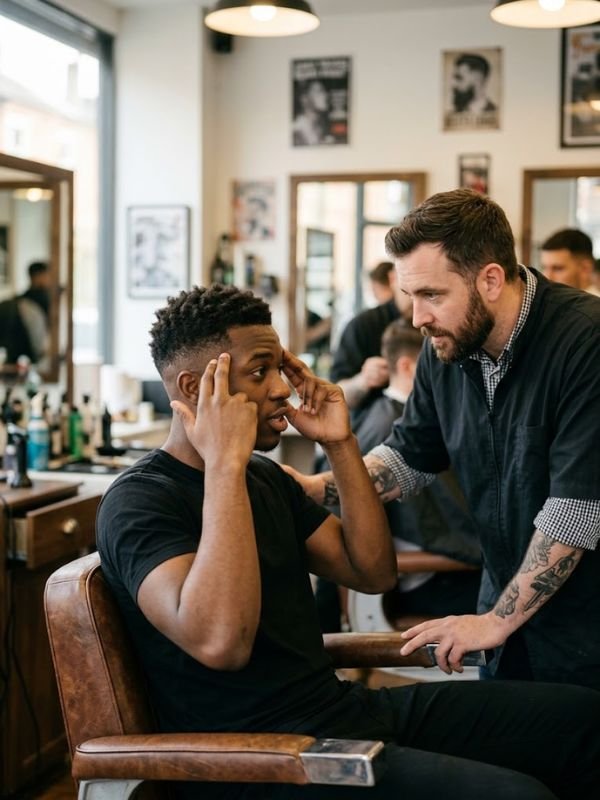
Most bad fades come from bad communication, not bad barbers. “Short on the sides” can mean five different things. Your fix is simple. Say four things clearly, and bring a photo.
Here is a simple script for your high taper fade for white guys visit. Change the numbers to fit your taste.
- Height: “I want a high taper, starting near the temples.”
- Shortest length: “Take it down to a #1 at the bottom” or “skin at the bottom.”
- Top length: “Leave about two inches on top.”
- Finish: “Square the neckline” or “keep it natural and tapered.”
Bring a reference photo of someone with your hair type. A photo of straight hair means little if you have thick curls, and the barber ends up guessing. Guessing is where the mismatch happens. Also tell the barber how you plan to wear it. Side part, forward fringe, and slick back all need slightly different blending on top.
Not sure about the height? Say it out loud. Try, “I want a taper but I am not sure how high to go. Can you check my hair and face shape and suggest a height?” A good barber will love that question. It shows you care about the result.
One last tip on skin. If you want bare skin, say “skin fade.” If you want almost bare but softer, ask for a “zero” or a “#1/2.” If you do not want bare skin at all, ask for a shadow or a light guard. Mixing these up is the most common mix-up in barbershops.
What Happens in the Barber Chair, Step by Step
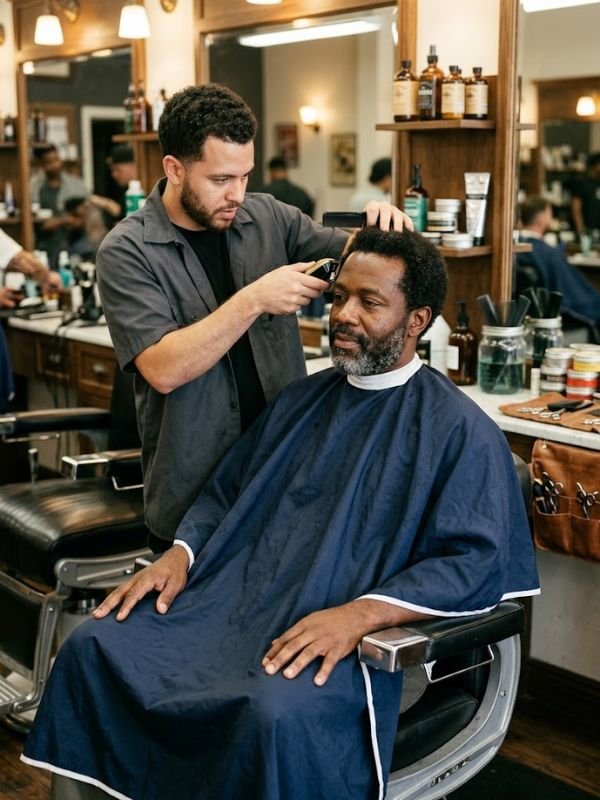
Nervous about the process? Knowing the steps takes the stress out of it. Here is how a good barber builds the cut, from start to finish.
- Consultation. You talk about height, guard, and top length. The barber checks your head shape and hairline.
- Sectioning. The barber clips the top hair out of the way so the sides are easy to work on.
- Base cut. They use a longer guard on the upper sides and back, working upward from the neckline.
- Blending. The barber steps down through shorter guards and uses a flicking motion to soften each line. This is where the skill shows.
- Detailing. A trimmer cleans the sideburns, the ear line, and the neckline.
- Top cut. Scissors or clippers shape the top based on how you plan to wear it.
- Finish. A brush removes stray hair, and the barber checks the blend under good light, from every angle.
Watch the mirror during step four. If you see a visible line, ask for a smoother blend. A good barber will fix it happily. Most cuts take 25 to 45 minutes, and a high taper fade for white guys with a detailed lineup can take a bit longer.
Want a cheat sheet for your first visit? Save the seven steps on your phone. Then you will know exactly when to speak up.
How Do You Style and Maintain a High Taper Fade?
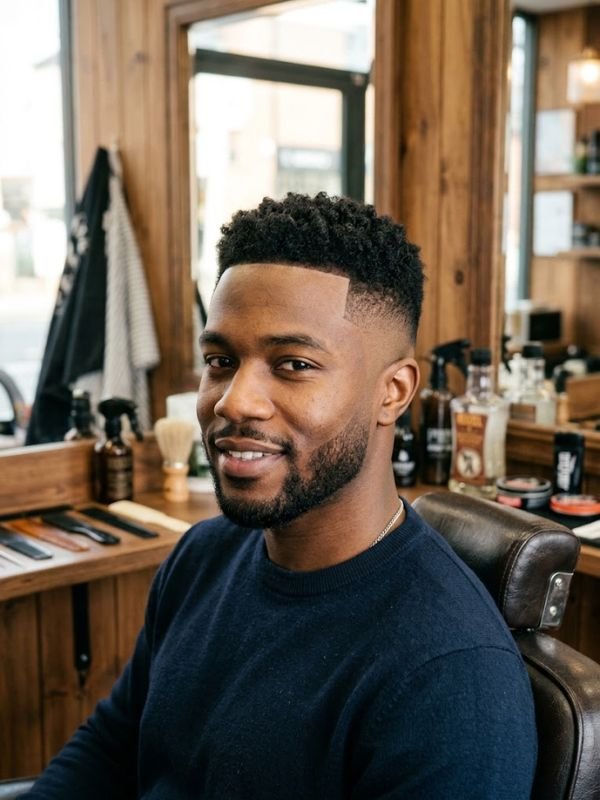
Here is the worry I hear the most. “Will I have to fix this every morning?” Not really. A high taper fade for white guys does the heavy lifting on the sides. Your job is a few minutes on top and a regular barber visit.
Start with the right product. Matte pomade gives a natural finish. Texturizing spray adds volume to fine hair. Clay or wax gives extra hold for a quiff or a crop. Use a pea-sized amount, warm it in your palms, and work it from the back to the front.
Day to day, keep three habits. Dry your hair before styling. Comb or brush the top in the direction you want. Use a small trimmer to clean the neckline once or twice a week, if you are careful. Never touch the fade line yourself, though. One slip and you get a bald spot.
The table below shows how often you should see your barber. The tighter the fade, the faster it fades out of shape. Hair grows about half an inch a month, so skin finishes reach a #1 look within a week.
| Finish at the bottom | Barber visit | Home care |
|---|---|---|
| Skin or zero | Every 2 weeks | Light neckline cleanup, daily moisturizer |
| #1 guard | Every 2 to 3 weeks | Neckline trim, pomade or clay on top |
| #2 or shadow | Every 3 to 4 weeks | Wash, dry, style as usual |
Also think about the scalp. Freshly shaved skin gets sensitive. Use a gentle shampoo, and add a light moisturizer if you feel dryness. Put sunscreen on the sides in summer, since pale skin burns fast once hair is short. Sounds small, but a sunburnt scalp ruins a good haircut.
Your Five-Minute Morning Routine

Short on time? Same here. This routine works for most tops, and it takes about five minutes.
- Start damp. Spray a little water or take a quick shower.
- Dry it. Use a blow dryer on medium heat, and push the hair in the direction you want it to sit.
- Add product. Rub a pea-sized amount into your palms and work it from back to front.
- Shape it. Use your fingers or a comb to form the crop, quiff, or part.
- Set it. A short blast of cool air locks the shape.
Two tips make a big difference. Do not use too much product. If your hair looks greasy, you used too much. And do not skip the blow dryer if you have a quiff. Heat and direction give you the lift, and product only holds it.
A high taper fade for white guys is a low-fuss style on the sides, so all your effort goes to the top. Once you find a routine, you will do it on autopilot.
Tools and Products Worth Owning
You do not need a bathroom full of stuff. A few simple items cover almost everything.
- A matte clay or pomade: natural finish, no shine. Great for crops and side parts.
- Texturizing spray or sea salt spray: adds body for fine hair.
- A small trimmer: for neckline cleanups between visits. Use it lightly, and only on the neck.
- A wide-tooth comb or brush: shapes the top and spreads product evenly.
- A blow dryer: a must for quiffs and pompadours.
- Gentle shampoo and moisturizer: short hair shows the scalp, so keep the skin healthy.
- Sunscreen: a quick layer on the sides in summer.
Keep it simple at first. Buy one styling product and use it for a month. If your top still misbehaves, add a second item. A high taper fade for white guys looks best with a light hand, not a heavy pile of goop.
How Much Does It Cost and How Long Does It Last?

Wondering what you should pay? Prices change by city and by shop. A standard taper fade, including a high taper fade for white guys, often runs between $25 and $60 at a barbershop. Big-city and premium shops charge more. Barber schools and chain salons usually charge less.
How long does the cut look fresh? Two weeks is the sweet spot for a sharp high taper. By week three, the blend starts to look soft. By week four, you can see the fuzz around the ears and the neck. That is not a failure. It is just how short hair works.
Want to save money? Book a standing appointment every two or three weeks. Many barbers hold your slot and treat regulars better. Tip fairly, and tell them what you liked last time. That builds trust fast, and the cuts get better each visit.
How Does a High Taper Pair With a Beard?
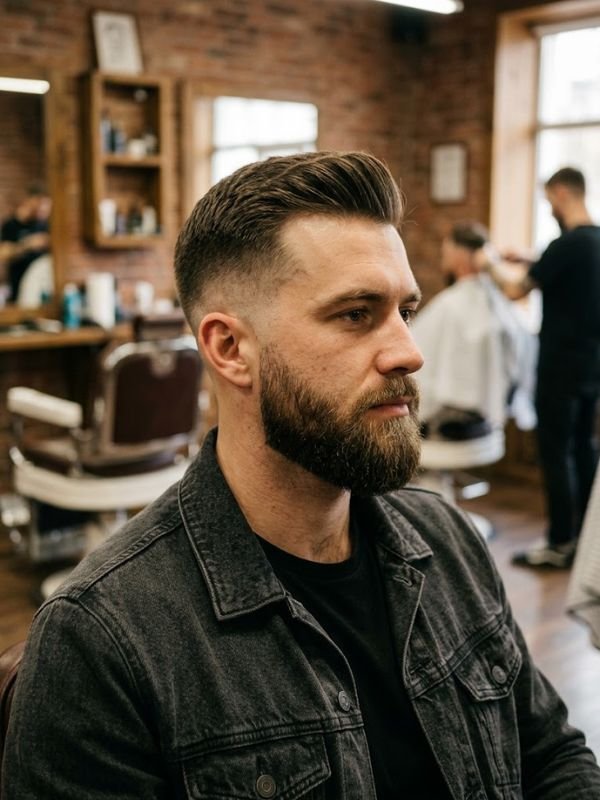
Got a beard, or thinking about one? Good news. A high taper fade for white guys and a beard go together well, since the fade can run straight into the facial hair. The barber blends the sideburns into the beard, so there is no gap and no harsh line between the two.
There are two common ways to do it. In the first, the fade goes down to the jaw, and the beard starts there with a soft, natural edge. In the second, the beard has a sharp cheek line, and the fade stays crisp around it. Pick the first for a relaxed look and the second for a clean, groomed one.
Mention the beard when you book, because the blend adds time to the service. Also tell the barber how long you plan to keep it. A short stubble beard needs a different blend than a full one. Beard oil keeps the skin soft, and a small comb keeps the shape tidy.
No beard? A clean-shaven face with a high taper looks very sharp. Just keep your razor skills in check, since a fresh shave and a fresh fade both show every mistake.
Where Does It Fit: Work, School, and Weekends?
Will your boss or teacher mind? That is a fair worry, and the answer depends on the finish. A high taper fade for white guys with a #2 or #3 bottom looks neat in most offices, banks, and classrooms. The taper never hits bare skin, so it reads as trimmed instead of edgy.
A skin finish is louder. Some workplaces do not care, while others like a softer look. If you are not sure, ask a coworker or check your dress code. You can also start with a #1 and go shorter later.
Weekends are easier. This is where you can go bolder with a textured top, a pompadour, or a sharp lineup. Add a bit of clay, and you are set for dinner or a game night. Weddings and formal events suit a slick back or a side part with a high taper, since the clean sides keep the whole look polished.
Sports and outdoor work call for a low-fuss version. A buzz cut taper handles sweat and helmets well. Rinse it, towel dry, and go.
What Are the Downsides and Common Mistakes?
Every haircut has trade-offs, and a high taper fade for white guys is no different. The biggest downside is upkeep. A high taper needs frequent visits, and those add up. The second downside is visibility. The cut shows skin, so any scars, moles, or uneven tone on the sides become easy to see.
Here are the mistakes I see most often, and how to dodge them.
- Going too high too fast: If you are new to fades, start mid. You can always go higher next time.
- Wrong contrast for your skin: A very pale scalp with a skin finish can look harsh. Try a #1 or a shadow.
- Ignoring the top: A great fade with a messy top looks unfinished. Keep the top shaped, too.
- Skipping the neckline: A sloppy neckline ruins a perfect blend. Ask for a clean shape.
- Using vague words: “Short on the sides” is a gamble. Use guard numbers and a photo.
- Trimming the fade at home: One wrong pass leaves a patch you cannot hide.
- Washing too much: Hot water and harsh shampoo dry out the scalp and make short hair look dull.
Picture a guy who walks in and says “give me a fade.” The barber hears “skin fade” and goes to bare skin. He wanted something soft. The result feels shocking and takes weeks to grow back. One sentence, “not skin, please,” would have saved him.
Take that story to heart. Speak up before the clippers start. It is fine to say “a bit longer” mid-cut. A good barber will listen. They can take more off, but they cannot put hair back.
Myths About the High Taper Fade
Let us clear up a few things you might have heard in the group chat.
- Myth: fades only suit certain guys. Truth: barbers cut them on all hair types and colors. The finish and top length are what you adjust.
- Myth: a fade makes thin hair look thinner. Truth: a short, even top can make thin hair look fuller, since the contrast draws the eye upward.
- Myth: you need loads of product. Truth: a crop or buzz needs almost none. A high taper fade for white guys is only as high maintenance as the top you pick.
- Myth: fades are a phase. Truth: the fade has stayed popular for years. The names change, but the clean blend stays.
- Myth: you cannot wear a fade to a job interview. Truth: a soft version with a neat top works fine. Choose a #2 or #3 bottom and a side part.
Got a myth of your own? Ask your barber. They hear these every day, and most will happily set the record straight.
What Are the Best Alternatives to a High Taper Fade?
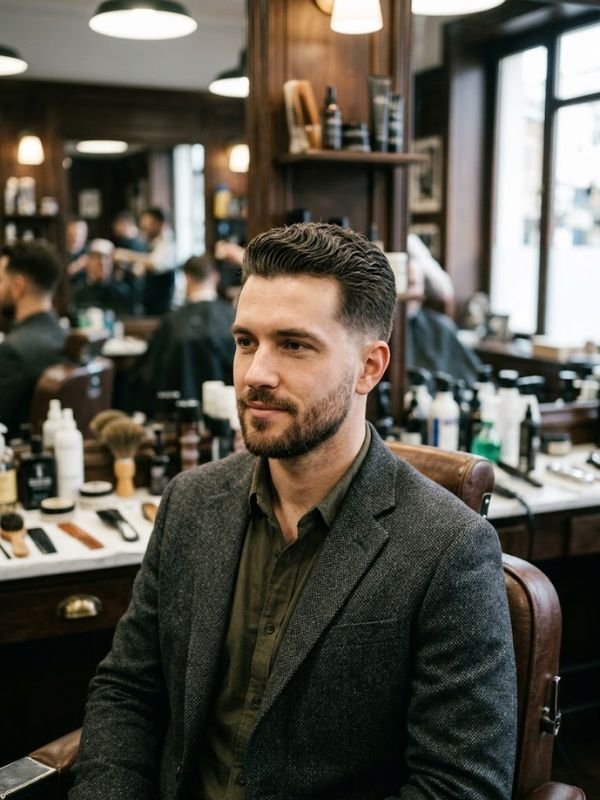
Maybe a high taper fade for white guys feels like too much. That is okay. You have solid options, and each one keeps the clean sides you probably like.
The mid taper fade is the safest swap. It has less contrast, and it grows out better. The low taper fade is even calmer, and it works with strict dress codes. Both keep a fresh, tidy shape, and both need fewer visits.
Want something with more bite but less upkeep? A classic scissor cut or a side part with a natural taper does the job. Short and neat, with no hard fade line. You can go three or four weeks between cuts without looking messy.
Prefer something bolder? Try a burst fade or a drop fade. These add shape around the ear and the nape, and they look great with textured tops. Or go the other direction with a buzz cut. One length, zero styling, and every barber knows how to do it.
Still torn? Ask your barber for a test cut. Start with a mid taper, live with it for two weeks, and see how it feels. If you want more contrast next time, go higher. It is a step-by-step path, and no one gets stuck with a bad choice.
Growing It Out: What to Expect Week by Week
What if you change your mind? Grow-out is not scary with a taper. Here is what you can expect.
- Week one: The sides start to soften. The neckline looks a bit fuzzy.
- Week two: The fade still looks clean. This is the peak zone for most guys.
- Week three: The blend loses its sharpness, and the top starts to fall over the ears.
- Week four: The taper looks more like a short cut. Time for a trim.
- Week six and beyond: The high taper fades into a mid or low look, and you can let it grow into a longer style.
The good news is that a taper grows out gently, since it never had a hard edge. A high taper fade for white guys does not leave you with an awkward shape halfway through. If you want to grow it out, ask for a clean-up every four weeks to keep the neckline tidy while the top gets longer.
Patience is the whole game. Show your barber the length you want to reach, and they will plan the cuts to match.
Quick Checks Before You Book
A little prep goes a long way. Run through these five checks before you sit in the chair.
- Find a barber with fade photos. Look at their recent work, not just their shop.
- Pick your photo. Choose someone with your hair type and a similar face shape.
- Decide on the bottom. Skin, zero, or a #1? Say it clearly.
- Plan your styling. Write down how many minutes you want to spend each morning.
- Check your calendar. Do not book a fresh high taper right before a big event on a Monday. Aim for two to four days before, when the cut settles.
Some guys also test looks with a hairstyle preview app on their phone. It is not perfect, but it gives you a rough idea of how a high taper fade for white guys sits on your face. Use it as a starting point, then trust your barber’s eye for the final call.
Did this section help? Drop a note to a friend who is thinking about a fade and share the checklist. It might save them a bad haircut.
Frequently Asked Questions
What is a high taper fade?
It is a cut where the sides and back start shortening near the temples and crown, then blend down to the neckline. The top stays longer.
Does a high taper fade work for white guys?
Yes. It suits straight, wavy, and curly hair, and you can adjust the finish to fit your skin tone and hair color.
Can a high taper fade for white guys work with thinning hair?
Yes. A short, even top with a high taper makes thin hair look fuller.
Is a high taper fade for white guys hard to style?
No. Most tops take about five minutes with a little clay.
Is a high taper the same as a high fade?
Not quite. A high taper stays more local and keeps more side length, while a high fade wraps further and cuts closer.
How often should I get a high taper fade?
Every two to three weeks keeps it sharp. Lower finishes can stretch to four weeks.
What guard number should I ask for?
A #1 is a safe, soft finish. Go to skin or a zero only if you want strong contrast.
Which face shape suits a high taper?
Round faces gain the most, since the cut adds height and slims the look. Square and oval faces work well too.
What products work best on top?
Matte pomade gives a natural finish, texturizing spray adds volume, and clay or wax gives stronger hold.
Can I get one with curly hair?
Yes. The tight sides keep curls neat and defined on top.
Is a high taper fade okay for work?
Often yes, if you keep the top neat and choose a soft finish. Check your dress code first.
How much does it cost?
Most shops charge between $25 and $60, depending on the city and shop level.
Final Takeaways
A high taper fade for white guys is a sharp, flexible cut that works on most hair types. Pick your height, name your guard number, and bring a photo. Keep the top styled and see your barber every two to three weeks.
Not ready for it? A mid or low taper gives you the same clean look with less upkeep. Which one will you try first? Share this guide with a friend who needs a new cut, and tell me how it goes.

1 thought on “High Taper Fade for White Guys: Styles, Barber Tips and a Full Care Guide”