
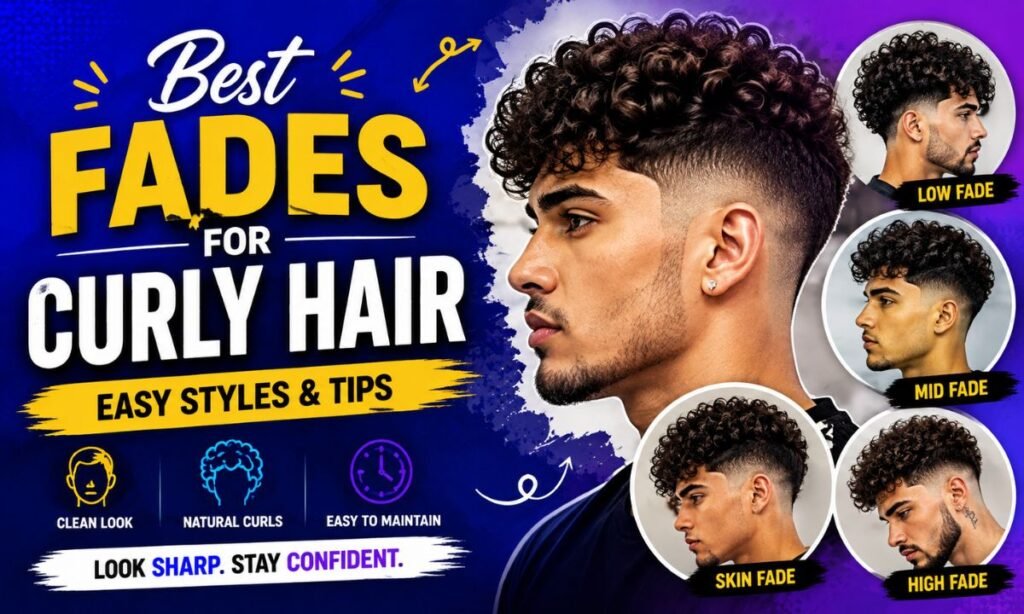
Finding the right haircut for curly hair can be tricky, but a good fade can make your curls look clean and stylish. Best Fades for Curly Hair: Easy Styles & Tips can help you choose a look that suits your curl type.
From low fades to high and mid fades, there are many options to try with curly hair. Best Fades for Curly Hair: Easy Styles & Tips covers simple styles that are easy to maintain and look great.
A fade can add shape while keeping the sides neat and letting your natural curls stand out. You can choose a style based on your hair length, curl pattern, and personal preference.
In this guide, we will explore popular curly hair fades along with useful styling and maintenance tips. Whether you want a fresh everyday look or something more modern, you can find an option that works for you.
Why a Fade Works Well for Curly Hair
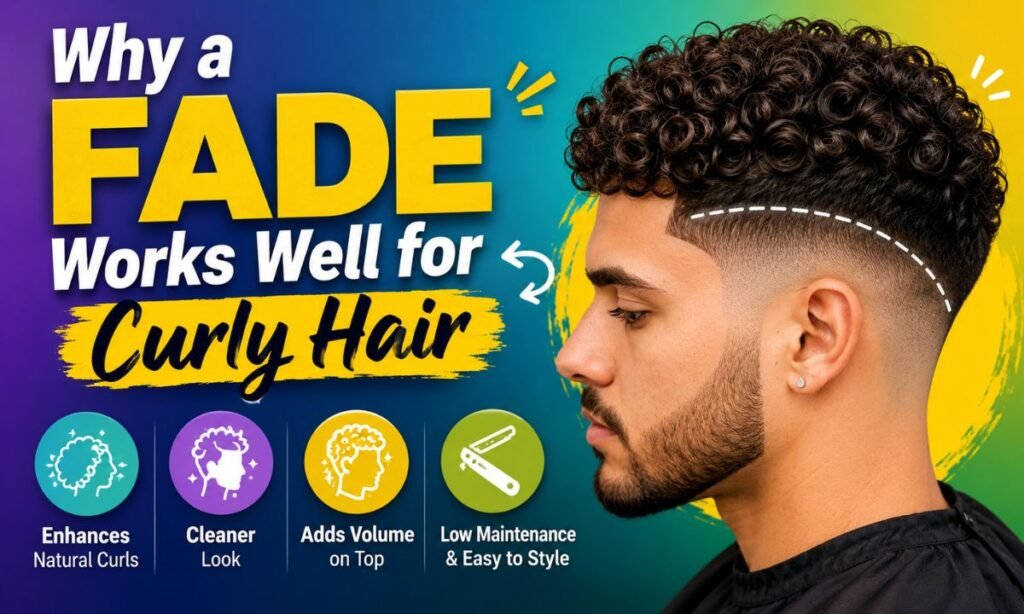
Curly hair grows outward and upward, not flat against the head. Without any shaping on the sides, it can look bulky, uneven, or triangle-shaped rather than round and balanced.
A fade fixes this by gradually shortening the hair on the sides and back while leaving the top full. Here’s what it does for curly hair specifically:
- Removes bulk without flattening curls — the top keeps its natural bounce and volume.
- Creates a clean frame so curls look intentional instead of overgrown.
- Balances the head shape, since curls add height and width that straight hair doesn’t.
- Grows out better than a straight-across trim, because there’s no hard line to lose.
- Works with every curl pattern, from loose 2A waves to tight 4C coils.
In short, a fade gives structure to the sides while letting the curls do all the talking on top.
What Is a Low Fade for Curly Hair?
A low fade is a haircut where the fading starts close to the ears and hairline, not higher up near the temples. It’s the most subtle fade style, which makes it a favorite for curly hair because it removes the least amount of hair while still cleaning up the sides.
Key features of a low fade:
- The fade begins about half an inch above the ear.
- It stays below the temple, so there’s no dramatic contrast.
- The transition from short to long is gradual and soft.
- It keeps more natural curl volume than a mid or high fade.
A low fade is a great starting point if you’re new to fades and don’t want to lose too much length or take a big risk with your curl pattern. It also reads as more professional, so it works for office settings, school, and formal occasions just as easily as casual days.
ALSO READ “The Best Complete Guide to Taper Fade Haircut”
What Is a Low Taper Fade for Curly Hair?
A low taper fade is a gentler cousin of the low fade. Instead of fading the entire side of the head, the barber tapers small sections — usually around the sideburns, ears, and neckline — while leaving more length everywhere else on the sides.
What makes a low taper fade different:
- The blend is softer and less dramatic than a full fade.
- Length is preserved on most of the side, not just the top.
- It creates a rounder, fuller silhouette that suits curls with lots of volume.
- It’s lower maintenance, since the blend zone is small and grows out more evenly.
For curly hair, a low taper fade is often the safer, more natural-looking choice. It cleans up the neckline and sideburns without exposing much scalp, so it still looks sharp even two or three weeks after a cut.
Low Fade vs Low Taper – Simple Difference
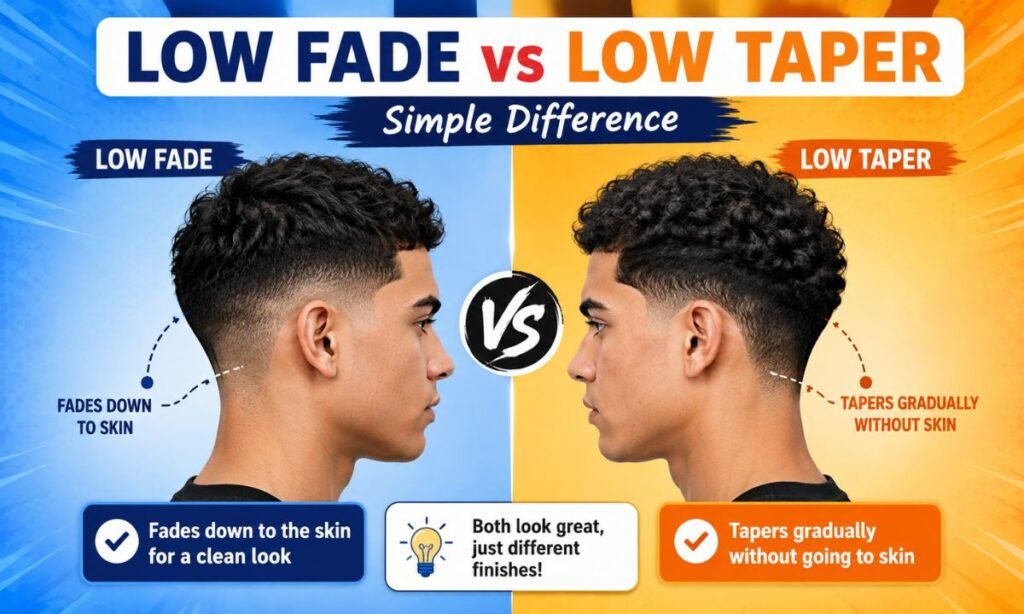
Both cuts sit low on the head, but they don’t remove hair the same way. Here’s a simple side-by-side comparison to help you decide.
| Feature | Low Fade | Low Taper Fade |
|---|---|---|
| Where it starts | Just above the ear | Around sideburns, ears, and nape |
| Amount of hair removed | Moderate | Minimal |
| Contrast level | Noticeable, clean blend | Soft, subtle blend |
| Best for | Defined, sharp look | Natural, low-maintenance look |
| Grows out | Well, but blend fades faster | Very well, blend lasts longer |
| Curl type suited | 2C to 4A | 2A to 4C |
| Maintenance | Every 3 weeks | Every 3 to 4 weeks |
Simple rule of thumb: if you want a crisper, more defined edge, go with a low fade. If you want something soft, natural, and easier to maintain between cuts, choose a low taper fade.
Best Low Fade Styles for Curly Hair
These are the low fade variations that consistently work well with curly texture:
- Classic Low Fade with Curls on Top — the sides fade gradually above the ears while the top curls stay short to medium length. Timeless and easy to maintain.
- Low Drop Fade — the fade curves down behind the ear, following the natural shape of the head. It adds dimension and suits oval and heart-shaped faces.
- Low Fade with Curly Fringe — curls are left longer at the front to fall naturally over the forehead, creating a relaxed, textured finish.
- Low Fade with Hard Part — a shaved line separates the fade from the top section, giving the curls a sharper, more graphic outline.
- Rounded Curly Top with Low Fade — the top is shaped into a soft round silhouette, which works especially well for tighter curl patterns that hold shape naturally.
- Low Fade with Beard Connection — the fade blends into the beard line for a fuller, more masculine finish.
Each of these keeps enough length on top for the curls to move freely, which is the whole point of pairing curls with a fade in the first place.
Best Low Taper Fade Styles for Curly Hair
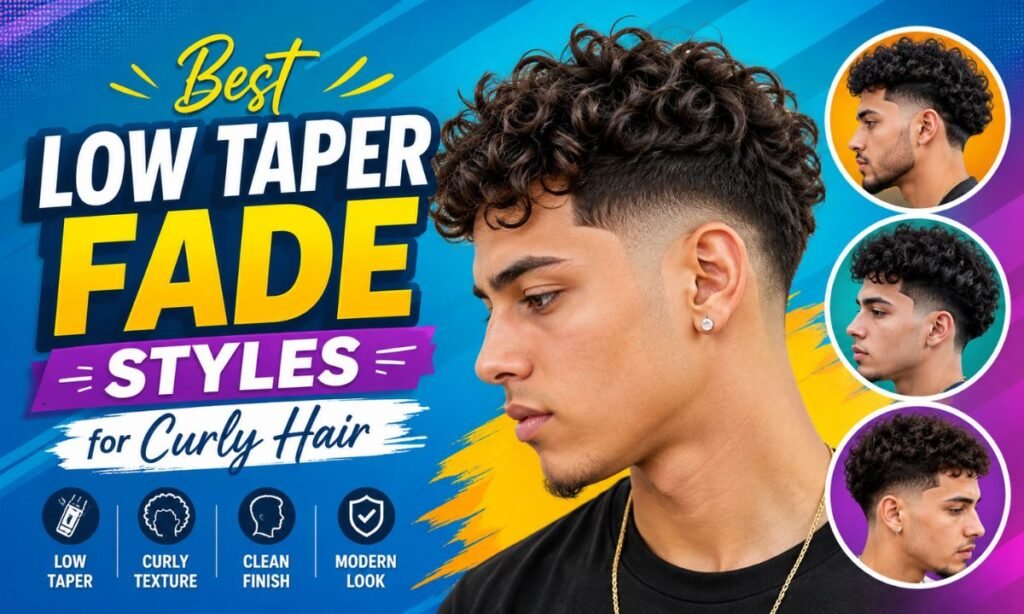
If you’d rather keep more length on the sides, these low taper fade styles are worth asking for:
- Taper Fade with Loose Curls — a soft blend around the ears and nape with natural, undefined curls left on top.
- Textured Fringe with Low Taper — curls are textured and pushed forward for a modern, effortless look.
- Low Taper with Defined Curls — curl cream is used to separate and define each curl, creating a sculpted, polished top.
- Low Taper Fade with Afro Top — sides are tapered close while the top is left fuller for an afro-style silhouette.
- Low Taper with Curly Quiff — the front section is styled upward and back for added height, while the taper keeps the sides tidy.
Low Taper for 3C / Coily Hair:
Coily hair (3C and up) holds volume differently than looser curl types, so the taper needs to work a little harder to balance it out.
- Keep the taper tight around the ears and neckline only — coily hair already provides plenty of visual structure on its own.
- Avoid cutting the top too short, since shrinkage can make it appear shorter than intended once it dries.
- Ask for a rounded shape on top rather than a flat one, since coily curls naturally grow upward and outward.
- A low taper (rather than a low fade) usually looks more balanced here, because it avoids too much contrast against the fuller top.
Choosing the Best Fade by Hair Type
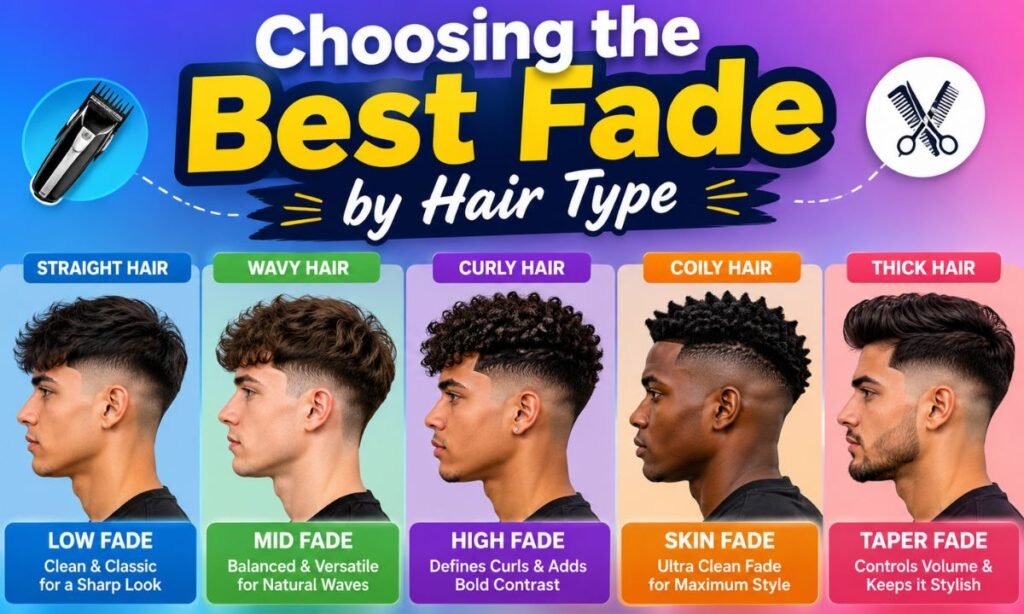
Not every curl pattern behaves the same way under the clippers. Here’s a quick guide to match the right fade with your specific hair type.
| Curl Type | Description | Recommended Fade |
|---|---|---|
| 2A – 2B (Loose Waves) | Soft, barely-there waves | Low taper fade for a natural, easy blend |
| 2C – 3A (Defined Waves/Curls) | Springy, well-defined curls | Low fade for a crisp, clean contrast |
| 3B – 3C (Curly/Coily) | Tight, bouncy curls with volume | Low taper fade to control volume without flattening |
| 4A – 4B (Coily) | Dense, tightly coiled texture | Low taper fade with a rounded top |
| 4C (Tightly Coiled) | Maximum shrinkage, dense coils | Low taper fade, minimal contrast, rounded shape |
As a general pattern, looser curls (2A–3A) can handle a bit more contrast from a low fade, while tighter curls and coils (3B–4C) usually look more balanced with the softer blend of a low taper fade.
How to Tell Your Barber:
Getting the exact look you want starts with clear communication. Use these pointers when you sit in the chair:
- Say whether you want a low fade or a low taper fade — don’t just say “fade,” since barbers will assume different starting points.
- Mention your curl type (for example, “3B curls”) so they know how much shrinkage to expect once the hair dries.
- Ask for the cut to be done on dry hair, since curls can shrink 20–40% once they dry, and a wet cut can end up shorter than planned.
- Specify how much contrast you want — “soft blend” for subtle, “sharp blend” for more defined lines.
- Bring a reference photo of a similar curl type and fade style, not just any photo, so expectations line up.
- Ask them to leave enough length on top if you want versatility for styling later.
Maintenance Tips:
A fresh fade only stays fresh with a little upkeep. Follow these tips to keep curls and the blend looking their best:
- Touch up every 2–3 weeks for a low fade, and every 3–4 weeks for a low taper fade, since the blend zone grows out slower.
- Use curl cream or leave-in conditioner, not gel, to define curls without stiffness or flaking.
- Keep product off the faded sides — heavy styling products can make short hair look greasy or clumped.
- Moisturize regularly, since curly and coily hair tends to be drier and more prone to frizz.
- Sleep on a satin or silk pillowcase to reduce frizz and preserve curl definition overnight.
- Detangle gently with fingers or a wide-tooth comb, ideally when hair is damp and conditioned.
- Avoid over-washing — two to three times a week is usually enough to keep curls hydrated without stripping natural oils.
Best Haircuts for Diamond Face Shape (Male)
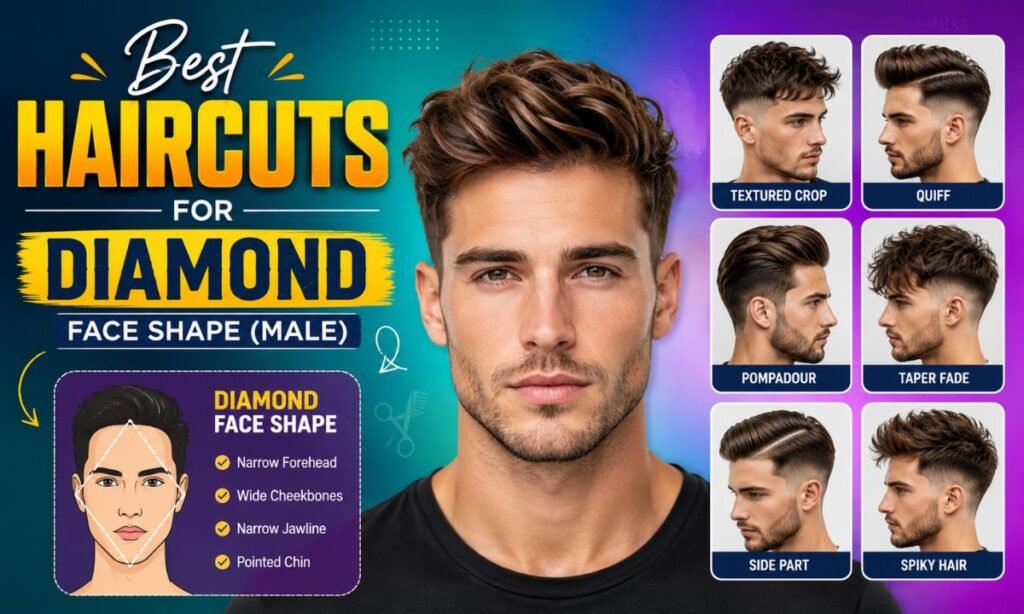
A diamond face shape has a narrow forehead, wide and prominent cheekbones, and a narrow, pointed chin. The goal with any haircut here is to soften the sharp angles and add balance at the top of the head. If you have curly hair and a diamond face shape, a fade paired with the right amount of volume works especially well.
- Textured Crop with Low Fade — adds volume on top to balance a narrow forehead, while the fade keeps the cheekbones from looking too dominant.
- Curly Fringe with Low Taper — curls fall forward over the forehead, softening the narrow top area of the face.
- Side Part with Fade — creates asymmetry that draws attention away from sharp jaw angles.
- Rounded Curly Top — a soft, rounded silhouette on top counteracts the angular lines of the cheekbones and chin.
- Curly Quiff with Taper Fade — adds height at the front, which elongates the face and balances a pointed chin.
Styles to avoid with a diamond face shape include very high fades, extremely short crops, and anything that removes too much volume from the top — these tend to expose the cheekbones and make the face look narrower rather than balanced.
Hispanic Low Taper Fade Styles (Clean & Modern Guide)
Low taper fades are especially popular within Hispanic barbering culture, where sharp lineups, defined edges, and clean necklines are a signature part of the style. These cuts often pair a low taper with curly or wavy textures common in many Hispanic communities.
Popular Hispanic low taper fade styles include:
- Low Taper with Sharp Line-Up — a crisp, straight-edged hairline paired with a soft taper on the sides for maximum contrast at the front.
- Low Taper with Slick Back — curls or waves are combed back and held in place, while the taper keeps the sides clean underneath.
- Low Taper with Curly Fringe and Beard Fade — the taper connects seamlessly into a beard fade, creating one continuous, polished look.
- Low Taper with Waves (360 Waves) — a favorite for wavy hair textures, this style combines a tight taper with brushed-in waves on top for a smooth, uniform pattern.
- Low Taper Mullet — a modern take that keeps the sides tapered while leaving extra length at the back.
These styles are typically finished with a straight razor lineup around the forehead and temples for extra sharpness, along with light pomade or curl cream to keep the top textured but controlled.
Frequently Asked Questions
Is a low fade good for curly hair? Yes, a low fade keeps the sides clean while preserving curl volume and bounce on top.
Is a low taper fade better than a low fade for curly hair? It depends on your curl type — a low taper fade is softer and lower maintenance, while a low fade gives a sharper contrast.
How often should I get my fade touched up? Every 2–3 weeks for a low fade, and every 3–4 weeks for a low taper fade.
Should curly hair be cut wet or dry? Dry, since curls shrink significantly once they dry and a wet cut can end up shorter than expected.
Can 4C hair get a low fade? Yes, though a low taper fade usually looks more balanced since it keeps more volume around the sides.
What products should I use on a fade with curly hair? Curl cream or leave-in conditioner works best; avoid heavy gels on the faded sides.
Does a low fade suit every face shape? Mostly yes, but the amount of volume left on top should be adjusted based on your face shape for the best balance.
Conclusion
A low fade or a low taper fade is one of the easiest ways to give curly hair a clean, modern shape without losing its natural personality. The low fade offers a sharper, more defined look, while the low taper fade keeps things soft, natural, and easier to maintain between cuts. The right choice comes down to your curl type, face shape, and how much contrast you want.
Whichever style you pick, clear communication with your barber and a bit of regular maintenance will keep your curls looking fresh, defined, and effortlessly stylish all year round.