

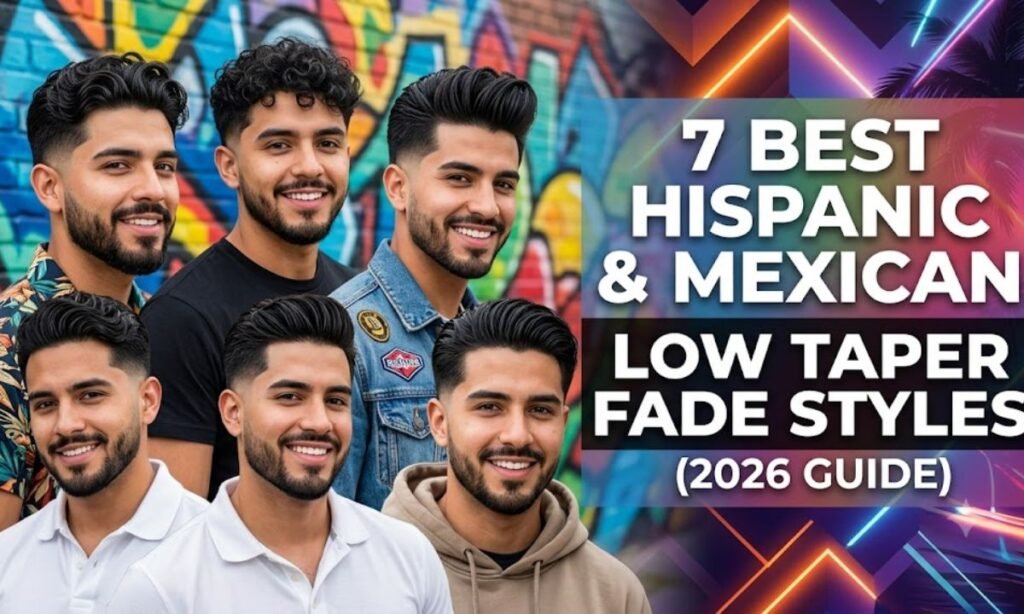
The low taper fade is one of the most requested haircuts in barbershops right now, and the Hispanic and Mexican versions of it lead the trend. Both styles share the same foundation — a fade that stays low near the ears and neckline — but the finishing details, texture, and overall vibe are different.
A lot of guys walk into the chair and ask for “a Hispanic fade” or “a Mexican fade” without knowing the two aren’t identical. One leans soft and natural. The other leans sharp and bold. This guide breaks down both styles in plain language so you know exactly what to ask for, which one suits your hair type and face shape, and how to keep it looking fresh between visits.
Barbers who specialize in Latino cutting techniques will tell you the difference comes down to training and tradition, not just personal taste. Hispanic grooming culture across countries like Mexico, Puerto Rico, Cuba, Colombia, Argentina, and Spain has shaped a wide range of fade styles over the decades. Some barbershops blend these influences together, while others stick closely to one tradition. Knowing the difference helps you communicate exactly what you want instead of leaving it up to guesswork.
What Is a Low Taper Fade?

A low taper fade is a haircut where the hair gradually gets shorter as it moves down toward the ears and neckline, without ever exposing bare skin the way a skin fade does. The blend stays close to the bottom of the head, leaving more length on the sides and top compared to a mid or high fade.
Because the fade sits low, it’s subtle enough for work, school, or formal settings, but still gives a clean, groomed finish.
Low taper fades are popular because they:
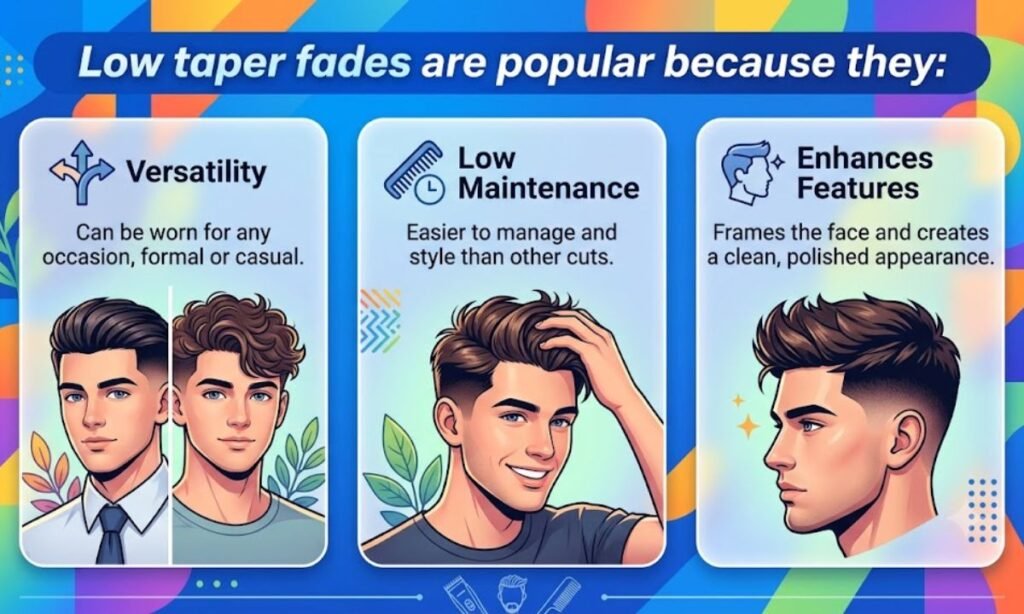
- Work with almost every hair type — straight, wavy, curly, or coarse
- Grow out gradually, so touch-ups aren’t urgent every week
- Suit round, square, oval, and diamond face shapes
- Look professional enough for the office and casual enough for weekends
- Pair well with beards, mustaches, and most top styles
- Require less maintenance than high or skin fades
- Give barbers room to add creative touches like hard parts, designs, or a connected beard
A low taper fade also differs from a low fade in one key way: a low fade eventually fades all the way down to skin near the bottom, while a low taper fade never exposes bare scalp. It simply tapers the hair shorter without going skin-tight. If you want a subtle, work-safe cut, the taper is usually the safer call over a full skin fade.
Where Does This Style Come From?
Fade haircuts have deep roots in barbershop culture across Latin America, where precision cutting and hands-on craftsmanship have always been a point of pride. Mexican barbershops in particular built a reputation for detailed lineups, creative parting, and clipper work passed down through apprenticeships rather than formal training.
As these techniques spread through the U.S. and beyond, they merged with broader Hispanic grooming traditions from countries like Puerto Rico, Cuba, the Dominican Republic, and Spain. That’s why you’ll often hear barbers use “Hispanic” as the umbrella term and “Mexican” as one specific, more defined style within it — similar to how “Italian food” covers a wide range of specific regional dishes.
Hispanic Low Taper Fade
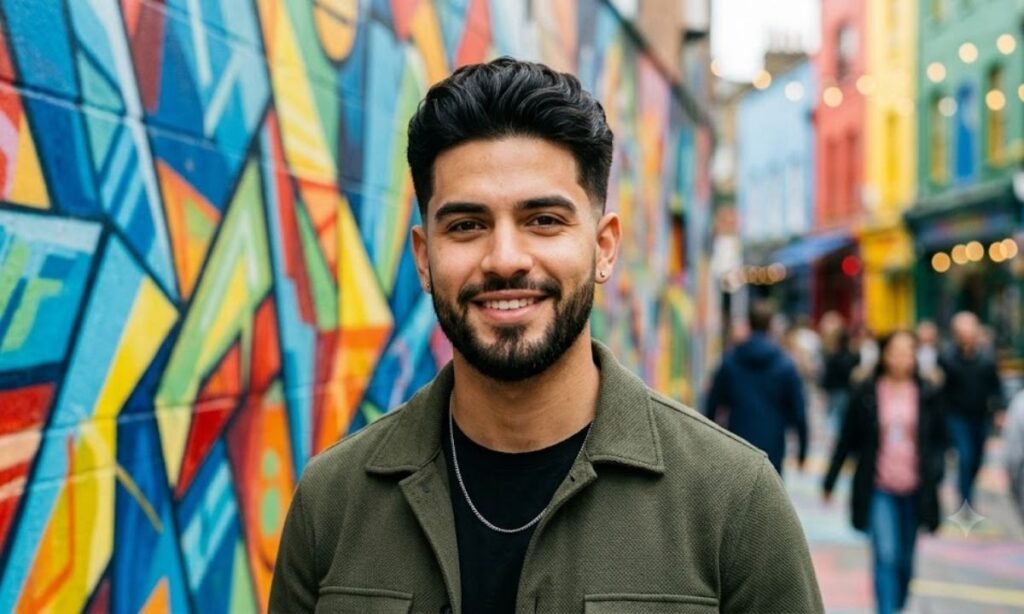
The Hispanic low taper fade draws from grooming traditions across Spanish-speaking communities in Latin America, the Caribbean, and Spain. Rather than chasing razor-sharp lines, this version focuses on a soft, rounded blend that flatters natural hair texture.
Key Features
| Feature | Description |
| Fade blend | Smooth and gradual, no harsh contrast |
| Hairline | Neat but natural, not razor-sharp |
| Top length | Usually left fuller for texture |
| Overall vibe | Balanced, low-key, versatile |
| Best hair types | Wavy, thick, coarse |
- Soft Fade: The transition from short to long hair blends naturally instead of snapping into a sharp line.
- Natural Hairline: Edges are tidied up but not carved with a razor.
- Balanced Style: The cut looks even and intentional from every angle, not just the front.
Best For
- Men who want a low-maintenance, everyday haircut
- Office jobs, interviews, and formal settings
- Guys with thick, wavy, or coarse hair who want texture on top
- Anyone who prefers a natural look over a heavily styled one
Because the fade sits low and the blend is soft, this style also grows out slowly and evenly. Most men can go three to four weeks between visits before it starts looking uneven, which makes it a practical choice for anyone who doesn’t want to sit in a barber’s chair every other week.
ALSO READ THIS:https://thehairsmaster.com/low-taper-fade-for-curly-hair/
Mexican Low Taper Fade
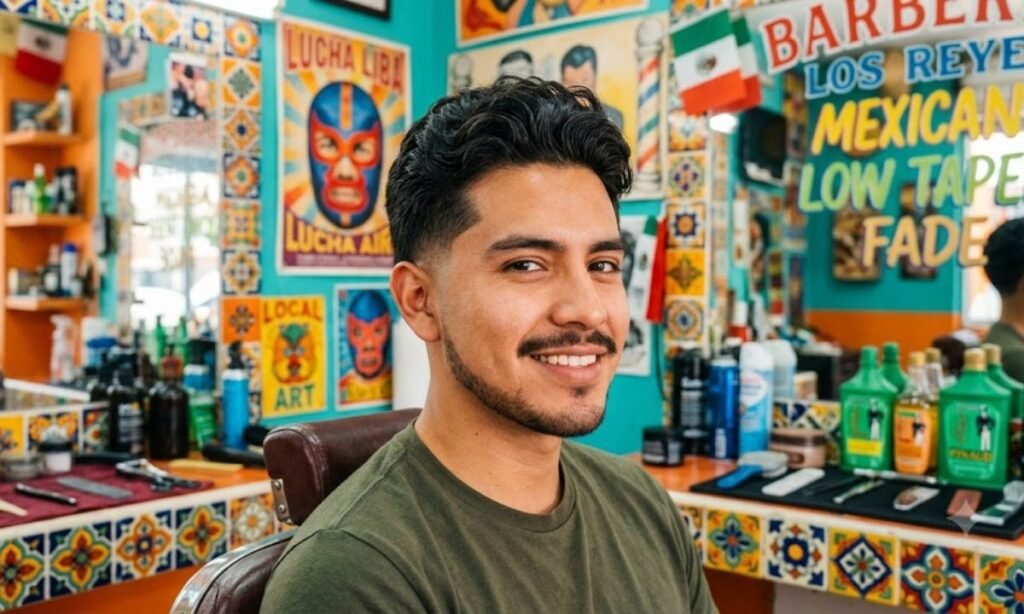
The Mexican low taper fade comes from Mexican barber culture, which is known for precision, sharp lines, and creative detailing. It uses the same low fade base but adds crisper edges and bolder finishing touches, often tied to the popular Edgar haircut — a fringe-forward style with a straight, blunt line across the front.
Key Features
| Feature | Description |
| Fade blend | Sharp, defined transition |
| Hairline | Crisp lineup, precise edges |
| Top length | Often styled with a fringe or textured top |
| Overall vibe | Bold, stylish, statement-making |
| Best hair types | Straight, thick, textured |
- Sharp Lineup: The edges around the hairline and temples are cut with precision.
- Defined Contrast: The fade stands out more than the Hispanic version, even while staying low.
- Cultural Detailing: Barbers often add hard parts (shaved lines) or small design elements for a personalized finish.
Best For
- Men who want a bolder, more noticeable haircut
- Guys who like styling their hair daily with product
- Anyone who wants the Edgar cut or a fringe-style top
- Social settings, nights out, and photo-friendly occasions
This version requires a bit more upkeep than the Hispanic style since the sharp lineup grows out faster than the softer blend. Most guys who wear this cut book touch-ups every two weeks to keep the edges crisp, especially if the hairline is a focal point of the style.
Hispanic vs Mexican Low Taper Fade
| Comparison | Hispanic Low Taper Fade | Mexican Low Taper Fade |
| Blend style | Soft and natural | Sharp and defined |
| Hairline | Neat, not razor-edged | Crisp lineup |
| Styling effort | Low maintenance | Needs more daily styling |
| Best setting | Office, school, formal | Casual, social, bold looks |
| Common pairing | Textured or wavy top | Edgar fringe or hard part |
| Overall feel | Professional, understated | Trendy, standout |
In short: the Hispanic style keeps things soft, natural, and professional, while the Mexican style goes sharp, bold, and stylish.
Popular Hispanic & Mexican Low Taper Fade Styles

These seven combinations are the most requested variations barbers see across both style categories:
- Classic Hispanic Taper with Textured Top — A soft, gradual fade paired with natural waves left longer on top. Low-key enough for daily wear and easy to style with just a light product.
- Mexican Edgar Cut — A sharp, blunt fringe across the front combined with a low taper on the sides. One of the most recognized Mexican haircuts among younger men right now.
- Curly Top Low Taper — A tight, controlled fade on the sides that lets natural curls stand out freely on top. Popular with guys who don’t want to fight their natural texture.
- Low Taper with Hard Part — A thin shaved line separates the fade from the top section, adding a sharp design detail without going overboard.
- Slick Back Low Taper — A Hispanic-style soft blend paired with a slicked-back, polished top. Works well for formal events and business settings.
- Takuache-Style Fade — A bolder Mexican taper often paired with a mullet-inspired back, popular in country and regional music scenes.
- Beard-Connected Low Taper — Either style blended smoothly into a boxed beard, goatee, or stubble for a fully connected, groomed look from hairline to jaw.
Face Shape & Hair Type Guide
Choosing between the two styles isn’t just about looks — your face shape and hair texture matter too.
Face Shapes
- Round Face: The Mexican taper’s sharper lines add structure and angles.
- Square Face: The Hispanic soft blend balances strong jawlines without adding extra edge.
- Oval Face: Both styles work well; this is the most flexible face shape for either version.
- Diamond Face: A textured top with either fade softens angular cheekbones.
Hair Types
- Straight hair: Works better with the Mexican style’s sharp, structured lines.
- Wavy or thick hair: Suits the Hispanic style’s natural, rounded finish.
- Curly hair: Both styles work, but a slightly longer top helps curls stand out.
- Coarse hair: The fade removes bulk while keeping volume on top in either version.
- Fine hair: A slightly shorter top with the Mexican style adds the illusion of density and structure.
Barber’s Note: “A good fade is all about precision. Even a small difference in blending can change the entire look of the haircut,” says a longtime barber who specializes in Latino fade techniques. This is why the same haircut name can look completely different depending on who’s holding the clippers — always judge a barber by their previous fade work, not just their portfolio of straight-on photos.
How to Ask Your Barber
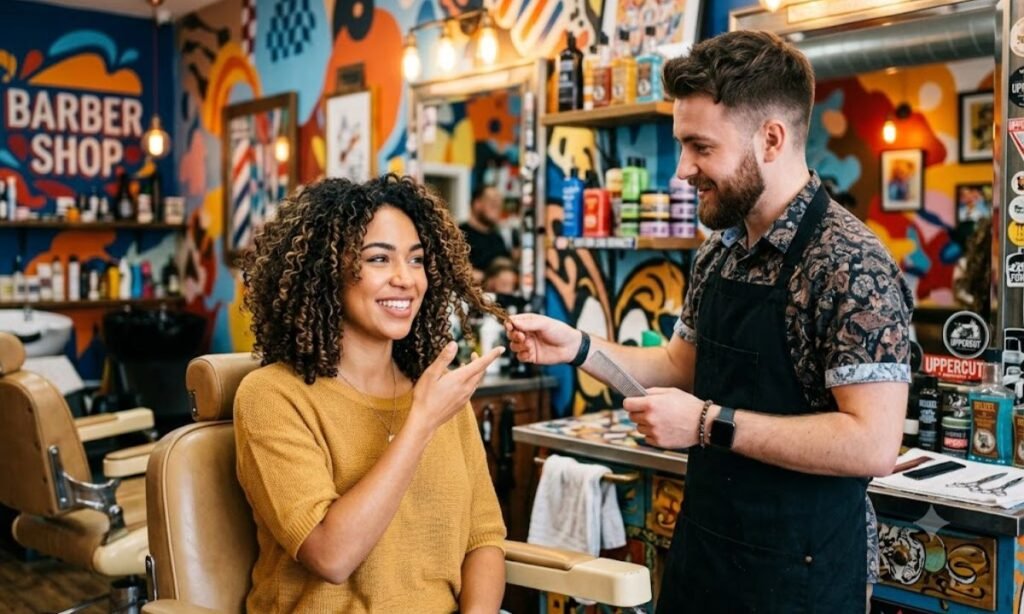
Walking in with the right words saves time and avoids a haircut you’re not happy with.
Choose:
- Say “low taper fade” specifically — not just “fade” — so the barber knows to keep it near the ears and neckline.
- Specify Hispanic style for a soft, natural blend, or Mexican style / Edgar cut for sharp lines and a fringe.
- Mention your hair type (straight, wavy, curly, thick) so they can adjust the technique.
- If you have a beard, ask for beard blending so it connects cleanly with the fade.
- Bring a reference photo — barbers work faster and more accurately with a visual.
Styling & Care Tips
- Use a light pomade or matte clay for a natural, textured finish.
- For curly or wavy hair, a curl cream keeps definition without heaviness.
- Wash with a gentle, moisturizing shampoo 2–3 times a week to avoid drying out the scalp.
- Comb or brush the top daily to train the direction of growth.
- Sleep with a silk or satin pillowcase to reduce frizz and preserve curl pattern.
- Avoid heavy gels on wavy or curly hair — they can weigh the top down and hide texture.
- Trim split ends every few visits, even if you’re only getting the sides faded, to keep the top looking healthy.
- Use a boar-bristle brush to distribute natural oils and keep the top from looking dry or dull.
- If your fade starts looking patchy or overgrown before your next appointment, a clean-up with a home trimmer on the neckline can buy a few extra days.
A Simple Weekly Routine
- Day 1–2 after cut: Style as usual with a light product; the fade is freshest now.
- Day 3–5: Add a touch more product or a curl cream if hair starts losing shape.
- Day 6–10: Wash more frequently to prevent buildup and keep the fade line visible.
- Week 2–3: Book a touch-up before the lineup or blend starts looking overgrown.
Cost & Touch-Ups
| Service | Typical Price Range | Frequency |
| Basic low taper fade | $20 – $35 | Every 2–3 weeks |
| Fade with lineup/design | $30 – $50 | Every 2–3 weeks |
| Fade with beard blend | $35 – $60 | Every 2–3 weeks |
Because the fade sits low on the head, it grows out more gracefully than high or skin fades, which means most men can stretch appointments to every two to three weeks without the cut looking messy.
Do & Don’t Tips
Do:
- Communicate clearly about which style (Hispanic or Mexican) you want.
- Keep up with regular trims to maintain the blend.
- Match the haircut to your hair texture, not just a photo.
- Ask for beard blending if you have facial hair.
Don’t:
- Assume “low taper fade” alone tells the barber everything — specify the finish.
- Use heavy products that flatten natural texture.
- Skip touch-ups for more than 3–4 weeks if you want a crisp look.
- Copy a style that doesn’t suit your face shape just because it’s trending.
- Let a new barber freehand a sharp design without seeing examples of their past work first.
- Wash your hair right before a fade appointment — slightly dirty, dry hair is easier for barbers to cut accurately.
FAQs
Are Hispanic and Mexican low taper fades the same?
No. Both use a low fade base, but the Hispanic version is softer and more natural, while the Mexican version is sharper and more defined.
Which is better for office jobs?
The Hispanic low taper fade, since it’s more understated and low-maintenance for formal settings.
Which looks bolder?
The Mexican low taper fade, especially when paired with an Edgar cut or hard part.
Are both good for curly hair?
Yes, both styles work well with curly hair as long as the barber leaves enough length on top for the curl pattern to show.
Final Summary
Hispanic and Mexican low taper fades share the same foundation but deliver different results. The Hispanic style keeps things clean, soft, and professional — ideal for everyday wear and formal environments. The Mexican style brings sharper lines, bolder styling, and a more standout finish, often paired with the Edgar cut.
Both are modern, low-maintenance, and work across a wide range of face shapes and hair types. The right pick comes down to how much styling effort you want to put in and where you’ll be wearing the cut most.
Latest Posts
- Common Low Taper Fade Mistakes and How to Avoid Them
- Low Taper Fade for Interviews: A Professional Haircut That Makes a Great First Impression
- Low Taper Fade with Beard for Black Men: Best Styles and Grooming Tips
- Low Taper Fade Styles for Wavy Hair
- Low Taper Fade for Summer: Stay Cool and Look Sharp
Related Posts
- Common Low Taper Fade Mistakes and How to Avoid Them
- Low Taper Fade for Interviews: A Professional Haircut That Makes a Great First Impression
- Low Taper Fade with Beard for Black Men: Best Styles and Grooming Tips
- Low Taper Fade Styles for Wavy Hair
- Low Taper Fade for Summer: Stay Cool and Look Sharp
Leave a Reply
Your email address will not be published. Required fields are marked.
Quick Links
- About Us
- Contact
- Privacy Policy
- Terms of Service
Categories
- Fade Haircuts
- Beard Styles
- Hair Care Tips
- Men’s Grooming